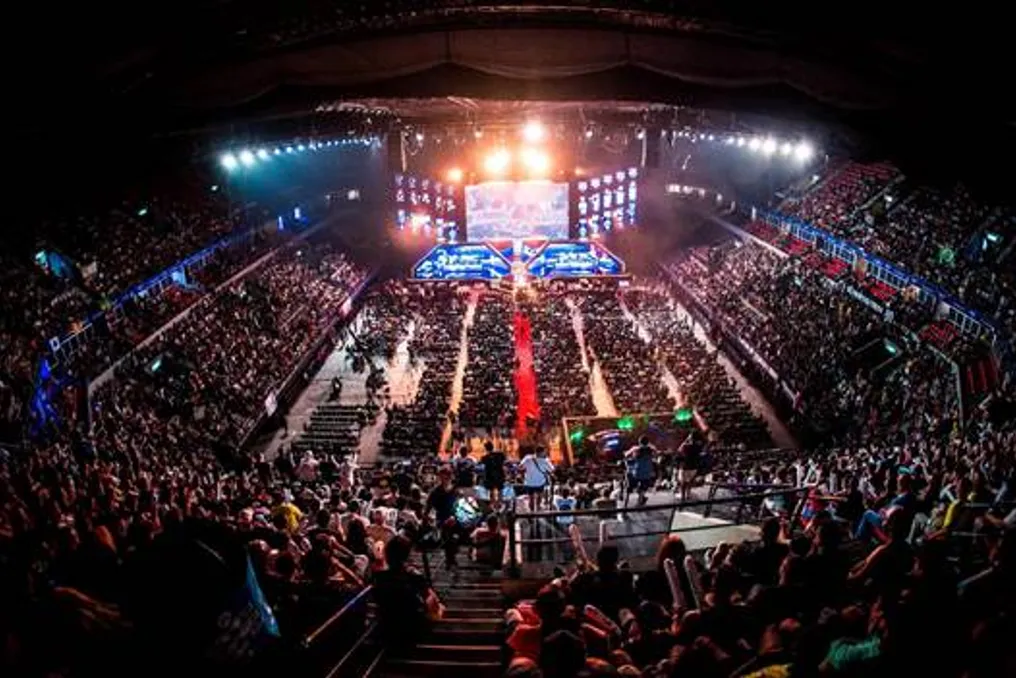
When viewers tune into a broadcast or enter a packed arena to watch an esports championship final, attention is focused on professional players and brilliant moments. However, long before the first match appears on screen, a real process has already begun, one that lasts for months.
The electronic sports market has ceased to be a niche for enthusiasts and has transformed into a global industry generating billions of dollars. But who are the people who take an esports championship from concept to reality?
Hosting a major tournament requires a production chain equivalent to, and sometimes surpassing, traditional entertainment and arena sports. Unlike football, where broadcasting is limited to following the ball, esports production must integrate the game signal in real time, API data, multiple viewpoints (Observers), visual effects, and commentator narration.
For the market to function, various fields must work in perfect harmony behind the scenes:
To understand how this machine works in practice, and what real difficulties arise when organizing such a large-scale event in Brazil, a conversation was held with Thiago 'Kaiser' Bueno, founder and CSO of EngageXP, a partner in game conversion in Latin America. With over 20 years of experience in the gaming market, he has accumulated knowledge in strategy, products, communities, esports, and monetization models. The creator of the Engage-to-Convert method, his career includes over 200 projects developed in the sector and more than 50 million Brazilian reais in gross revenue.
Thiago 'Kaiser' Bueno explained that a championship begins with defining the business objective. Before creating a calendar, it is crucial to understand who the show is for, what platform, device, and viewing time will be used. This happens long before the competitive format is formed or the people in front of the cameras are chosen. Next comes the budgeting stage: how much does it cost and how are expenses covered, whether through distribution rights, advertising inventory, sponsorship, or registration fees. The budget sheet is a key step. Brands require detailed metric reports, while publishers have strict rules for official and community tournaments. Production translates these conditions into an execution plan, where everyone knows who makes decisions, who approves, and what evidence confirms each delivery.
Thiago 'Kaiser' Bueno noted that the biggest invisible problem is decision latency. During a live broadcast, the team coordinates the game, signal, match observation, audio, graphics, score, communication, sponsor activations, rights, and data. An isolated failure can usually be fixed; the risk increases when no one knows who can pause, replace a source, adjust the schedule, or activate a backup plan. Therefore, rehearsals, backups, and team structure are as important as equipment. Viewers must feel continuity while problems are being solved backstage.
Thiago 'Kaiser' Bueno stated that Brazil already demonstrates a level of production comparable to the best in the world in terms of technical talent, creativity, and community understanding. However, maturity still wavers in terms of reproducibility: predictable calendars, contracts, data integration, rights, measurement, monetization, and continuity between seasons. More mature international operations turn a championship into a regular product. In Brazil, excellent projects are still observed, supported by the outstanding efforts of specific specialists. The next leap will come through process documentation, knowledge retention, and, most importantly, treating it as a real business.
Regarding technical skills, he highlighted four pillars: Budget, Team, and Schedule Management; Storytelling and Content Creation; Data Measurement and Analysis; and Marketing/Commerce. A manager does not need to manage every device, but they must understand dependencies and ask the right questions. As for behavioral skills, these include communication under pressure, prioritization, negotiation, and calmness for decision-making with incomplete information. The most underestimated skill is translation: the ability to explain the same problem in the language of the brand, publisher, technical team, and player. This translation reduces friction and speeds up decision-making.
Thanks to recent technological advancements, the trend for the coming years is a reduction in production costs, which will allow high-quality tournaments to be held without exclusive dependence on direct publisher funding.
Thiago 'Kaiser' Bueno added that combined with a good broadcasting channel, an engaged community, and sound business plans, esports has every chance to develop and achieve what it could never fully: sustainability.
Esports proves that it is not just 'computer games,' but one of the most innovative pillars of the modern entertainment industry. And at the center of this revolution are experienced professionals working behind the scenes to ensure the spectacle never stops.
Kaiser's advice to those wanting to enter this field: 'The secret to any line of communication, and for those who want to work with games, is to learn to be more interesting than interested. Learn to connect creativity, operations, and business. It is this combination that turns an audience into long-term value.'