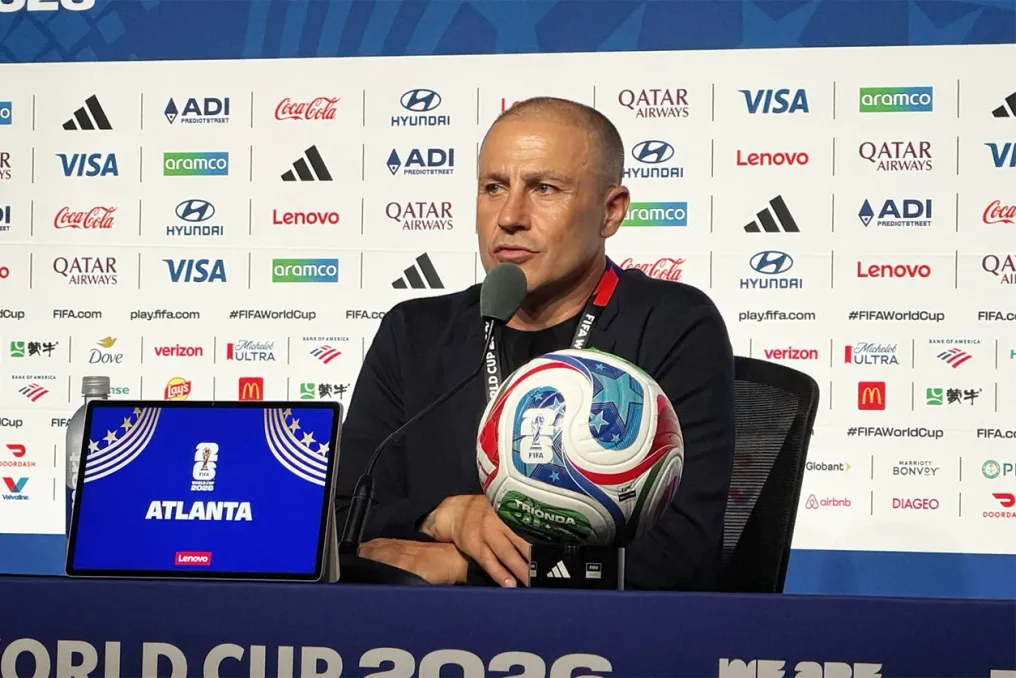
The head coach of the Uzbekistan national football team, Fabio Cannavaro, reported that there was an individual within the squad who was spreading false information about the coaching staff.
The head coach of the Uzbekistan national football team, Fabio Cannavaro, reported that there was an individual within the squad who was spreading false information about the coaching staff.
Speaking at a press conference, the Italian coach noted that a large amount of unreliable data circulated regarding the team, which, in his opinion, resulted from leaks from inside the team.
Cannavaro commented on the spread of rumors, stating: 'Someone was spreading too much false information. Perhaps because I am a foreign coach. The rules we followed were not invented by me—they are European standards. I still do not understand why so much unreliable information was circulating.'
Furthermore, the head coach emphasized his respect for his predecessor Timur Kapadze and called the constant criticism directed at him unfounded.
He added: 'The previous head coach is an excellent local specialist who achieved good results. But this should not be a reason for constant criticism towards me. I felt the need to clarify this issue.'
According to Cannavaro, a significant amount of false information could have arisen due to the presence of his own 'spy' in the national team.
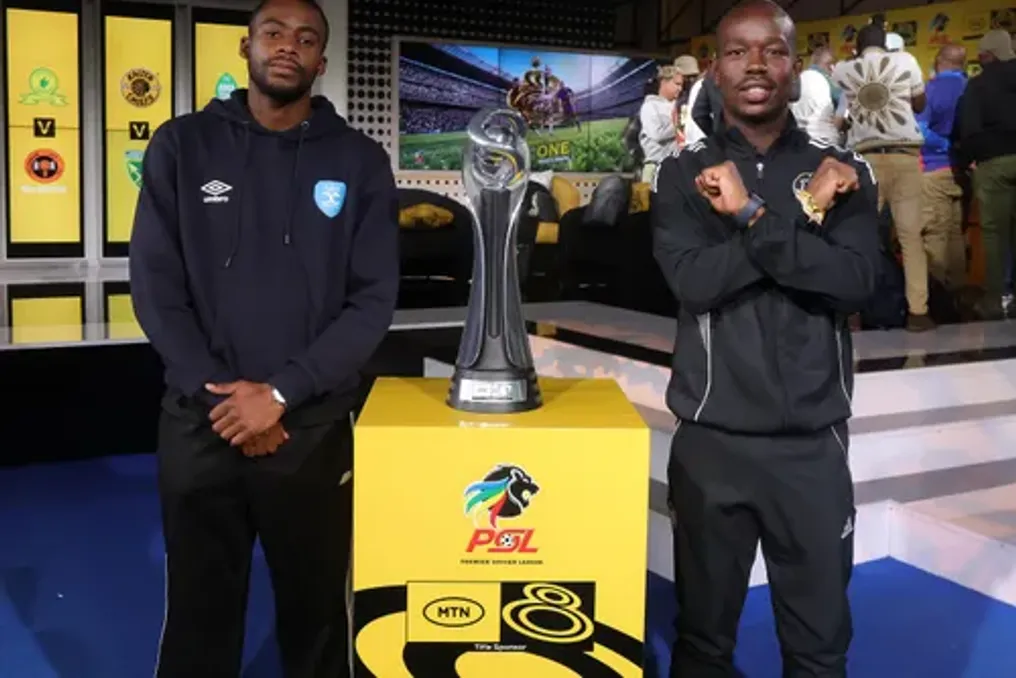
Orlando Pirates captain Nkosinathi Sibisi expressed enthusiasm regarding the energy brought by new players to the club, which aims not just to defend its triumvirate this season.
The Pirates started the season positively, securing three points against Milford FC on the first day. Now they are set to face Nedbank Cup champions, Durban City, in the MTN8 quarter-finals on Saturday afternoon at Orlando Stadium. The match is scheduled to kick off at 15:00.
The 'Bucaneers' will once again fight for all available trophies this season, which is reflected in the club's transfer policy that included no less than eight new players.
Among these acquisitions are Sebastian Pedersen from Norway, Mtheteleli Mthiyane and Sichle Nduli from Stellenbosch, Sbangani Zulu and Nkosinxona Ndaba from Richards Bay, Tshepo Mashilwan from Baroka, Bolale Ngwato, and Gampani Lungu.
During the press conference before the MTN8 quarter-finals, Sibisi noted: 'Yes, we have many signings, many young players. I think you can see the direction the team is moving, trying to update the squad as much as possible.'
He added that energy is necessary for the upcoming competitions, as the team participates in five or six tournaments this season. The Pirates are targeting both continental glory in the Champions League and a national championship title, while striving to maintain their triumvirate, which means giving their all in the MTN8, one of the cups they won last year.
The central defender emphasized the importance of every player: 'We will need everyone because in previous seasons, we have seen that it is not the same guys who start who finish the season. Sometimes it is those who start in the stands who finish the season. Therefore, everyone is important in the club.'
Squad management is also a priority for the Pirates, considering that Sibisi helped more than a few teammates make it to the Bafana Bafana national team for the World Cup, which ended in the Round of 32 last month.
The captain shared his impressions of the recent pre-season tour of Spain, describing the past four weeks after returning from the World Cup as challenging due to difficult conditions and opponents. Nevertheless, he noted that the players are well-prepared for the new season, and starting with three points at home is the best way to do so.
Mamelodi Sundowns defender Obrey Modiba admitted that the club would have preferred to start its season in the Premier League alongside other teams last weekend. However, the tragic death of teammate Jayden Adams forced them to postpone their football plans.
Sundowns' season start was delayed following Adams' passing, and the team has now focused on the MTN8 quarter-final against Stellenbosch FC on Saturday. Modiba shared the strong emotional shock caused by the loss of a teammate and Bafana Bafana national team player, which was felt throughout the pre-season.
Modiba noted that the situation was extremely difficult for the team, the country, and the world, given how people commemorated Adams' life. He mentioned that even during training sessions, some players were distracted, and the coach understood this, sometimes allowing them a break to grieve. Despite the postponement being inevitable, Modiba emphasized that 'mentally we were ready to play,' as the team does not want to fall behind their rivals.
Instead, Sundowns managed to study Stellenbosch in a real match setting when Gavin Hunt's team began its campaign with a 1-0 defeat to AmaZulu in Durban. Modiba believes this could be beneficial because 'they have already played, and it gave us the opportunity to analyze them and understand their strengths and weaknesses. Perhaps it is a small advantage because they know little about us this season.'
Despite Sundowns losing the Premier League title to Orlando Pirates, who won the CAF Champions League last season, they have gained additional motivation to complete their long wait for success in domestic cups. Modiba stated that fans expect them to win all trophies, and the team strives to match the intensity of the Pirates, who have won it four times in a row.
Despite the difficult start to the new season, Modiba believes that maintaining stability under Miguel Cardoso, combined with the emergence of several talented academy graduates, gives Sundowns every reason to expect another successful season. The match on Saturday will take place at Lucas Moriphe Stadium at 15:00.
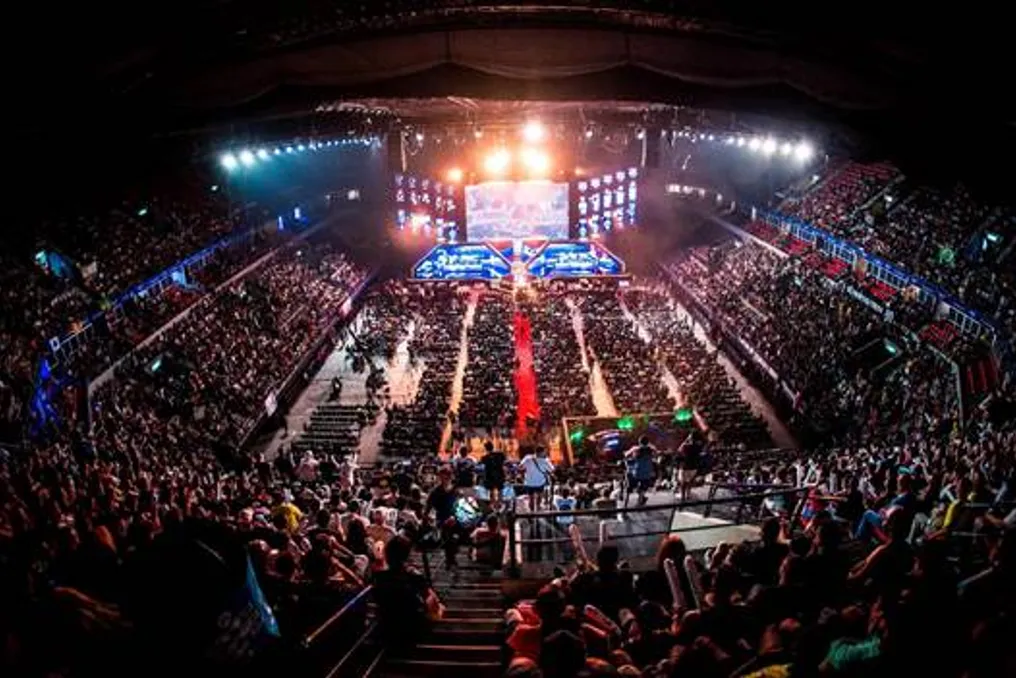
When viewers tune into a broadcast or enter a packed arena to watch an esports championship final, attention is focused on professional players and brilliant moments. However, long before the first match appears on screen, a real process has already begun, one that lasts for months.
The electronic sports market has ceased to be a niche for enthusiasts and has transformed into a global industry generating billions of dollars. But who are the people who take an esports championship from concept to reality?
Hosting a major tournament requires a production chain equivalent to, and sometimes surpassing, traditional entertainment and arena sports. Unlike football, where broadcasting is limited to following the ball, esports production must integrate the game signal in real time, API data, multiple viewpoints (Observers), visual effects, and commentator narration.
For the market to function, various fields must work in perfect harmony behind the scenes:
To understand how this machine works in practice, and what real difficulties arise when organizing such a large-scale event in Brazil, a conversation was held with Thiago 'Kaiser' Bueno, founder and CSO of EngageXP, a partner in game conversion in Latin America. With over 20 years of experience in the gaming market, he has accumulated knowledge in strategy, products, communities, esports, and monetization models. The creator of the Engage-to-Convert method, his career includes over 200 projects developed in the sector and more than 50 million Brazilian reais in gross revenue.
Thiago 'Kaiser' Bueno explained that a championship begins with defining the business objective. Before creating a calendar, it is crucial to understand who the show is for, what platform, device, and viewing time will be used. This happens long before the competitive format is formed or the people in front of the cameras are chosen. Next comes the budgeting stage: how much does it cost and how are expenses covered, whether through distribution rights, advertising inventory, sponsorship, or registration fees. The budget sheet is a key step. Brands require detailed metric reports, while publishers have strict rules for official and community tournaments. Production translates these conditions into an execution plan, where everyone knows who makes decisions, who approves, and what evidence confirms each delivery.
Thiago 'Kaiser' Bueno noted that the biggest invisible problem is decision latency. During a live broadcast, the team coordinates the game, signal, match observation, audio, graphics, score, communication, sponsor activations, rights, and data. An isolated failure can usually be fixed; the risk increases when no one knows who can pause, replace a source, adjust the schedule, or activate a backup plan. Therefore, rehearsals, backups, and team structure are as important as equipment. Viewers must feel continuity while problems are being solved backstage.
Thiago 'Kaiser' Bueno stated that Brazil already demonstrates a level of production comparable to the best in the world in terms of technical talent, creativity, and community understanding. However, maturity still wavers in terms of reproducibility: predictable calendars, contracts, data integration, rights, measurement, monetization, and continuity between seasons. More mature international operations turn a championship into a regular product. In Brazil, excellent projects are still observed, supported by the outstanding efforts of specific specialists. The next leap will come through process documentation, knowledge retention, and, most importantly, treating it as a real business.
Regarding technical skills, he highlighted four pillars: Budget, Team, and Schedule Management; Storytelling and Content Creation; Data Measurement and Analysis; and Marketing/Commerce. A manager does not need to manage every device, but they must understand dependencies and ask the right questions. As for behavioral skills, these include communication under pressure, prioritization, negotiation, and calmness for decision-making with incomplete information. The most underestimated skill is translation: the ability to explain the same problem in the language of the brand, publisher, technical team, and player. This translation reduces friction and speeds up decision-making.
Thanks to recent technological advancements, the trend for the coming years is a reduction in production costs, which will allow high-quality tournaments to be held without exclusive dependence on direct publisher funding.
Thiago 'Kaiser' Bueno added that combined with a good broadcasting channel, an engaged community, and sound business plans, esports has every chance to develop and achieve what it could never fully: sustainability.
Esports proves that it is not just 'computer games,' but one of the most innovative pillars of the modern entertainment industry. And at the center of this revolution are experienced professionals working behind the scenes to ensure the spectacle never stops.
Kaiser's advice to those wanting to enter this field: 'The secret to any line of communication, and for those who want to work with games, is to learn to be more interesting than interested. Learn to connect creativity, operations, and business. It is this combination that turns an audience into long-term value.'