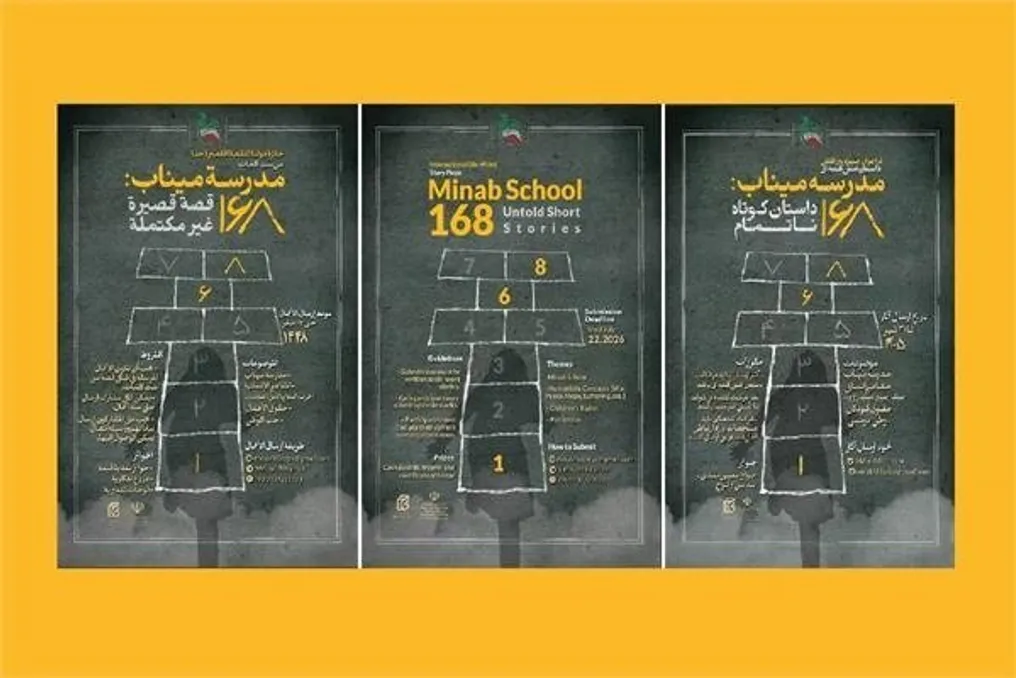
The secretariat of the first International Six-Word Story Contest, titled 'Minab School – 168 Unfinished Short Stories,' announced a massive response to its initial call for participation, gathering authors from around the world.
The secretariat of the first International Six-Word Story Contest, titled 'Minab School – 168 Unfinished Short Stories,' announced a massive response to its initial call for participation, gathering authors from around the world.
According to data from the Public Relations Department of the Deputy Minister for Cultural Affairs of the Ministry of Culture and Islamic Guidance, 3,354 authors from 38 different countries submitted a total of 16,158 works.
The global reach of the contest was demonstrated by applications from numerous nations, including Iran, Argentina, Germany, the United States, Indonesia, Armenia, Uruguay, Australia, Spain, Afghanistan, Algeria, Italy, Brunei, Belgium, Belarus, Burkina Faso, Pakistan, Portugal, Tunisia, China, Russia, Romania, Japan, Chile, Serbia, Iraq, France, the Philippines, Cameroon, South Korea, Congo, Lebanon, Libya, Mali, Egypt, Nicaragua, India, and Yemen.
The contest, organized by the Directorate of Literature and Persian Language, focuses on key themes such as children's rights, peace, patriotism, and hope. It is distinguished by a strict minimalist format, requiring writers to create a complete narrative plot using exactly six words—a format that demands extreme conciseness while maintaining deep capacity for interpretation and resonance.
The secretariat reported that due to the large volume of submitted materials and the need for a thorough evaluation process, the closing ceremony is expected at the end of the current season. Details regarding the date and location will be published through official communication channels.
The works are currently being assessed by a panel of authoritative domestic and international experts. Winners will be awarded trophies, commemorative plaques, and valuable cash prizes at the final ceremony, marking a new chapter in the field of short fiction.
Another part of the material mentions a tragic event: on February 28, a devastating massacre occurred at the Shajareh Tayebe Girls' Primary School in Homozgan province following strikes on Iran by the United States and Israel.
While dozens of girls and boys aged 7 to 12 were starting lessons, the school was hit by a missile strike, causing the building to collapse and burying children and teachers under the rubble. Iranian authorities confirmed the final death toll at 168 people, with at least 95 injured, making it one of the most horrific incidents in the early days of the conflict.
Despite attempts by US and Israeli authorities to distance themselves from this massacre, detailed forensic and digital investigations presented a completely different picture as images of the tragedy circulated on social media.
An analysis conducted by Al Jazeera's digital investigations unit, utilizing satellite imagery spanning over a decade and recent video clips, showed that the school was clearly a separate civilian object, isolated from any neighboring military installations for at least ten years. Furthermore, witness testimonies and satellite analysis confirmed that the school was subjected to three separate, targeted strikes, leaving no doubt about the nature of the attack.
The international community is facing a growing body of evidence regarding responsibility for this atrocity; investigations by leading global publications, including The New York Times, BBC Verify, CBC, and NPR, have concluded that the United States bears responsibility for the strike.
These findings raise fundamental questions about the information used to justify the bombing, as the nature of the strike indicates a direct, targeted assault on a civilian educational institution. The tragedy at Minab School now serves as a grim testament to the immense human cost of aggression and has become a focal point for those demanding international accountability.
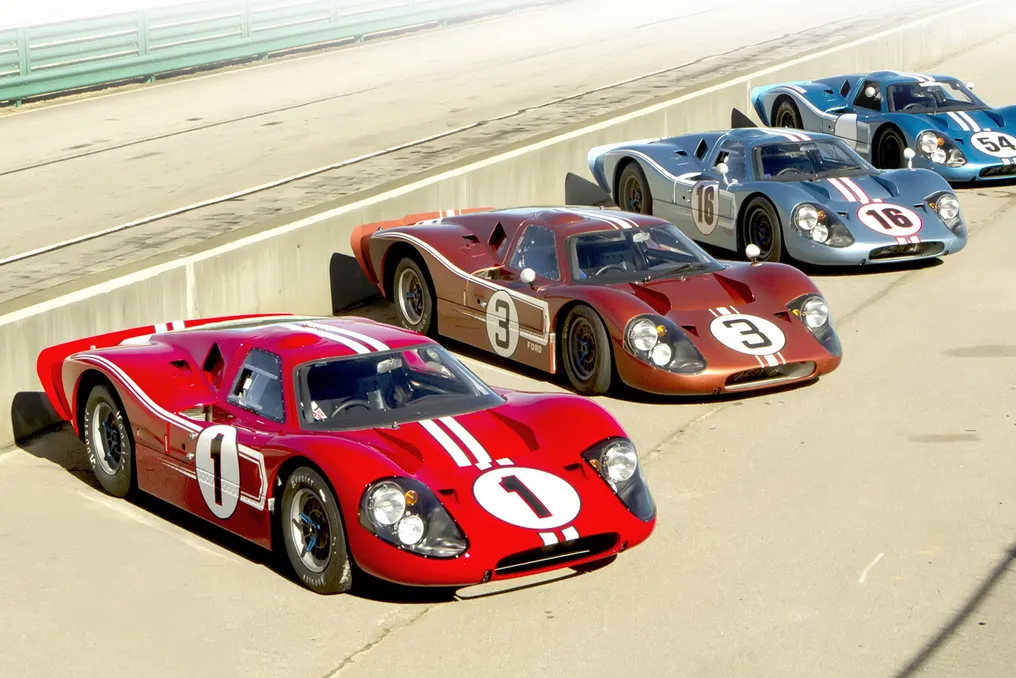
The provided text does not contain journalistic information about the Kar-Kraft workshop, but rather an invitation to become a member of the Flatout family, offering unlimited access to in-depth and true content, in contrast to sensationalist journalism.
By signing up as a subscriber, the reader gains full access to quality material, avoiding superficial or exaggerated reports. To decide if it is worth it, it is suggested to check testimonials from other subscribers, free samples, and the additional benefits available when joining Flatouter.
This specific content is restricted, possibly exclusive to subscribers or only available after exhausting the limit of free articles set for the current month.
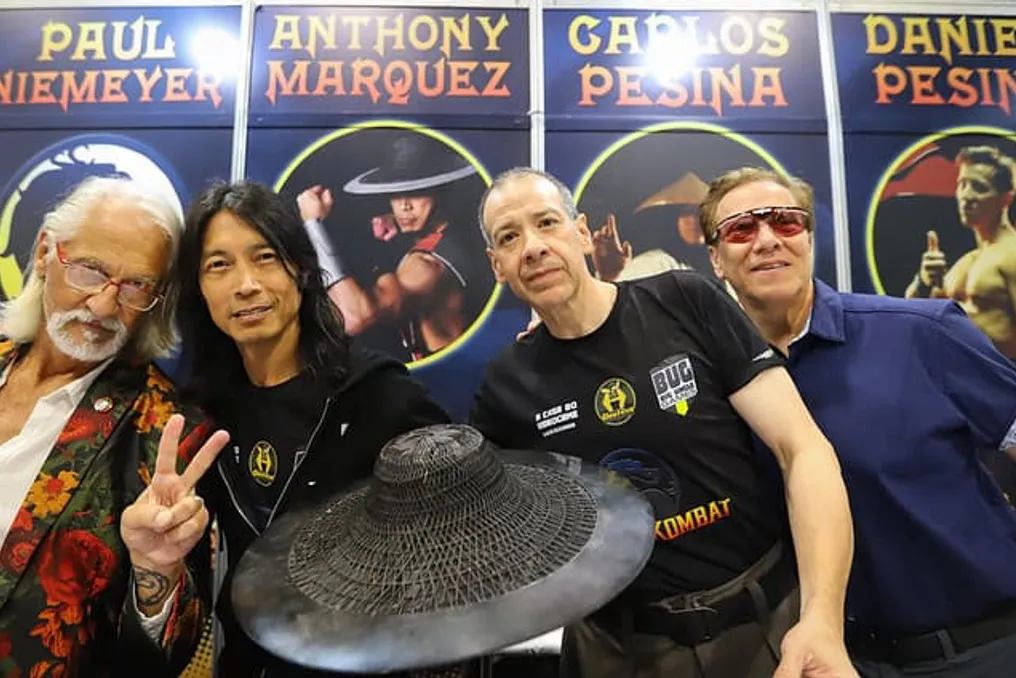
Retrocon 2026, held from July 24th to 26th at the Expo Center Transamérica in São Paulo, gathered key figures in the creation of Mortal Kombat. Present were actors Daniel Pesina, Carlos Pesina, and Anthony Marquez, who portrayed iconic characters such as Scorpion, Sub-Zero, Raiden, and Kung Lao in the first two titles of the franchise, alongside designer Paul Niemeyer, creator of the series' classic logo. The portal Olhar Digital conducted interviews with these four professionals.
This fourth edition of Retrocon, highlighted as Brazil's largest retro gaming fair, occupied the pavilions of the Expo Center Transamérica. The event offered a vast program that included original arcades and pinball machines, video games connected to tube televisions, competitions, historical exhibitions on consoles, a space dedicated to content creators, in addition to shops, booths, and a selection of Brazilian indie games, including national retro gaming titles.
Mortal Kombat, a franchise over thirty years old, continues to captivate new generations, which was evident during Retrocon. The guests interacted with fans, participated in photo sessions, and became main attractions. Carlos Pesina, the actor who played Raiden in the first two games, recounted the experience, saying it is 'marvelous, it's also a bit overwhelming because they are very... we had never been to Brazil, at least Tony Anthony Marquez and I, the original Kung Lao.'
Carlos added that it is gratifying to see the impact they have had on people, stating: 'But it is wonderful to see everyone, to see the lives we have touched. It humbles us, in a good way, and we are very grateful to have such fans. Sometimes it feels like I'm a huge superstar because I can't go anywhere without someone coming to talk to me. But it is wonderful and emotional at the same time.'
Anthony Marquez, the original interpreter of Kung Lao, described his feeling similarly. He mentioned that he has trained in martial arts since childhood with the other actors, and that the creation of Mortal Kombat was a natural consequence of this friendship. 'I love Brazil. Mortal Kombat fans are truly passionate about it, and I am very grateful that after 35 years, they continue to keep this memory alive,' he declared.
Currently, Anthony teaches martial arts at EKF Martial Arts, his academy located in Chicago, United States.
Daniel Pesina, who has the most roles in the franchise, having conceived Scorpion and Sub-Zero and acted as Johnny Cage, Reptile, Smoke, and Noob Saibot in the first two games, stated that the greatest gift of Mortal Kombat was not fame, but the encounters. He commented: 'What this game allowed me to do was come to places like here, in São Paulo, and meet in person friends I only knew through social media. Now I can come here and really meet them.'
Paul Niemeyer, the designer responsible for the final art of the logo and the visual identity of the original 1992 arcade, while working as a freelancer for Bally/Midway, detailed the origin of the Mortal Kombat symbol. He explained that, contrary to what many imagine, there was no divine intervention, but rather an extremely tight deadline. 'I had three hours and they gave me a quick sketch, and I transformed it. Then I passed it to hand calligraphy. And since I only had three weeks to do everything, a lot of things were like Yoda: don't think, just do. And I really think that is the secret to the success of the entire game.'
Paul also described the producer's trust in approving the art: 'When I finished, I took the material to them, and they simply sent it straight to the printer. They hadn't even seen the A I file I was going to deliver. They trusted it would be good. It was like crossing decades.'
However, the narrative took a more difficult turn. Paul revealed that initially, Midway did not believe in the game's potential and hired him as a freelancer just to solve the issue. 'They thought the game would be a failure. That's why they called a freelancer, just to get it out of their way. I was that freelancer,' he said. However, after the launch, the game was a massive success, generating a new conflict: 'Because the guy who made the most valuable art the company ever had was never an employee, and had rights to it.'
According to Paul, instead of recognition, the company threatened him with a lawsuit and sidelined him. 'I disappeared for 27 years, at least within the Mortal Kombat universe. About seven years ago, I was rediscovered by accident, and that's it: now everyone knows who I am.' He admitted that the first two years after realizing the value of what he had created, without receiving payment or credit, were challenging. Despite this, he guaranteed that the lack of credit did not impact his career in other areas outside of gaming, joking that 'This is just a bonus round,' before thanking Brazil for the chance to share his story.
} , 3.Disney announced that it is analyzing the implementation of a free option for Disney+, which would include advertising. This possibility was communicated by the company's CEO, Josh D’Amaro, during an earnings conference call held this Wednesday (05).
This proposal is part of the company's corporate strategy aimed at attracting consumers who are more sensitive to price issues and consequently increasing the user base of the streaming service. However, D’Amaro clarified that there is no set date yet for the launch of this initiative.
The debate takes place in a context of intense competition in the digital entertainment market, where paid services compete with free alternatives, such as YouTube, which has been seeking to resemble traditional television models.
When presenting the results to investors, D’Amaro detailed that the company is considering a no-cost modality for consumers. If this initiative is implemented, it would serve as an initial access point for individuals who are not currently subscribers to the paid service.
The executive justified that the idea aims to reach a niche audience for whom value is a determining factor in choosing a platform. Despite this, Disney emphasized that no specific details were provided regarding the format, availability, or timeline of the free version.
This discussion about a free version had already occurred internally before the public announcement. In July, Business Insider reported that Adam Smith, Disney's product and technology director, had mentioned this alternative during an internal meeting of the organization.
This move occurs while major streaming companies face growing competition from open platforms. YouTube, for example, has incorporated features that bring its experience closer to television, such as channels with uninterrupted programming and tools to organize creator content into seasons.
Additionally, Disney plans to expand the role of Disney Plus within its digital ecosystem next year. The company informed that the service will integrate experiences related to games, products, subscriber benefits, exclusive content, and greater personalization capacity.
Another action announced by the company involves a collaboration with TikTok, aiming to make fan-generated content from franchises like Disney, Marvel, Star Wars, and Pixar available on the streaming platform.