In her column, Tracy shares lessons and experiences she learned while balancing life with two sons.
In her column, Tracy shares lessons and experiences she learned while balancing life with two sons.
Initially, Tracy thought she would never be one of those mothers who panic to finish school assignments the night before the deadline, desperately searching for long-lost glue sticks or rummaging through the trash can late in the evening to find one more cardboard box.
However, her idea of organization crumbled. It all started quite innocently on a Monday evening during dinner when her seven-year-old son announced, 'Mommy, we have a project that needs to be turned in on Wednesday.'
Tracy initially took it as an easy task when she learned they needed to draw an animal, but then it turned out it had to be colored using recycled materials.
She noted that her older son, like herself, is a determined person striving to do everything well. While her son suggested ideas, her mind calculated the logistics: when could they do it?
As a journalist, Tracy explained that her work schedule was irregular, and between deadlines, trips to school, and swimming, there was only one evening left to create this masterpiece.
The next day, she picked up her son from after-school care to gather materials. When she asked what he had collected, he replied that nothing. Then they went to his mother's, where they managed to find various recyclable items in cabinets and drawers.
After collecting the 'treasures'—plastics, paper, wool, toothpicks, leaves, twigs, and parts of a plastic plant—the drawing phase began. Her son stated that he wanted to depict a fish resembling a South African mullet, which was too complex a task for a second-grade project due the next day.
After long negotiations, comparable to a UN summit, they reached a compromise and decided to make a bubble fish, a simpler and more reasonable option. Then the main work began: leaves became fins, twigs became seaweed, and wool became the ocean.
Watching him carefully glue each detail, Tracy realized that the essence was not in the fish itself or the grades, but in problem-solving, creativity, and the opportunity to spend unplanned time together.
Although she admitted she would prefer to receive advance notice, she decided she would ask about projects every Monday throughout the school year. Despite the project being imperfect, and the living room resembling the site of an art workshop explosion, she understood that the best memories are often born amidst chaos.
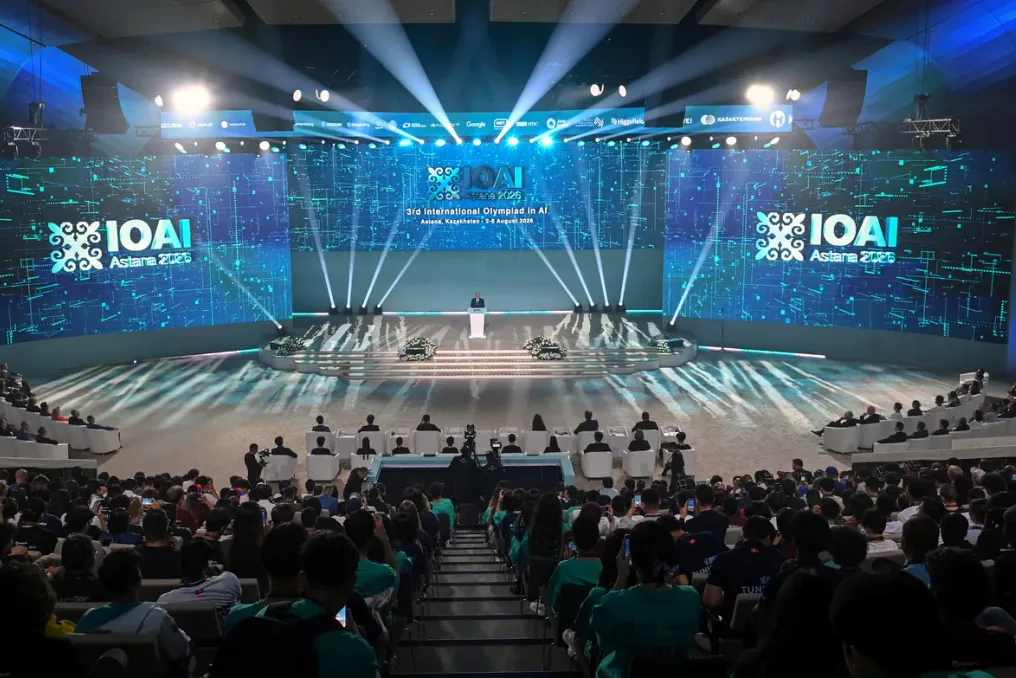
The capital of Kazakhstan, Astana, is hosting the III International Olympiad on Artificial Intelligence (IOAI) from August 2 to August 8. The event will bring together over 500 schoolchildren from 106 countries worldwide. This Olympiad is one of the largest international events for students dedicated to artificial intelligence, machine learning, and robotics.
Participants demonstrate their knowledge and practical skills in creating artificial intelligence models, solving complex engineering problems, and programming autonomous robotic systems.
The President of Kazakhstan, Kassym-Jomart Tokayev, participated in the opening ceremony. He emphasized that hosting such a global competition reflects the country's aspiration to build a digital economy and develop high technologies. According to the president, Kazakhstan is consistently implementing its digital transformation strategy, creating a modern innovative ecosystem where artificial intelligence plays a central role in public administration, economic growth, and business.
Tokayev noted that Kazakhstan ranks 24th out of 193 countries in the UN E-Government Development Index and is a leader in Central Asia in terms of readiness to adopt advanced digital technologies. He also highlighted the development of human capital, mentioning that the Kazakh team won three gold, one silver, and three bronze medals at last year's International Olympiad on Artificial Intelligence in Beijing.
The President stated: "Knowledge has always united people and moved humanity forward. Perhaps it is here that ideas and projects capable of changing the world for the better are born."
The International Olympiad on Artificial Intelligence is a relatively new but already well-established global educational initiative. It brings together talented schoolchildren, researchers, educators, and leading experts in the field of AI. Unlike traditional programming contests, the IOAI focuses on solving practical problems closely related to the real challenges of the modern digital economy.
Participants work with machine learning algorithms, computer vision, data analysis, and neural networks, developing intelligent models and programming autonomous robots. The goal of the competition is to assess not only theoretical knowledge but also the ability to apply it to create innovative technological solutions.
Artificial Intelligence as the Driving Force of the Global Economy
This event demonstrates the growing global significance of artificial intelligence as one of the defining technologies of the 21st century. AI-based solutions are increasingly being implemented in fields such as industry, healthcare, education, finance, transport, agriculture, environmental protection, and public administration. According to international analysts, in the coming years, AI technologies will occupy a significant share of the global economy, and the demand for AI specialists will continue to grow rapidly. As a result, many states are investing in developing youth digital skills, expanding educational programs, and supporting emerging researchers.
In addition to the competition itself, the Olympiad serves as a platform for knowledge exchange among participants, teachers, researchers, and representatives of the high-tech industry. The opening ceremony was attended by executives from Sinovation Ventures and 01.ai, Kai-Fu Lee, Chair of the International Olympiad on Artificial Intelligence Council, Elena Marinova, President of the Kazakhstan Sports Programming Federation, Bagdat Mussin, co-founder of Kaspi.kz, Mikhail Lomtadze, and CEO of Freedom Holding Corp., Timur Tyurlov. During the event, Tokayev familiarized himself with the structure of the Olympiad, the competition tasks, and demonstrations of autonomous robotic systems.
The III International Olympiad on Artificial Intelligence underscores Kazakhstan's ambitions to become one of the leading centers of digital technology and innovation in Eurasia. Organizers note that holding this global competition promotes international scientific cooperation, advances engineering education, and helps shape a new generation of specialists who will define technological progress in the coming decades. The organizers also emphasized that artificial intelligence has ceased to be a technology of the future, becoming a key factor in national competitiveness. In this context, the International Olympiad on Artificial Intelligence not only identifies talented young developers but also contributes to the creation of a global community of future leaders of the digital age.
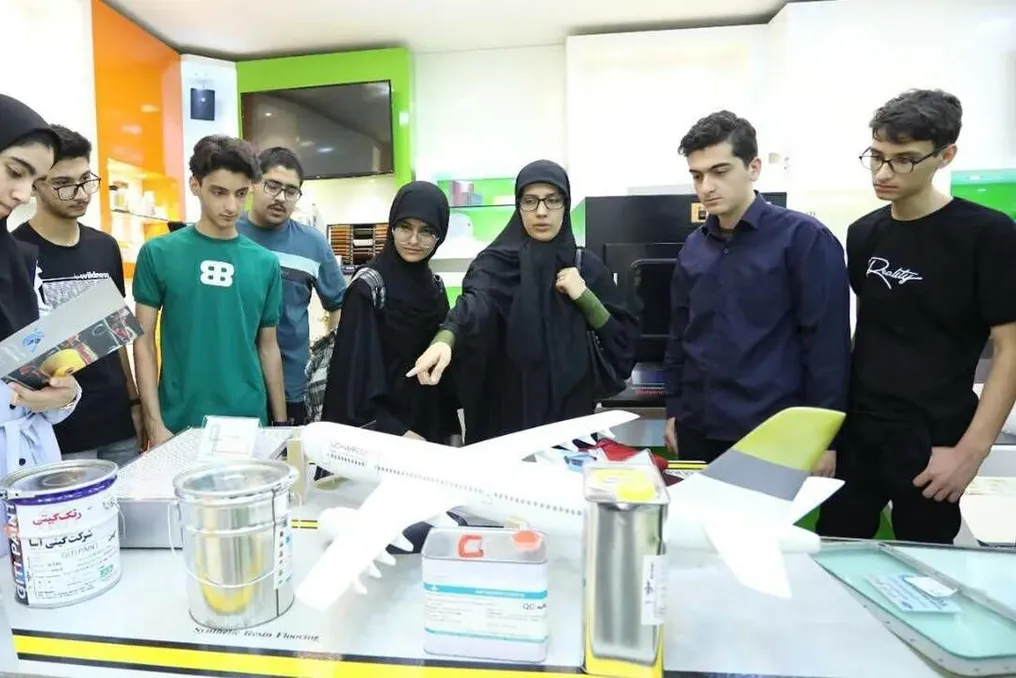
The fifth summer training program in nanotechnology has started in Tehran, aimed at enhancing specialized knowledge and supporting researchers. The event began on July 23rd and is scheduled to last for two months. According to nano.ir, the school's goal is to expand modern educational approaches, promote technologies, train qualified personnel, and facilitate effective interaction between universities, industry, and technology centers.
The summer school program includes over 40 specialized training courses and 10 scientific webinars led by renowned university professors, lecturers, and experts in nanotechnology. The curriculum covers a wide range of current topics in nanotechnology, allowing participants to study the latest scientific and technological achievements, innovations, new technologies, industrial applications of nanotechnology, as well as entrepreneurship.
Over the past four years, the nanotechnology summer school has been highly sought after by both Iranian and international students. To date, more than 4000 students have benefited from the various educational programs offered by the school, including over 50 international participants.
The development of the nanotechnology sector in the country demonstrates more than just scientific achievements, given the presence of over 430 companies operating in this field and more than 1960 nanotechnology products that have received nano-level certification. As reported by IRNA, the development of nanotechnology in Iran is measured not only by scientific rankings and published articles but also by the products that have been manufactured and implemented in the industry and market.
The total sales volume of these products exceeds 970 trillion rials (approximately 554 million dollars), indicating the transformation of scientific achievements into economic and industrial potential. Nanotechnology in the country is an example of successful development of a technological ecosystem, as a long-term roadmap was developed from the outset to strengthen all aspects of the technological development chain—from education and research to commercialization and market development.
The role of the Nanotechnology Headquarters in recent years has not been limited to macroeconomic planning; it has also included facilitating coordination among universities, research institutes, industry, knowledge-based companies, and supporting institutions. Factors contributing to the transition of nanotechnology from laboratories to industries in the country include the creation of a strategic network of technological laboratories, the development of standards for evaluating nanoproducts, startup support, and the design of industrial programs.
In the past Iranian calendar year (March 2025 – March 2026), approximately 230 products received nano-level certification, exceeding the target by 40 units. Last year, the Vice Presidency for Science, Technology, and Knowledge-Based Economy, and the Nanotechnology Headquarters planned to obtain nano-level certifications for 190 products (one product per working day). The total number of nanotechnology products with nano-level certification increased to 1965, according to IRNA.
The highest number of products receiving nano-level certification was registered in the provinces of Tehran, Fars, and Mazandaran, with 64, 48, and 24 respectively. The next most populous provinces were Zanjan (32 products), Kohgiluyeh and Boyer-Ahmad (17), Markazi (16), Qazvin (11), and Isfahan (7).
Among the 230 products, industrial supplies accounted for the largest share with 72 products. The energy, oil, and related sectors comprised 41 products, the chemical industry accounted for 36, and pharmaceuticals and healthcare accounted for 26 products.
The Nanotechnology Headquarters supported the promotion of 20 nanotechnology inventions in the country, which accounts for 19 percent of the total registered inventions in 2024. Over the past year, 33 nanotechnology plans were approved, resulting in contracts for 23, according to ISNA.
The Headquarters intends to identify, evaluate, and support innovative ideas to strengthen business in the nanotechnology sector.
During the Iranian year ending in March 2025, the total number of nanotechnology products certified at the nano-level by the Iranian Nanotechnology Innovation Council reached 1735, and they were commercialized by 201 companies. The total revenue from the sale of these products in the Iranian year 1403 (March 2024 – March 2025) reached 973 trillion rials (nearly 506 million dollars), which is 57 percent higher compared to the previous year and 72 percent higher than 200 trillion rials ($104 million) over the last four years. This growth is approximately 31 percent above the country's average annual inflation rate, noted Emad Ahmadvand, Secretary of the Iranian Nanotechnology Innovation Council Headquarters.
This official made these statements during a meeting with journalists at the 16th Iranian Nanotechnology Exhibition, held in Tehran from November 2 to 5, 2025. He also added that the export of these nanoproducts accounts for 10 percent of sales, equivalent to approximately 183 million dollars.