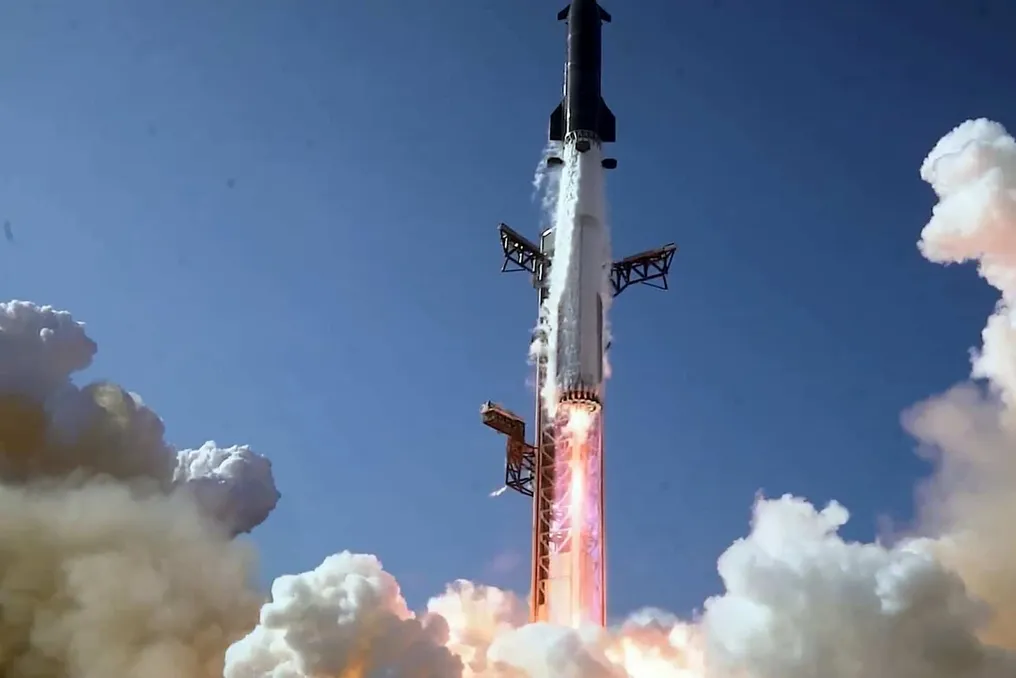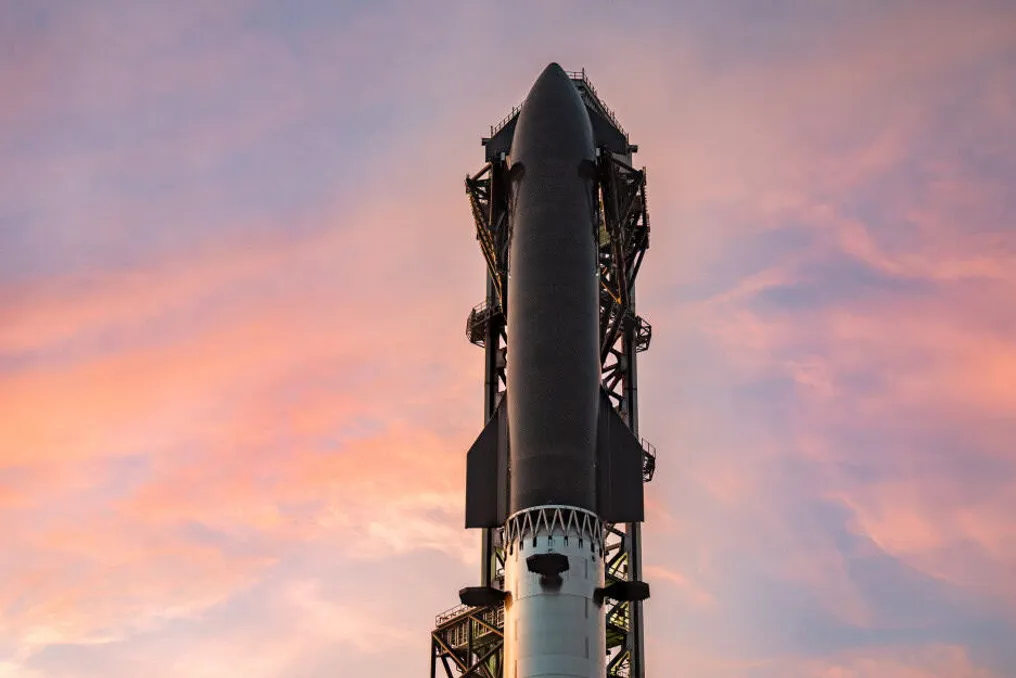
SpaceX is at a critical juncture to convert its space aspirations into tangible growth, with the performance of the Starship rocket considered fundamental for Elon Musk's company's upcoming endeavors.
After going public this year, the company saw a drop in its stock price following the release of its first quarterly report as a public entity. Investors expressed apprehension due to the high investments made, despite management maintaining a very aggressive expansion forecast.
The main challenge lies in developing a vehicle capable of transporting substantially larger payloads at costs much lower than current systems. Without the success of Starship, projects related to new satellites, space artificial intelligence, and the expansion of the Starlink network risk being hampered.
Historically, SpaceX's trajectory has been built primarily by the Falcon 9, the rocket responsible for over a decade of launches and a constantly increasing operational frequency. In 2025, the company conducted 165 missions with this model, performing nearly one launch every two days.
However, the capacity of the Falcon 9 has begun to be perceived as insufficient given the corporation's new objectives. This equipment can carry about 23 tons to low Earth orbit, while the next generation of projects demands vehicles capable of transporting considerably greater volumes.
Starship was specifically designed to meet this need. With an estimated capacity of 100 tons, which is approximately four times more than the Falcon 9, the rocket would enable the launch of more advanced and larger satellites, including future versions of the equipment used in the Starlink internet service.
Currently, satellite operations constitute SpaceX's largest source of revenue. In the second quarter, Starlink generated revenue of US$ 4.29 billion, representing an increase of approximately 66% compared to the same period last year.
Beyond expanding satellite connectivity, the company associates Starship with an even bolder goal: placing a large quantity of AI-equipped satellites into orbit. This initiative would depend on much lower launch costs than current ones, given the mass of the required devices.
Analyses by MoffettNathanson specialists suggest that about 143 development-phase Starship missions would be necessary to place into space a computational capacity equivalent to a large terrestrial artificial intelligence center, with a power output of approximately one gigawatt.
The reduction in costs is intrinsically linked to the rocket's ability for full reusability. Unlike the Falcon 9, which only reuses the first stage, Starship was designed to recover both the propellant and the second section of the vehicle.
Evercore ISI analysts estimated that the cost of transporting cargo with the Falcon 9 reaches about US$ 2,700 per kilogram sent to orbit, while Starship has the potential to reduce this value to approximately US$ 185 per kilogram, provided the project achieves the expected performance.
Even after a 22% decline in shares since the start of trading, SpaceX maintains a high valuation, corresponding to about 28 times its projected future revenue. This level surpasses several established technology companies and significantly exceeds the Nasdaq index average.
In dialogue with analysts, Elon Musk stated that the company aims to drastically expand its space transport capacity. The executive affirmed that the goal is to raise the annual transport capacity from about 2,500 tons, achieved by Falcon rockets, to over one million tons with Starship, with the possibility of reaching ten million tons later on.
However, the development of the new rocket still faces hurdles. Although SpaceX has accumulated hundreds of successful launches with the Falcon 9, the Starship program started more turbulently, with five of the 13 flights conducted showing failures or relevant problems during testing.
The company has registered recent progress, including two successful Starship launches in the same year, although it has not yet managed to recover and reuse the boosters. New missions were scheduled for the subsequent months.
Therefore, SpaceX's future is directly tied to its ability to consolidate Starship as a reliable operational platform. If the project achieves the expected results, the company can increase its presence in the space sector; otherwise, its biggest bets will remain limited by the capacity of current rockets.