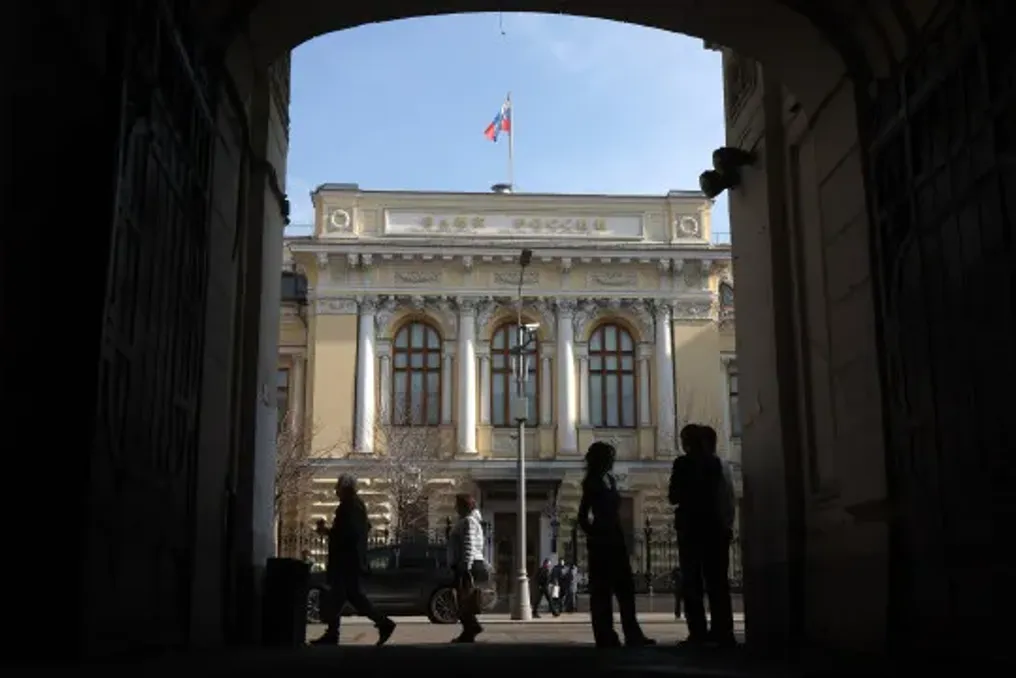
The Russian Central Bank has adjusted its economic growth forecasts, indicating that the Gross Domestic Product (GDP) will grow 0.1 percentage point below the estimate presented in April. The Russian regulator predicts that the national economy will register 0.5% growth during the third quarter.
However, the GDP growth projection for 2026 was reduced by 0.5 percentage points, now projected between 0% and 1%. This reduction is due, among other reasons, to the temporary decrease in productive capacity in certain segments of the economy. This occurs amid the fuel shortage crisis in the country, caused by Ukrainian attacks on oil infrastructure.
According to the regulator, current indicators point to a contraction in economic activity as early as July. Looking ahead, the Bank of Russia anticipates a gradual stabilization of the fuel market and a moderation in consumer price increases, while maintaining the current monetary policy with an interest rate of 14%.
Additionally, the bank calculated that inflation will remain between 6% and 7% until the end of the second quarter of 2026, after having shown acceleration in June and July, reaching the target of 5.9%.
The newspaper Kommersant reported a weak situation in both domestic demand and industrial production in the country, whose economy relies almost entirely on domestic orders, most of which are linked to the military sector given the current circumstances.
In mid-July, the Kremlin (the Russian presidency) refuted the idea that the country was undergoing an economic crisis, despite the contraction observed in the first months of the year. This denial led the Government to revise its growth expectation for the current year downwards, from 1.3% to 0.4%.
The budget deficit in the first half of the year reached 5.731 billion rubles (equivalent to 75.502 billion dollars or 66 billion euros), representing 2.5% of GDP, more than double what was recorded in the same period last year.
While economic authorities seek to manage the situation, the Kremlin prioritizes military spending and remains firm in its demands to Kyiv, after more than four years of war in Ukraine without significant advances on the battlefield.
In recent months, the United States suspended certain sanctions imposed on Russian oil following the invasion of Ukraine, which began in February 2022. This suspension aimed to control the rise in barrel prices driven by the conflict initiated on February 28 by the United States and Israel against Iran, which drew criticism from Ukraine and its European partners, who warned of the risk of the Kremlin increasing funding for its war effort amidst economic difficulties.
However, the US Congress is evaluating new restrictions against Russia focused on the hydrocarbon sector, proposing tariffs of up to 500% on its sales. The bill, named after Republican Senator Lindsey Graham, a supporter of Kyiv who recently passed away, also grants the US President the power to impose secondary tariffs of up to 100% on the largest buyers of Russian oil, including China and India.
The United States pioneered the imposition of sanctions on Moscow after the invasion of Ukraine, but Washington's stance changed with Donald Trump's return to the White House leadership in January 2025, seeking, without success so far, to mediate the conflict.
Meanwhile, the European Union continues to update penalties against Russia, having approved its twenty-first package of restrictions in July, alongside financial and military support offered to Kyiv.