
Staying updated with the latest fashion trends can sometimes require sacrifices to health and comfort for the sake of style. Contemporary trends, such as oppressive corsets, delicate shoes, and gigantic bags, have caused suffering to those who wear them. However, these are considered harmless when compared to several more dangerous fleeting fashions from history, some of which were lethal.
The invention of the stiletto heel in the 1950s generated divergent opinions. While for some women it represented a symbol of empowerment and femininity, with many valuing the added height, others found the stiletto heel uncomfortable to walk in. Concerns about the potential damage caused by these shoes thus arose.
In 1953, the British photojournalism magazine Picture Post published an article titled 'The Risks of the Stiletto Heel,' reporting doctors' fears about the imminent dangers of wearing these shoes, ranging from ankle sprains to fractures. Decades later, apprehensions about the harmful effects of high-heeled shoes persist, as studies have proven a direct link between wearing high heels and musculoskeletal injuries.
Furthermore, the use of stiletto heels is not limited to physical damage; in 2016, the newspaper The Telegraph reported that these heels were used as weapons in hundreds of assaults. A notorious case occurred in 2013, when American citizen Ana Trujillo, known as the 'Stiletto Killer,' was sentenced to life imprisonment for stabbing her boyfriend 25 times with a blue suede stiletto shoe.
The corset has a long and often controversial trajectory, dating back centuries. Since the 16th century, this intimate garment was made with whalebone and sometimes steel, used to shape the waist. However, over time, concerns grew about the possible harm resulting from wearing corsets, particularly due to the practice of 'tight lacing.'
One example is the book published in 1793 by the German physician and anatomist Samuel Thomas von Sömmerring, where he expressed his worries about the prolonged use of tight corsets. In this work, Von Sömmerring argued that such practice could compress internal organs and ribs, resulting in thoracic cage deformities. Later, in June 1890, the medical journal The Lancet published an article detailing the devastating effects of excessively tight corsets, including rib fractures, organ damage, respiratory problems, deformities, and even death.
Although the trend of wearing tight corsets has decreased, doubts remain about the impacts that more modern versions, such as shapewear, may have on the body. Research has indicated that wearing restrictive garments, such as shapewear, can negatively affect respiratory capacity.
During the Victorian era, a fatal trend emerged related to a specific shade of emerald green, which became popular in fabrics, decorative items, and fashion. Due to the difficulty in producing this vibrant and desired hue, Victorian seamstresses used a specific dye called Scheele's green, which was rich in arsenic. The public was unaware of the risks of these arsenic-laden dresses until the renowned chemist A. W. Hoffman published the article 'The Dance of Death' in 1862, exposing the dangerous toxicity of the green dye. The following week, the popular British satirical magazine Punch published a caricature titled 'The Arsenic Waltz,' depicting a skeleton in a ball gown. The lethal effects of these dresses included ulcers, organ failure, and ultimately, death. Young women who made such dresses in factories also exhibited symptoms such as open wounds, convulsions, vomiting, and even death.
Queen Elizabeth I was recognized for her porcelain complexion, seen as an emblem of beauty and status at the time. However, the makeup used by Queen Elizabeth I to achieve this look also served as a cover for smallpox scars on her skin. The monarch achieved her paleness through the use of Venetian ceruse, a lead-based makeup believed to be the cause of her death. Recent research revealed that Queen Elizabeth I's white makeup was actually a mixture of lead and white vinegar, which would facilitate the absorption of lead into the body in greater quantities than in other formulations of Venetian ceruse.
Like many other fashions, lead-based makeup has a long history. The Egyptian queen Cleopatra used a lead-based kohl eyeliner, which, according to more recent analyses, might have actually prevented illnesses.
Hair, often a fashion symbol, has also been the scene of various toxic trends over the years. For example, the Pompadour hairstyle of the 1900s, named after the 18th-century French courtesan Madame de Pompadour, achieved its volume using toxic lead pomades that were fashionable. The early 20th century also saw an unusual and dangerous trend of products containing radium, including radioactive tonics and hair oils. Some products claimed that radioactivity would aid hair growth and cure dandruff. On occasion, radium was applied to the hair with a brush to give it shine in the dark. However, prolonged exposure to radium caused numerous adverse effects, affecting bones and blood, even years after use.
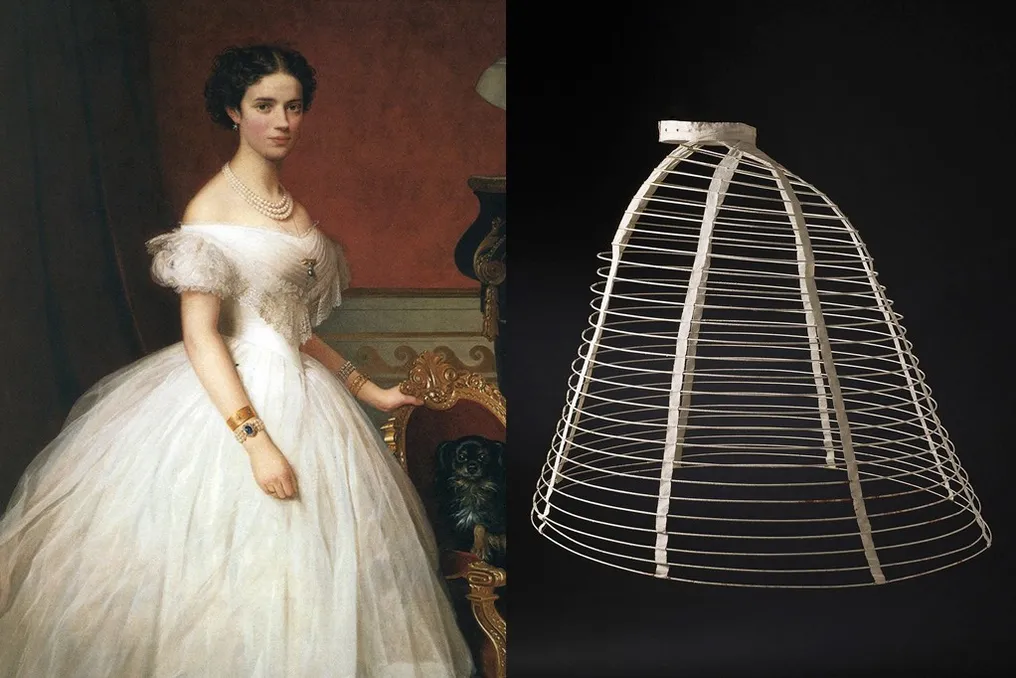
In 1871, two sisters of Oscar Wilde attended a Halloween party in Ireland. Dressed in the latest fashions, they wore voluminous crinoline skirts. However, during the dance, their large skirts caught fire upon contact with the flame of a candle, resulting in the loss of both their lives. Their tragic story was not isolated; during the Victorian era, it is estimated that over 3,000 women met the same fate. The crinoline was valued for its lightness and mobility, but it was heavy and extremely flammable. In 1858, the New York Times recorded an average of three deaths per week, classifying the crinoline as one of the most dangerous fashions in history.
Just as fashion trends evolve, the risks associated with their use also change. One can consider oneself luckier than ancestors, as current fashions are largely less lethal than many of the past ones.