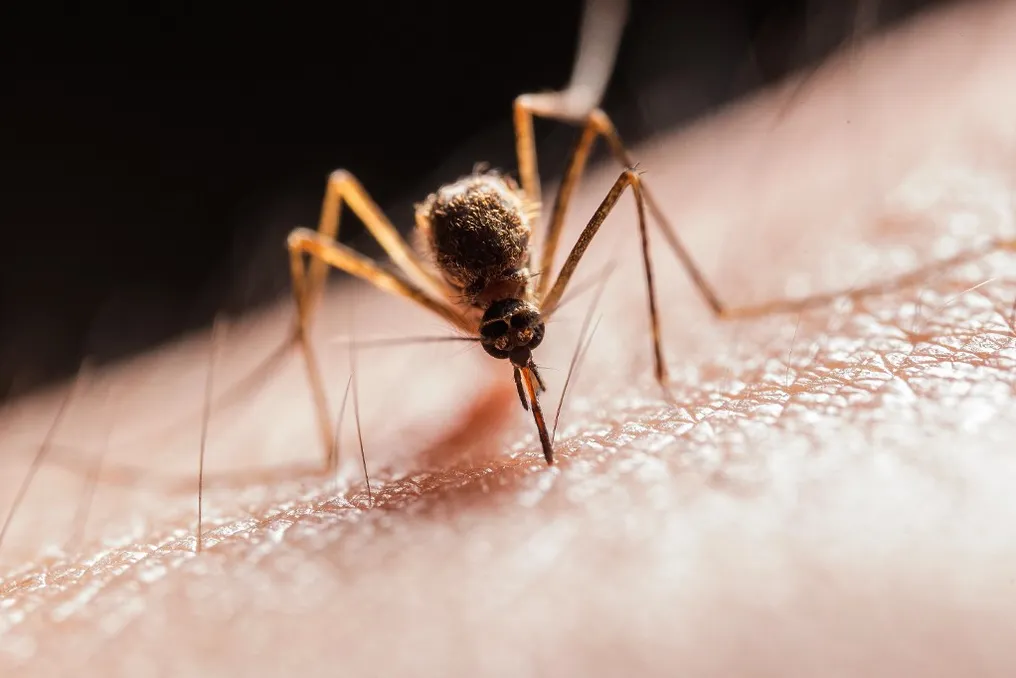
The popular belief that certain people attract more mosquitoes, often associated with the idea of having sweet blood, is a myth. Science indicates that insect attraction is linked to odors released by the skin.
The popular belief that certain people attract more mosquitoes, often associated with the idea of having sweet blood, is a myth. Science indicates that insect attraction is linked to odors released by the skin.
To date, defining which variations in body odor affect mosquito attraction has been challenging due to the complex composition of human odor. This odor results from the transformation of odorless secretions from the skin into gases known as volatile organic compounds (VOCs), aided by bacteria from the cutaneous microbiome. There are about a thousand of these compounds on human skin, which complicates the exact correlation between chemical substances and specific odors, not to mention the 3,600 known species of mosquitoes, which may have distinct olfactory preferences.
However, a new experiment provided new clues. Researchers from Florida International University (FIU) selected 119 volunteers from Miami and asked each one to place their arm in an olfactometer. At the tip of this device, three species of mosquitoes were introduced to determine who they would be attracted to.
The species used in the study included Aedes aegypti, known for transmitting viruses such as dengue, zika, chikungunya, and urban yellow fever; Aedes albopictus, a less common relative capable of transmitting the same viruses and causing Japanese encephalitis; and Culex quinquefasciatus, nicknamed the gadfly or muriçoca, which frequently bites in indoor nighttime environments and can be a vector for lymphatic filariasis.
The authors observed unique characteristics in each mosquito, noticing that each tended to prefer a different group of individuals. Specifically, Aedes aegypti showed a slight predilection for men over women, while the other two species did not show sex-based preference. Furthermore, being attractive to one mosquito did not guarantee that the person was consistently attractive to all three species, as some volunteers did not attract the attention of any or only one of the mosquitoes.
The results were published in detail in the journal iScience. By looking for similarities among individuals who attracted the same combination of mosquitoes, researchers investigated the skin microbiome of the participants—the community of bacteria, fungi, and viruses present on the skin surface. 246 distinct bacteria were identified, three of which were present in most participants.
The authors explained in the article that in the species Aedes aegypti, Aedes albopictus, and Culex quinquefasciatus, three central bacteria common to participants who attracted many mosquitoes were detected, and these were not found in the central microbiomes of those who attracted few. These bacteria, namely Co. kefirresidentii, Cu. granulosum, and Staphylococcus epidermidis, may serve as a signal to mosquitoes indicating the presence of an attractive host. It is important to note that these bacteria are part of the natural skin microbiome.
Additionally, researchers discovered that both Aedes aegypti and Culex quinquefasciatus seemed to be attracted to individuals who presented low levels of volatile compounds (VOCs), suggesting that these mosquitoes may avoid certain VOCs when deciding where to land. The authors emphasize that, although previous studies have compared the attractiveness of different mosquito species, the cross-comparison of attraction rates of multiple species by the cutaneous microbiomes of specific individuals had not yet been conducted, according to them.
Despite the findings, there is still much to learn about which types of odoriferous compounds and bacteria contribute to mosquito attraction. Knowledge like this could, for example, enable the development of specialized repellents capable of driving away insects or even the modification of the cutaneous microbiome to make it less inviting to mosquitoes.
The U.S. Food and Drug Administration (USFDA) has issued a warning letter to the major Indian Fast-Moving Consumer Goods (FMCG) manufacturer Dabur India, citing serious violations of Good Manufacturing Practices (CGMP) at the company's pharmaceutical manufacturing facility in Silvassa.
This letter followed an inspection conducted by the U.S. health regulator at the Dabur facility in Silvassa, as well as in the regions of Dadra and Nagar Haveli and Madhva and Diu, which took place from January to December 2026. In a letter dated July 24, 2027, addressed to Dabur India's CEO Mohit Malhotra, the USFDA highlighted issues with data integrity, inadequate quality control, and improper manufacturing procedures.
According to the USFDA, the facility's methods, controls, and manufacturing practices did not comply with CGMP requirements, leading to products being deemed 'adulterated' under the U.S. Federal Food, Drug, and Cosmetic Act. Among the most serious findings, the USFDA investigator determined that the equipment usage log provided by the company for the production line was falsified, as the version submitted to the inspector intentionally omitted certain over-the-counter products sold in the U.S. that were present in the original log found later in the documentation department.
The regulator also noted deficiencies in laboratory control, stating that analytical records were incomplete, and working notebooks and data sheets confirming testing procedures for several batches of medicines intended for the U.S. market were missing. Furthermore, it was observed that microbiological test records were incomplete, and equipment usage was not properly documented.
Moreover, the USFDA discovered that the cleaning validation program for the company's shared production equipment was insufficient and relied heavily on visual inspection, lacking scientifically sound cross-contamination limits or quantitative residue testing. The regulator also noted that Dabur did not conduct process validation for most over-the-counter products manufactured at this site, raising concerns about the ability of the manufacturing processes to consistently ensure product quality.
Although Dabur responded to the USFDA's observations, acknowledging shortcomings and promising corrective actions, including staff retraining, revision of documentation practices, and improvement of the cleaning validation program, the regulator deemed this response 'inadequate' across the board because it failed to address the systemic nature of the quality and data integrity problems.
The USFDA reported holding a teleconference with the company on May 13, 2026, recommending the withdrawal of certain batches from the U.S. market. Subsequently, Dabur voluntarily recalled some products on June 2, 2026, although the regulator noted that the company had not recalled all affected medicines. The USFDA placed all Dabur medicines and products from the Silvassa plant on import alert list 66-40 starting June 5, 2026, and advised the company to engage an independent CGMP consultant to conduct a comprehensive audit of its operations.
The letter stated: 'This letter notifies you of our findings and provides you with an opportunity to correct the aforementioned deficiencies. Upon receipt of this letter, you must respond to our office in writing within 15 business days, detailing what you have done to remedy any violations and prevent their recurrence. In response to this letter, you may provide additional information for our review while we continue to assess your operations and practices.' The letter also mentioned: 'If you are unable to implement corrective actions within 15 business days, state the reasons for the delay and your completion schedule.'
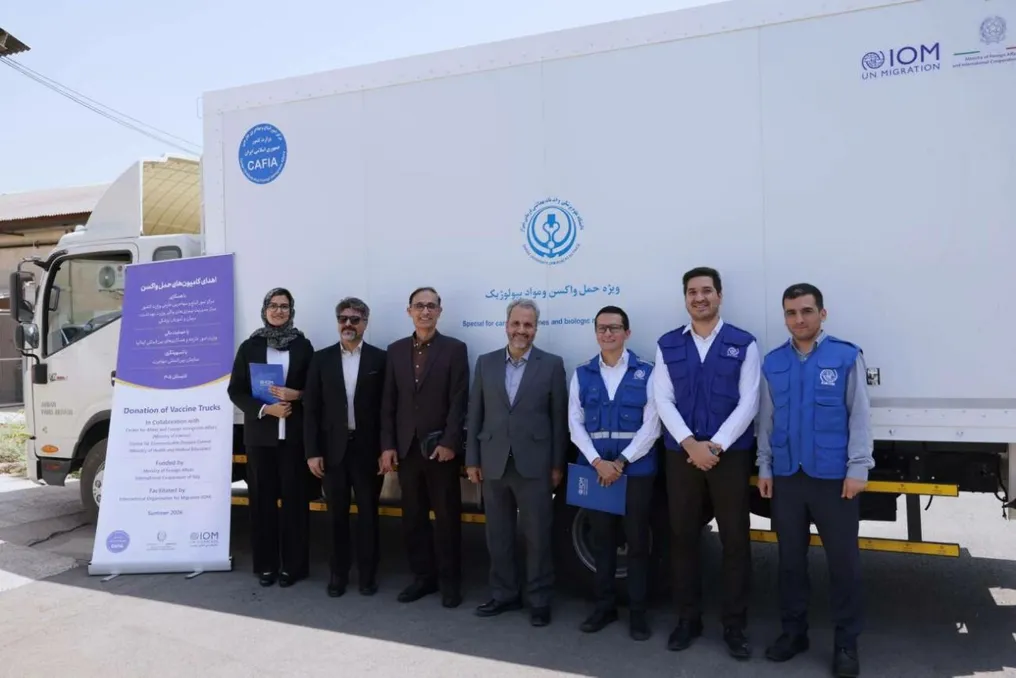
The International Organization for Migration (IOM) has provided the Ministry of Health with two refrigerated trucks capable of transporting six tons to improve immunization services for migrants and host communities in the southern and southwestern parts of the country, particularly in the provinces of Khuzestan and Fars.
This support was given in response to a request from the Center for Infectious Disease Control of the Ministry of Health and Medical Education. The transit was carried out through IOM's main governmental partner in Iran—the Center for Foreigners and Immigrants (CAFIA) of the Ministry of Interior, as announced on the UN website in Iran on August 1.
Each of these refrigerated vehicles is specially designed for the safe and timely delivery and distribution of vaccines. Equipped with a dual-mode operating system and specialized cold chain equipment, the trucks will help maintain vaccine integrity and enhance delivery to medical facilities across the country.
Salvador Gutierrez, head of the IOM mission in Iran, noted: 'Access to healthcare services, including routine immunization, remains vital for the health and well-being of communities.' He added that this aid will strengthen vaccine distribution networks, ensuring the safe and effective delivery of essential medicines to people living in remote and underserved areas.
These two trucks, intended for large-scale vaccine transport and acquired by IOM for the Ministry of Health, will be sent to regional distribution centers in the provinces of Khuzestan and Fars. This will strengthen Iran's national vaccine cold chain system. Through these centers, vaccines and biological products will be distributed to medical facilities serving populations covered by the Medical Universities of Sciences in Shiraz, Fars, Jahrom, Gorgan, Lorestan, Ahvaz, Bushehr, Abadan, Behbahān, and Dezful.
The initiative aims to benefit both migrants and host communities in urban and rural areas, paying special attention to vulnerable groups with limited access to healthcare. Strengthening vaccine distribution capacities will help improve access to immunization services and increase vaccination coverage in the communities served by these two hubs.
Iran is a country hosting one of the largest migrant populations in the region, including millions of Afghans who rely on state services alongside host communities. Maintaining sustainable healthcare systems and reliable vaccine distribution remains particularly important amid ongoing regional instability, which puts pressure on infrastructure, mobility, and basic services.
The new vehicles will help strengthen these distribution networks, supporting continuous access to essential immunization services for both migrants and host communities, while enhancing the capacity of local health systems to reach remote and hard-to-reach populations. This intervention was made possible through funding from the Italian Ministry of Foreign Affairs and International Cooperation.
Over the past four decades, Iran has been among the leading countries hosting the largest number of refugees and migrants, despite the numerous difficulties the country faces. Most of these refugees are from Afghanistan and fled their country due to wars, instability, poverty, and crises.
In 2023, the global figure for international migrants was approximately 304 million, of whom 83 million were internally displaced. According to the United Nations High Commissioner for Refugees (UNHCR), Iran hosts about 773,000 refugees holding Amaesh cards and over 2.7 million people in similar refugee situations. The total number of refugees makes Iran the second-largest host country. By accommodating more than 3.5 million refugees, Iran plays an important role in this global picture and is one of the key players in managing the migration crisis.
Interestingly, field reports and unofficial statistics claim that seven million Afghans live in the country, four million of whom are undocumented. International organizations like IOM have consistently praised Iran for providing various services, including healthcare and education, to refugees. Afghan children study in the same schools as Iranian students free of charge, whereas in other countries, refugees face serious restrictions in accessing medical and educational assistance.
Danandzaya Bhattarai, Head of the UNHCR Office in Mashhad, highly praised Iran's generosity in hosting refugees and treating them with dignity. Most Afghan refugees in Iran live in villages and cities and constantly interact with host communities.
Iran, in cooperation with international organizations, has attempted to help refugees gain opportunities for employment, vocational training, and collaboration with non-governmental organizations; this approach has transformed migrants from passive populations into active members of society.
However, Iran faces serious challenges as the international community has provided less than a third of the funding needed to address the humanitarian needs of refugees. With the start of the current Iranian year, which began on March 21, the government adopted a new policy for organizing refugees for the deportation of irregular migrants.
According to a UNHCR press release dated October 27, 2025, over 1.7 million Afghan refugees returned from Iran to Afghanistan in the first nine months of 2025. A wide range of services is also provided at the borders, especially in the eastern province of South Khorasan, the northeastern province of Khorasan Razavi, and the southeastern province of Sistan and Baluchestan. These services include establishing health camps, infectious disease screening, and providing clean water and sanitation, according to the Ministry of Health website.
The Ministry of Health has established permanent and temporary camps for screening and providing medical care, such as injections, serum therapy, and treatment for acute patients.
In December 2025, the Iranian Ambassador to Geneva, Ali Bahreini, called on the international community to invest in infrastructure, employment, education, and other services to improve conditions in Afghanistan with a view to the sustainable return of refugees to their homeland. Speaking at the 116th session of the IOM Council, the official stated: 'Forced displacement has increased due to conflicts and growing global instability.' However, he stressed that 'intense pressure on host communities and the lack of international assistance make it impossible to continue this situation indefinitely.' Emphasizing that 'Iran reserves the sovereign right to return unauthorized citizens,' the representative also strongly urged high-ranking IOM officials to visit Iran's border regions to gather firsthand information and find real common solutions.
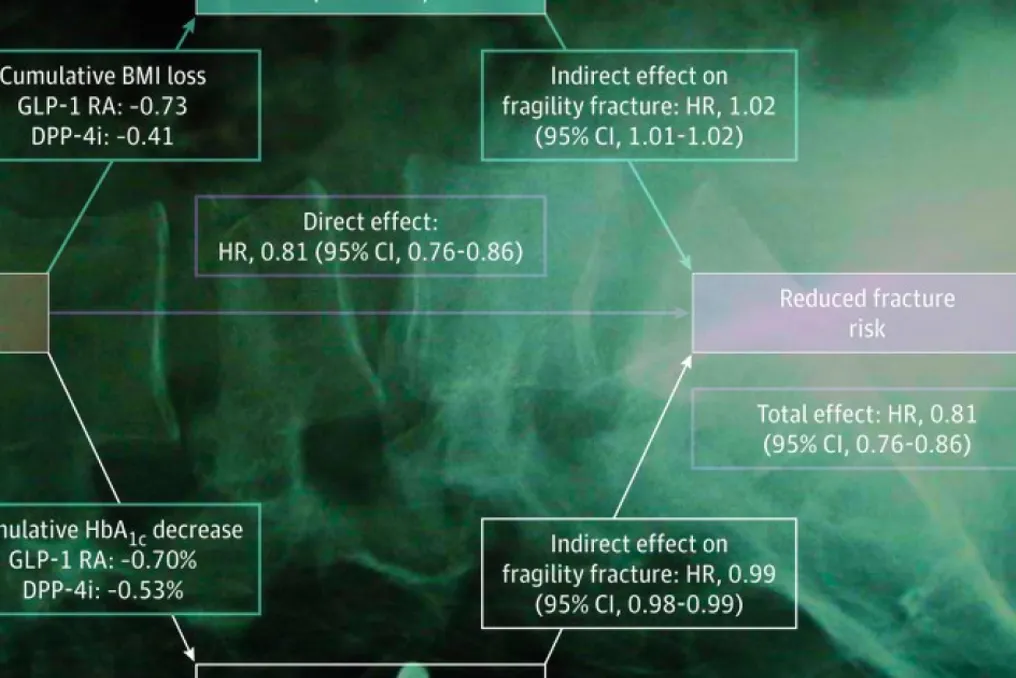
Researchers from the University of California, Los Angeles, including Christopher Hamad, conducted a simulation of target clinical trials. They found that the use of glucagon-like peptide-1 (GLP-1) receptor agonists significantly reduces the likelihood of low-trauma fractures in individuals suffering from type 2 diabetes.
Data extracted from the TriNetX medical database was used for the analysis. The study included over 133,6 thousand patients with type 2 diabetes, aged between 50 and 90 years.
Patients were divided into two groups. Half of them, with an average age of 63.2 years and consisting mainly of men (52.7%), started taking GLP-1 agonists. The other group, selected using a pseudo-randomization method, comprised half of the sample (average age 63.8 years; 54% men) and took dipeptidyl peptidase-1 inhibitors (gliptins).
The participants' condition was monitored for three years. The results obtained were officially published in the journal JAMA Network Open.