Four deputies, three of whom represent the United Left party, have put forward an unofficial proposal to the Spanish government. They strongly urge Spain to officially notify FIFA, the Spanish Football Federation, and the Portuguese government about the need to revise the model for the joint organization of the tournament. This model also includes the participation of Portugal and three matches in South America.
In its initiative, Sumar asserts that an event of this magnitude requires significant mobilization of state resources and commitments from states. Consequently, the host countries must demonstrate 'effective and constant respect for human rights, international law, and democratic principles.'
The group of parliamentarians insists on conducting an independent study of human rights risks in the organizing countries. The results of this study must be presented to Congress within six months, accompanied by proposals for measures in case serious violations are confirmed.
Furthermore, they demand that FIFA change its regulations to allow for the withdrawal of a host country's status in the event of serious violations of fundamental human rights and democratic principles. They also call on the Royal Spanish Football Federation (RFEF) to activate mechanisms provided by FIFA to monitor compliance with its own statutes.
The motion also requires clarification of events that occurred in Ceuta, including the identification of the dead and missing, establishing responsibility, and implementing rescue and protection systems for minors. The deputies formally ask the Spanish government to assess the 'impact of the events that took place on the border of Ceuta on human rights obligations related to the tournament.'
This assessment must be accompanied by additional proposals for measures if a 'serious' violation of international obligations and human rights is proven by any of the host nations.
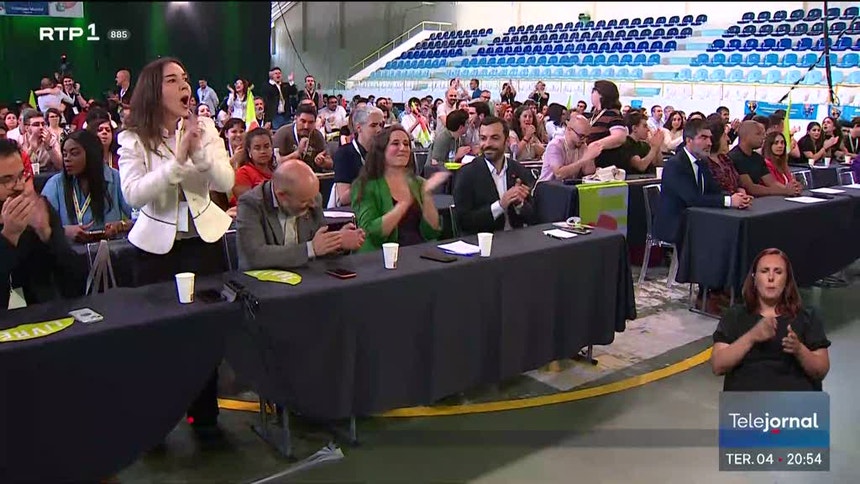
This legislative initiative in Spain aligns with the position of the Portuguese environmental party Livre. Livre sent a letter to the Prime Minister and the President of the Portuguese Football Federation, advocating for the exclusion of Morocco from the joint organization of the competition. Livre justifies its position by stating that events on the Spanish border and the ongoing disregard for international law in Western Sahara make political, safe, and cooperative conditions impossible for maintaining the tripartite partnership.
Livre believes that Portugal and Spain are capable of hosting the tournament independently, without jeopardizing their international image or foreign policy regarding human rights. The 2030 World Cup will be organized by Portugal, Spain, and Morocco from June 8 to July 21, and will include three friendly matches in Uruguay, Argentina, and Paraguay, marking the centenary of the first tournament held in Montevideo in 1930.