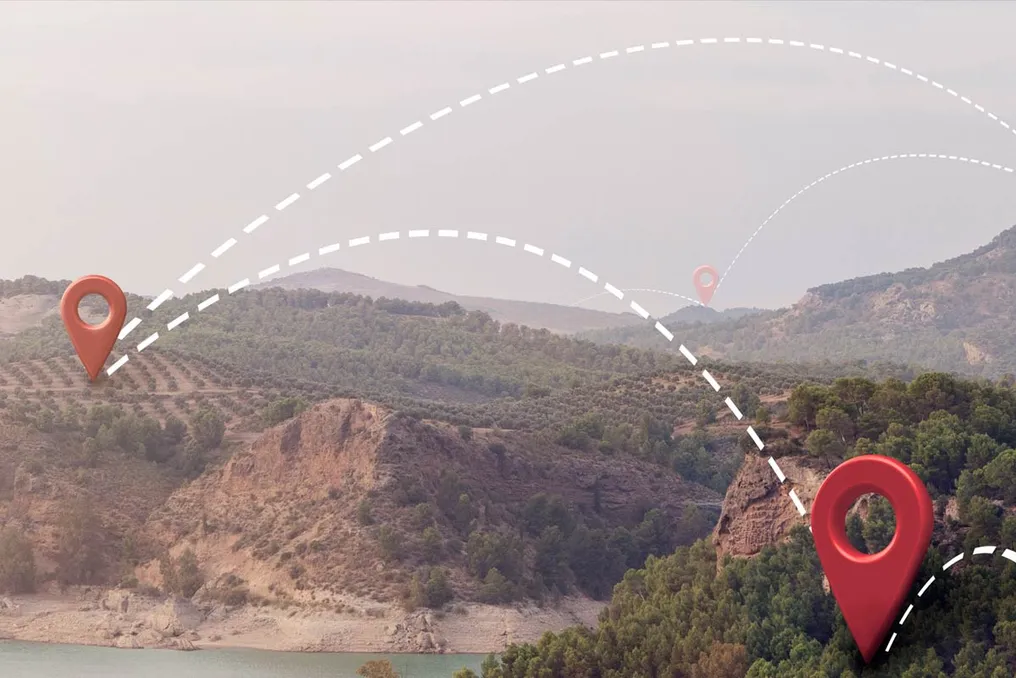
In late June 2026, South Africa's national standards for spatial information were officially published in accordance with the Spatial Data Infrastructure Act, which established the South African Spatial Data Infrastructure (Sasdi).
In late June 2026, South Africa's national standards for spatial information were officially published in accordance with the Spatial Data Infrastructure Act, which established the South African Spatial Data Infrastructure (Sasdi).
Although the publication of a new regulatory bulletin is often a routine technical procedure, this document holds particular significance. Experts believe it has the potential to stimulate billions of rand in economic growth in the long term and has already provided organizations with a foundation for further work.
There is now a single, agreed-upon method in the country for collecting, maintaining, and exchanging spatial data. Systems can agree on object naming, retain identification when streets are renamed or parcels are divided, and record the current level and accuracy of datasets. Changes in names, accuracy, and other data quality aspects can now properly influence decision-making.
This principle is analogous to how the creation of a common screw thread connection and a unified railway gauge became the basis for entire economies: once a standard is agreed upon, everything built upon it begins to move faster. Sasdi represents such an agreement for the data underpinning some of the most significant decisions in South Africa.
AfriGIS has prepared for this process and is ready to assist municipalities, departments, and other organizations in assessing and implementing these standards, as the company has been observing the impact of accurate data on financial performance for over twenty years.
According to experts, correctly establishing this foundation—creating a common language for location that is fixed once and can be trusted universally—could potentially increase South Africa's GDP by a full percentage point over time. This growth accumulates gradually, not through one large deal, but through thousands of small operations: reducing duplication of survey work, speeding up service delivery, and lowering the risk premium on loans and insurance policies calculated based on the precise location of assets.
There is also a dividend in service provision. The National Treasury regularly notes the reliability of municipal data as a priority task, especially during periods when capital budgets often remain underutilized. Aligning data with Sasdi is a direct path to roads reaching clinics faster, quicker connection to power grids in developing settlements, and rapid recovery of infrastructure damaged by floods. Better data itself does not lay pipes, but it determines whether the people laying the pipes know exactly where to dig, the first time.
AfriGIS has supported location data according to such standards since 2002 and participated in shaping some of the standards now published under Sasdi. This gives the company confidence that proper adherence to standards transforms a point on a map into an actual basis for budgeting.
Although the standards have been published, this is only the first step toward their implementation, not the last. Whether South Africa achieves this percentage point depends on the data custodians, municipalities, and businesses that choose to act.
The work begins the moment an organization decides to use the same map as everyone else. A team of geospatial information specialists can assess how well an organization's data conforms to the Sasdi standard and determine what steps are necessary to fill gaps. It is recommended to start with an assessment of existing resources.
To begin the assessment of spatial data standards, contact the AfriGIS team via the website www.afrigis.co.za.
AfriGIS is a geospatial science company based in South Africa specializing in location-sensitive solutions and data. The company provides clients with a suite of web tools and APIs to connect, enhance, and enrich their own data using geo-intelligence, analytics, and reliable data. Founded in 1997, it is a Level 1 B-BBEE contributor and employs over 100 staff in Pretoria, Durban, and Cape Town in South Africa, as well as in Dublin (Ireland) and Dhaka (Bangladesh).
Interior Minister Leon Schreiber noted that any changes aimed at compelling all citizens to participate in elections would require careful study of the Constitution and necessitate broad national policy discussion.
These statements were made in response to questions from Parliament by Andile Mngxintamy, a member of the MK Party. Mngxintamy raised the issue of considering legislative reforms that could mandate citizen participation in voting. He emphasized that declining voter turnout threatens the legitimacy of election results, despite voting being a civic duty.
Mngxintamy's question came amid observations by the Independent Electoral Commission (IEC) that the upcoming local elections will take place in the most challenging electoral climate in three decades. The IEC conducted a survey between October 2025 and February 2026, the results of which showed widespread disillusionment with political leadership, decreased trust in key political institutions, and dissatisfaction with the functioning of democracy.
In June, Deputy Chief Electoral Officer Mashebo warned that with elections approaching, the intention to vote could drop from 76% recorded in 2015 to 64%. He added that this does not happen automatically but depends on meeting certain conditions and citizens' perception of politicians' responsiveness.
The IEC plans to hold the final week of voter registration on August 1 and 2, after which the register will close following the publication of the local election proclamation on November 4. As of June 22, the total number of registered voters was 28.5 million. Responding to Mngxintamy, Schreiber explained that the constitutional structure of South Africa is based, among other things, on human dignity and freedom. He also pointed out that the Bill of Rights obliges the state to respect, protect, promote, and fulfil the rights enshrined in the Constitution.
Schreiber specifically highlighted that one of the fundamental rights of citizens is the freedom to make a political choice, which is guaranteed and provided for in Section 19 of the Constitution. Nevertheless, he noted that the current legislative framework, based on the freedom of political choice, complies with the constitutional order. However, he reiterated that legislative changes requiring compulsory voting need thorough examination of the constitutional basis and require comprehensive national discussion.
Schreiber's response came against the backdrop of EFF leader Julius Malema submitting a notification to Parliament regarding a bill aimed at increasing voter turnout, reducing the number of unregistered voters, and lowering the cost of information campaigns. According to the draft summary, the current Electoral Act allows registration from age 16, but the process remains voluntary and dependent on individual initiative and the IEC's campaign organization.
Malema stated that this has led to massive exclusion, especially among youth. He also noted that the sustained and worrying decline in turnout is exacerbated by low registration rates and high migration. He criticized the IEC's efforts, noting that campaigns and digital platforms were costly and insufficient. Therefore, in his view, the 'Electoral Matters Amendment Act' seeks to shift the responsibility of registration from individual initiative to the state, utilizing existing population data for inclusion through Automated Voter Registration (AVR).
Malema added that countries with AVR processes demonstrate higher levels of registration completeness, improved equality in voter rolls, and greater participation among traditionally underrepresented groups such as youth and low-income populations. He concluded that South Africa, possessing developed civil registration and identification systems, is suitable for adopting this reform. The AVR process, according to Malema, would involve creating and maintaining a database where population registry information is transferred using technology.
An expert argues that the future of South Africa is determined not by material wealth such as mineral resources, entrepreneurial spirit, or strategic location, but by an invisible asset—collective belief.
Many might consider South Africa's financial institutions, Constitution, or the resilience of its population to be its most valuable national resource. However, there is another asset that cannot be measured on a balance sheet or taxed. This is an invisible force that determines whether the nation will develop or decline. This asset is collective conviction.
The world's most successful nations are not simply those with the strongest economies or the richest natural resources. They are societies where citizens share a common belief in a better future; where people trust each other enough to cooperate, entrepreneurs are confident in opportunities, investors are willing to commit capital, and youth believe in the possibility of improving tomorrow. Nations function based on confidence long before they begin operating on capital.
During Mandela Month celebrations, the question arises whether South Africa's greatest problem is not only economic or political, but also psychological. The doubt emerges: have the residents stopped believing? Recent public discussions concerning crime, unemployment, immigration, and economic inequality point to a country under immense pressure. These issues demand serious political solutions and honest public debate.
Nevertheless, parallel to these legitimate concerns, something more subtle is happening: social cohesion is weakening, public trust is declining, and confidence is fading. When confidence disappears, it becomes harder to build prosperity. This is not merely an opinion, but a conclusion supported by scientific data.
Behavioral scientists have long demonstrated that beliefs shape behavior. People who believe their efforts matter are more likely to persevere, innovate, and invest in the future. Conversely, when people lose hope, they withdraw, become less risk-taking, less entrepreneurial, and less willing to collaborate.
This same principle applies to societies. Economists often speak of investor confidence, but investor confidence is merely a manifestation of a much broader phenomenon: collective conviction. Businesses invest because they believe in market growth. Families raise children because they believe in available opportunities. Entrepreneurs create companies assuming their efforts will be rewarded. Communities cooperate because they believe others will do the same.
Conviction transforms into behavior, behavior into results, and results reinforce conviction. This generates either a virtuous or a destructive cycle. South Africa has experienced both scenarios. There were times when the country believed in itself as a whole, such as during the transition to democracy or at the 1995 Rugby World Cup.
The 2010 FIFA World Cup showed what is possible when government, business, civil society, and ordinary citizens unite around a common goal. Despite widespread skepticism, South Africa hosted one of the most memorable tournaments in FIFA history, presenting to the world a nation capable of extraordinary achievements. For a short time, South Africans remembered what it felt like to have collective belief. This feeling mattered because belief is contagious, just like cynicism.
Today, negativity often dominates the national conversation: social media encourages anger, headlines amplify failures, and political discourse tends to divide rather than unite. Criticism is necessary in any democracy because it ensures accountability, transparency, and active debate. However, there is a crucial difference between constructive criticism and collective despair. No nation achieves prosperity solely through talk.
History demonstrates a strikingly consistent pattern: Germany restored confidence after the war before regaining global competitiveness. Singapore combined visionary leadership with unwavering belief that the island with limited resources could become one of the world's leading economies. South Korea transformed itself from one of the poorest countries in the world into one of the most innovative, cultivating a shared national commitment to education, excellence, and long-term progress.
The success of these countries was based not only on optimism but on a shared belief embodied in disciplined action. South Africa needs precisely this formula. Belief does not replace economic reforms, nor can it substitute competent governance, sound policy, or ethical leadership. But reforms cannot succeed if the nation ceases to believe in the possibility of improvement.
Therefore, leadership carries a responsibility far greater than merely managing institutions. Leadership creates belief. The greatest legacy is left by leaders who expand people's perceptions of what is possible. Perhaps this was Nelson Mandela's greatest contribution to South Africa. His outstanding achievement was not just the peaceful transition to democracy; he inspired millions of South Africans and millions of people worldwide to believe in the possibility of reconciliation when conflict seemed inevitable, that hope could triumph over fear, and that a shared future was stronger than a divided past. He understood that before people change their behavior, they must first change their beliefs.
Perhaps this is the challenge facing every resident of South Africa today. Business leaders must create organizations that people believe in. Politicians must restore trust through honesty and keeping promises. Educators must help youth believe that their potential exceeds their circumstances. Communities must rediscover the value of social cohesion over social division.
And each of us has a choice regarding the stories we tell ourselves and others. Will we strengthen decline, or will we become builders of confidence? South Africa's future will be determined not only by GDP, not only by elections, or not only by global markets. It will also depend on whether we can restore the invisible asset upon which any prosperous society ultimately depends—collective belief. Because when a nation believes in itself, it gains the ability to achieve far more than anyone could have imagined. And perhaps this is the most important investment South Africa can make—not only in its economy, but in its future.