An archaeological study conducted at the DOI-Codi complex, located in the Vila Mariana neighborhood of São Paulo, identified traces of human blood in interrogation rooms and a infirmary, as well as a calendar engraved on the wall of a bathroom.
An archaeological study conducted at the DOI-Codi complex, located in the Vila Mariana neighborhood of São Paulo, identified traces of human blood in interrogation rooms and a infirmary, as well as a calendar engraved on the wall of a bathroom.
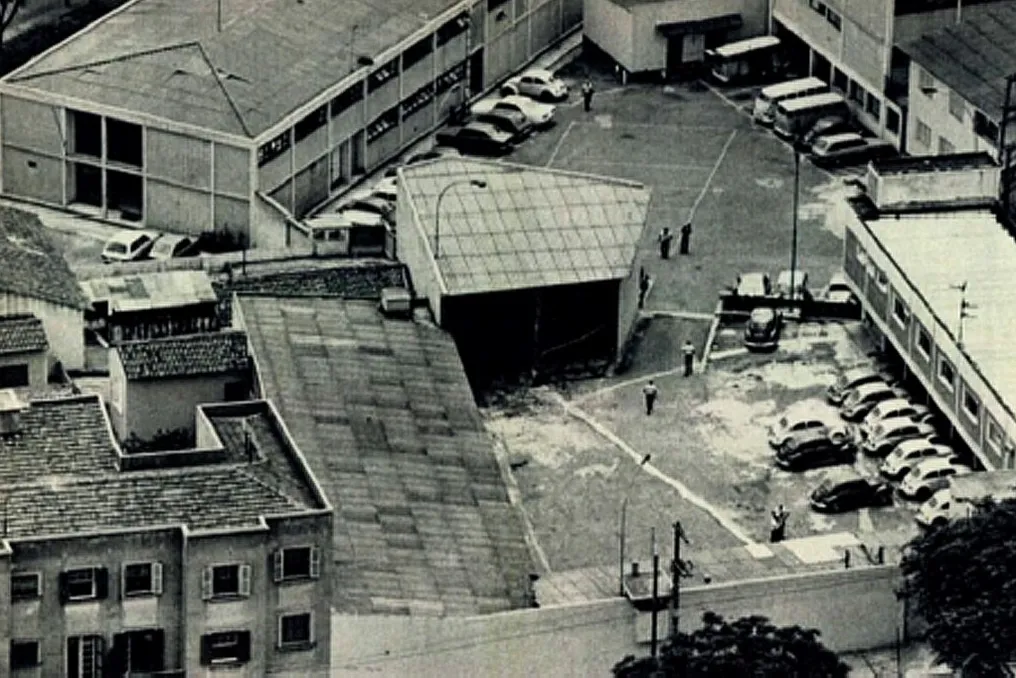
This former repression center of the Brazilian military dictatorship, known for its function as the Information Operations Detachment – Internal Defense Operations Center, housed cells, torture rooms, and interrogation spaces. It is estimated that more than seven thousand individuals passed through the location, and at least fifty-two died during its operation, covering the 1960s and 1970s. It was in this place that journalist Vladimir Herzog was murdered on October 25, 1975.
Currently, researchers from various fields are investigating the complex with the aim of documenting and reconstructing the events that occurred inside. However, the task is complex due to the multiple renovations the building has undergone over the years, which hinders the location of evidence from the dictatorship period.
A new investigation, conducted by the Federal University of São Paulo (Unifesp) and published in July in the scientific journal Forensic Archaeology, Anthropology and Ecology, managed to point out significant physical indications about the history of the site, identifying traces of human blood.
The researchers focused their analysis on building 2-a of the complex, which served as the intelligence sector and was one of the main locations designated for torture and interrogation sessions. Initially, the team worked to understand the original internal organization of the building and the function of each environment during the military regime. To this end, testimonies from survivors were gathered, historical documents were analyzed, and the building's architecture was studied to map its temporal modifications. Furthermore, ground-penetrating radar was employed to create a three-dimensional scan of the structure.
Based on this information, specific areas were selected for the archaeological investigation: interrogation rooms, a bathroom, an area related to torture, and a possible infirmary. In these locations, excavations and small cuts were made in the floors and walls to expose the distinct layers of paint and plaster accumulated over the decades. This allowed, in certain points, to reach the original wooden subfloor from the dictatorship era, where forensic analyses were conducted using various techniques.
Among the techniques used was luminol, a chemical substance that reacts in the presence of hemoglobin, the main component of blood. This test yielded positive results in samples collected both in the infirmary and the interrogation rooms, subsequently confirmed by chemical analyses as human blood. However, due to damage caused by successive renovations and the advancement of material degradation, it was not possible to determine the age of the blood, its biological origin, or recover DNA, preventing the association of the blood with a specific event or practice.
In the bathroom, although no traces of blood were found under the layers of paint, the team identified a calendar engraved on the wall. This calendar was presumably made by someone detained at the location to track the passage of time, showing inscriptions for the days October 13 to 31 and November 1 to 4. By cross-referencing these dates with calendars from the period, the researchers concluded that the record could belong to 1970 or 1981. Despite this, a witness account indicates seeing the engraving during their imprisonment in 1971, leading the authors to consider the 1970 hypothesis as the most probable.
In a statement, Unifesp stated that 'investigated in dialogue with documents and testimonies, these traces add a material dimension to the knowledge about political repression.' Additionally, it highlighted that such findings can aid in investigating other sites linked to political violence and human rights violations, as well as strengthening policies of memory, truth, and justice.
South Africa is home to places that have shaped both human history and the natural world, including some of the oldest rocks on Earth and caves where our earliest ancestors lived. UNESCO has officially recognized 12 such World Heritage sites in South Africa, each valued for its outstanding cultural or natural significance.
Heritage sites are selected for their historical, scientific, cultural, or natural importance, making them among the most important places on the planet. South Africa's collection includes mountain ranges, ancient fossil sites, biodiversity hotspots, and landmarks that tell the story of the country's journey to democracy.
The cradle of humanity, often associated with heritage sites, actually encompasses several locations with rich fossils across South Africa. These sites have allowed for the discovery of some of the most crucial findings regarding early human evolution.
iSimangaliso was recognized by UNESCO due to its presence of beaches, wetlands, lakes, coral reefs, forests, and the largest estuarine system in Africa. A recent expansion of this site included Mputo National Park in Mozambique, strengthening conservation efforts in this incredible coastal ecosystem.
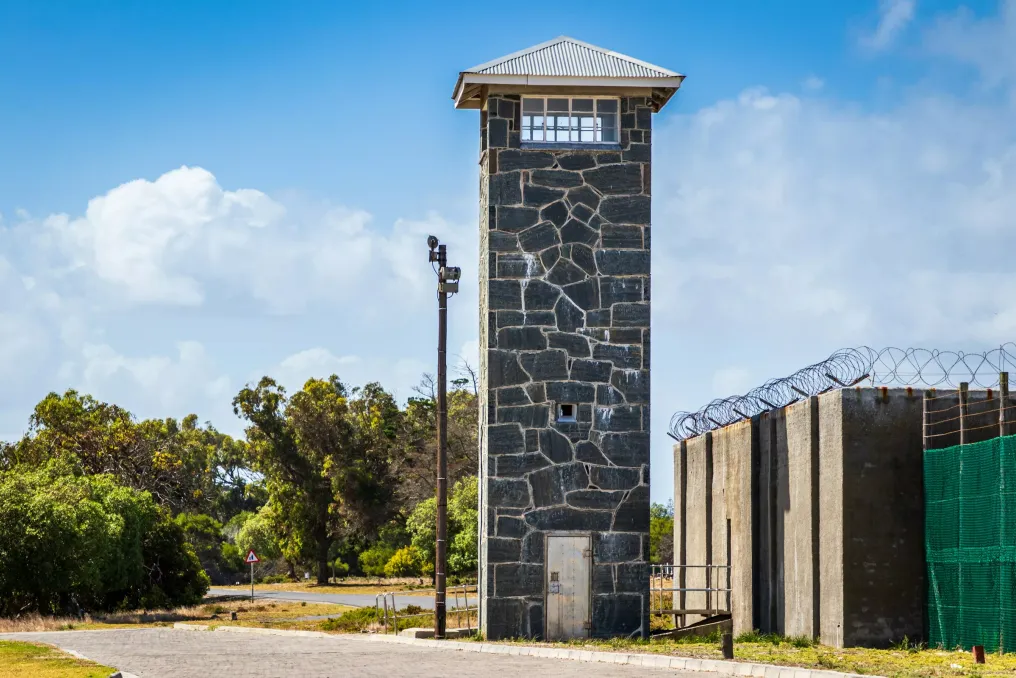
A short ferry ride from Cape Town leads to one of South Africa's most significant historical monuments—Robben Island. This island is known as the prison where Nelson Mandela spent eighteen years in confinement, symbolizing resilience, sacrifice, and the fight for freedom.
Another impressive landscape is a park shared with Lesotho. It is famous for its high basalt cliffs, rolling grasslands, and thousands of ancient San rock paintings. The park is recognized for its stunning scenery and cultural significance.
Mapungubwe, which existed long before modern cities, served as the center of a developed African kingdom. Archaeological finds at this site changed perceptions of early Southern African civilizations, and the famous Golden Rhino was discovered here in 1932.
The Cape Floral Region is one of the world's richest plant kingdoms, despite its relatively small area. Thousands of plant species inhabit it, many of which are found nowhere else. A site known as Dome Wredefort is one of the largest and oldest structures formed by a meteorite impact approximately two billion years ago.
Richtersveld features a unique combination of desert biodiversity and centuries-old traditions of the Nama people. This region is part of the Succulent Karoo, one of the two arid biodiversity hotspots on Earth. The cultural landscape extends into the southern Kalahari and honors the traditions and knowledge of the !Xhomani San people.
The Barberton-Mahondza Mountains contain some of the oldest exposed rocks on Earth, helping scientists understand the state of the planet long before the appearance of dinosaurs, plants, or complex life. Some formations here date back approximately 3.5 billion years.
The newest cultural heritage site in South Africa combines several locations related to Nelson Mandela's life and the country's struggle for democracy. These sites tell a story of courage, resistance, and reconciliation.
Cave complexes, such as the Dikloof rock shelter, Pinnacle Point complex, and Sibhudu Cave, have helped researchers better understand how modern humans evolved and adapted tens of thousands of years ago. These sites reveal archaeological evidence of the development of behavioral traits in early humans, such as symbolic thought, creativity, and the making of complex tools.
The anticipated Tami concert in Durban, originally scheduled for Friday, will now take place at the prestigious Hollywoodbets Kingsmead stadium. Organizers announced that the venue change was necessitated by the hosting of the SADC Summit of Heads of State and Government under the auspices of the Durban ICC.
The concert, which was set for August 7th, will now be held at the famous cricket stadium while the Durban ICC hosts one of the region's most important diplomatic events.
The Chief Executive Officer of Durban ICC, Lindive Rakharebe, stated that the decision was made through the joint efforts of all stakeholders to ensure the success of both events. She emphasized: 'Durban ICC is honored to host the upcoming SADC Summit of Heads of State and Government, an event of immense importance to our region.'
Rakharebe also added that they recognize the excitement surrounding Tami's return to Durban and have been working closely with the event organizers to ensure fans continue to enjoy an exceptional concert.
Organizers assured attendees that they can expect the same production, live band, and performance from the Grammy award winner in the R&B genre. The singer's repertoire will include hits such as 'Officially Missing You', 'So Into You', and 'Stranger in My House.'
All tickets purchased for Durban ICC remain valid. Attendees will automatically be issued new tickets for the Kingsmead venue, with seats reassigned to the best available option. No ticket exchanges or additional payments are required.
More detailed information regarding parking, venue entrances, and logistics on the day of the event will be communicated through the official organizer channels before the concert. Durban ICC confirmed its commitment to ensuring a successful experience for both the international delegates of the SADC Summit and music lovers attending one of Durban's largest entertainment events this year.
Horror fiction possesses a unique ability to remain in the reader's memory long after turning the final page. Although the modern genre continues to evolve, many of its greatest achievements were written decades or even centuries ago. These classic novels introduced iconic monsters, explored humanity's deepest fears, and shaped the horror stories we read today.
If you plan to delve into the origins of the genre in 2026, these five horror works deserve a spot on your reading list. Each book offers a different kind of fear—from psychological dread to supernatural nightmare, proving that great horror never goes out of style.
Several horror novels have had a massive impact, but 'Dracula' stands out particularly strongly. Originally published in 1897, Bram Stoker's masterpiece introduced Count Dracula, one of literature's most enduring villains. The plot, told through letters, diary entries, and newspaper clippings, recounts a group of people attempting to stop the mysterious vampire from spreading terror across England.
The effectiveness of 'Dracula' lies in its atmosphere: the mounting sense of anxiety, isolated castles, and the fear of the unknown create a story that remains unsettling more than a century later. For lovers of gothic horror, vampires, and classic suspense, 'Dracula' is required reading.
Often cited as the first science fiction horror novel, 'Frankenstein' retains astonishing relevance to this day. Mary Shelley's 1818 story tells of Victor Frankenstein, a scientist who creates life through unnatural means and is forced to confront the consequences of his actions.
While many are familiar with the monster from adaptations, the original novel is far more complex. It addresses themes of loneliness, responsibility, ambition, and the true meaning of human existence. Instead of relying on jump scares or gore, Shelley generates horror through emotional depth and moral questions. This work continues to provoke thought while eliciting moments of genuine unease.
'The Haunting of Hill House' is widely regarded as one of the greatest ghost stories ever written. It blends psychological tension with a mystical mystery. The plot follows a small group of people gathered at the infamous Hill House to investigate paranormal activity.
As strange events begin to occur, readers question: is the house truly inhabited by ghosts, or does the horror stem from within the characters themselves? Shirley Jackson's elegant style and masterful ambiguity make this novel unforgettable. The fear here comes not from monsters, but from uncertainty, isolation, and the fragility of the human mind. Published in 1886, this novel explores one of humanity's oldest fears—the darkness hidden within us.
Dr. Henry Jekyll develops a formula that transforms him into the cruel and reckless Mr. Hyde, allowing him to separate his respected public persona from his darker impulses. However, the experiment soon spirals out of control. The novel remains powerful because its central theme feels timeless. Every person has different facets to their personality, and Stevenson's story examines what happens when those dark instincts are given complete freedom. Short, gripping, and deeply unsettling, it remains a cornerstone of horror literature.
If you enjoy psychological horror that makes you doubt everything, 'The Turn of the Screw' will be essential reading. The plot centers on a governess who becomes convinced that two children under her care are being influenced by evil spirits. As the narrative unfolds, readers are forced to decide whether the ghosts are real or if the governess is losing touch with reality. Henry James masterfully uses ambiguity to build tension. The novel never provides clear answers, which only heightens its mystery. It is more than just a ghost story; it is an exploration of fear, obsession, and perception.
What allows these books to endure is their capacity to tap into universal fears. Whether it is the fear of death, isolation, identity, ambition, or the supernatural, these stories continue to resonate because the emotions they explore are eternal. Modern horror may feature a faster pace and contemporary settings, but these classics laid the foundation for everything that followed. Their influence is still visible in today's bestsellers, films, and television series. For readers wishing to explore the best the genre has to offer, these five classic horror works provide an ideal starting point. They frighten, they make you think, and they prove that the most persistent nightmares are often the oldest.