Uzbek student Eyzosa Beshimjonova joined the scientific and educational expedition 'Traveler of Knowledge' organized by Rosatom and headed to the North Pole. This was reported by the Rosatom press service.
Uzbek student Eyzosa Beshimjonova joined the scientific and educational expedition 'Traveler of Knowledge' organized by Rosatom and headed to the North Pole. This was reported by the Rosatom press service.
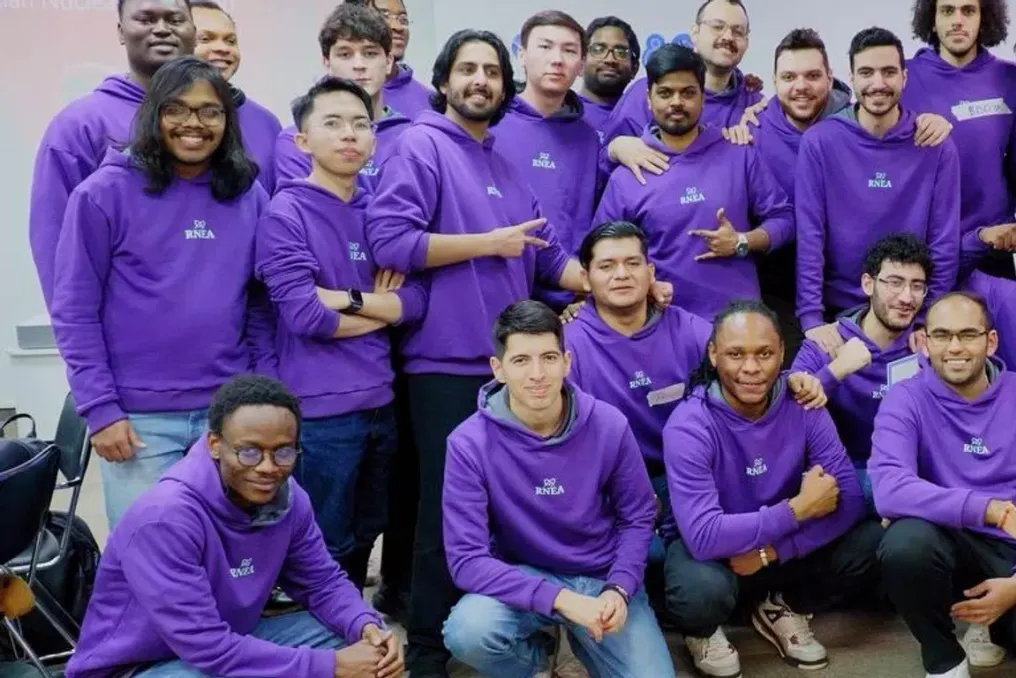
The expedition includes schoolchildren and college students from Russia and 22 other countries. The expedition started from Murmansk along the route Murmansk — North Pole — Franz Josef Land — Murmansk.
Foreign participants were selected through an international competition among almost five thousand applicants, with one winner chosen from each of the 22 countries.
During the trip, lectures, discussions, and master classes dedicated to atomic technologies, Arctic studies, and modern engineering fields will be organized for the participants. The students will also learn about the structure and operational process of the atomic traveler.
According to Alexey Likhachev, CEO of Rosatom, this initiative aims to unite talented youth from different countries around ideas related to science and planetary preservation.
Over six seasons of the 'Traveler of Knowledge' project, more than 400 talented students from various countries have participated in expeditions to the North Pole.
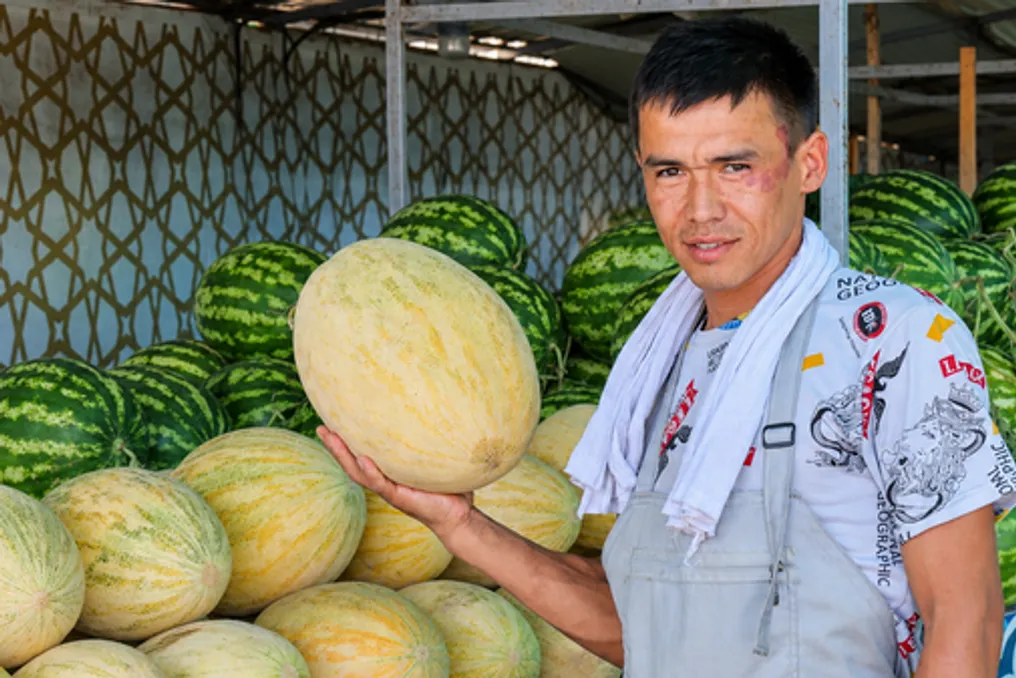
In Tashkent, the Eski Zhuva market has started the season for trading watermelons and melons. The market is filled with watermelons of various varieties and large melons brought from Jizzakh.
Entrepreneur Doston Nosirov provided information on available varieties, their weight, and current prices. The trade of watermelons and melons has intensified during the summer period, as fresh harvest is delivered to the market every morning. Sellers unload the produce from trucks onto stalls and assist buyers in selecting ripe fruits.
At the market, one can find watermelon varieties such as 'chillaki', 'qukcha', 'guloba', 'handalak', and 'obinavot'. According to Doston Nosirov, farmers have harvested a high-quality and sweet crop this year. One of the most sought-after varieties during the summer season is 'chillaki', which received its name because it ripens during the hottest period of summer—chilla.
Watermelons of the 'chillaki' variety have an average weight of three to eight kilograms. Their price is 5 thousand sums per kilogram, but by negotiating with the buyer, an eight-kilogram watermelon can be purchased for 30–35 thousand sums. The 'obinavot' variety, grown in the Syrdarya region farms, is also offered at a price of 5 thousand sums per kilogram. The price for the 'qukcha' variety approaches 7 thousand sums per kilogram.
Melons from the Jizzakh region have also arrived at the stalls. They are sold at approximately 3.5 thousand sums per kilogram. The average weight of one melon is eight to ten kilograms, and its cost reaches 30–35 thousand sums. Doston Nosirov emphasized that one melon averages 30–35 thousand sums, although some buyers prefer smaller sizes, while others look for large and fleshy specimens.
The market has a characteristic summer trading atmosphere: stalls are laden with watermelons and melons, sellers are busy unloading and arranging the new harvest, and buyers are selecting ripe and sweet fruits.
An analytical article by Alauddin Ne'matov, a researcher at the Imam Bukhari International Scientific Research Center, was published in the influential electronic publication Misq's 'Al-Siyusi'. The article is titled 'Uzbekistan's New Strategy to Combat Ignorance Through Enlightenment.'
The work emphasizes that in the first quarter of the 21st century, alongside rapid technological and scientific progress, there is an intensification of ideological threats, spiritual decline, and a growing sense of hopelessness.
The author elaborates on the essence and practical significance of the principle 'Against Ignorance – Through Enlightenment,' which has been elevated to the level of state policy in New Uzbekistan amid a complex social situation.
It is stressed that the fight against radical and extremist ideas cannot be limited only to administrative measures or the use of force. The most effective and sustainable solution is raising the level of education of the population, especially youth, and instilling the essence of Islam as a religion based on humanism and generosity into people's hearts.
The article pays special attention to the large-scale reforms being carried out in Uzbekistan aimed at studying the rich scientific and spiritual heritage of great ancestors such as Imam Bukhari and Imam Tirmizi, as well as promoting them internationally. The author argues that the model of using science and enlightenment as the main weapon against ignorance, implemented by the country's research centers and educational institutions, can become a role model for the international community, particularly the Muslim world.
Thus, the publication in 'Al-Siyusi' once again demonstrated that the principles of peaceful coexistence and enlightened Islam promoted by Uzbekistan and consistently applied in practice enjoy wide recognition on the international stage.
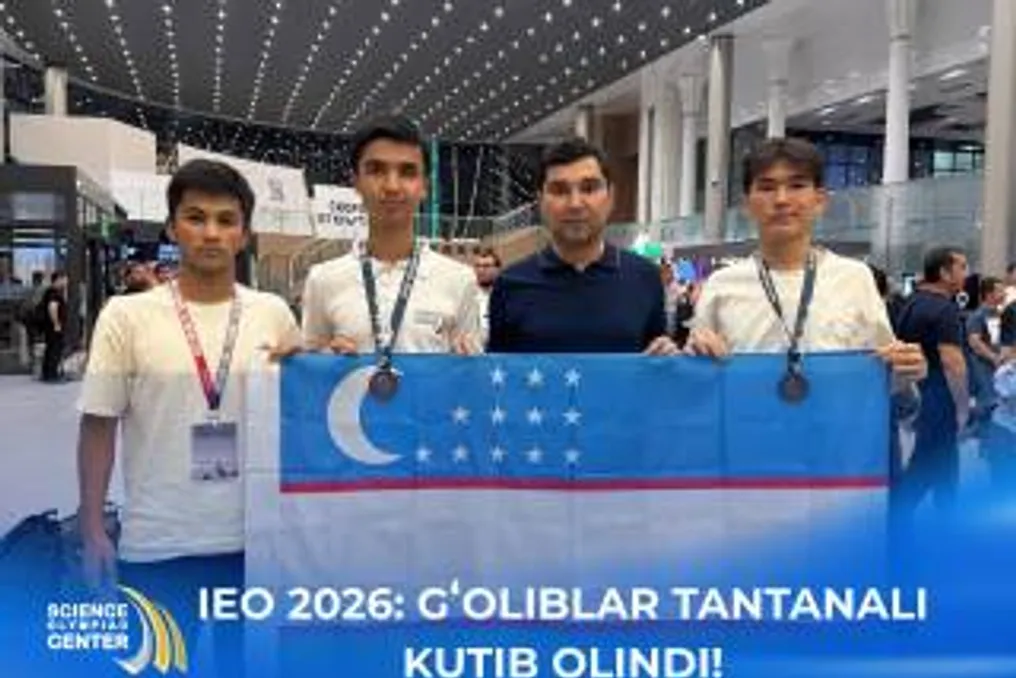
A team of young participants from Uzbekistan achieved success at the International Economic Olympiad (IEO 2026), which involved over 250 talented young economists from about 60 countries around the world.
Participants from Uzbekistan won a total of two medals in this international competition. Asliddin Boynazarov, a student of the Presidential School from the city of Karshi, and Nurlibay Alimzhanov, a student of the Presidential School from the city of Nukus, were among those awarded bronze medals.
The Uzbek team, which proudly represented its country, was solemnly welcomed at Islam Karimov Tashkent International Airport.
It is worth noting that the International Economic Olympiad was first organized in Moscow in 2018. Uzbekistan has regularly participated in this prestigious Olympiad since 2024.