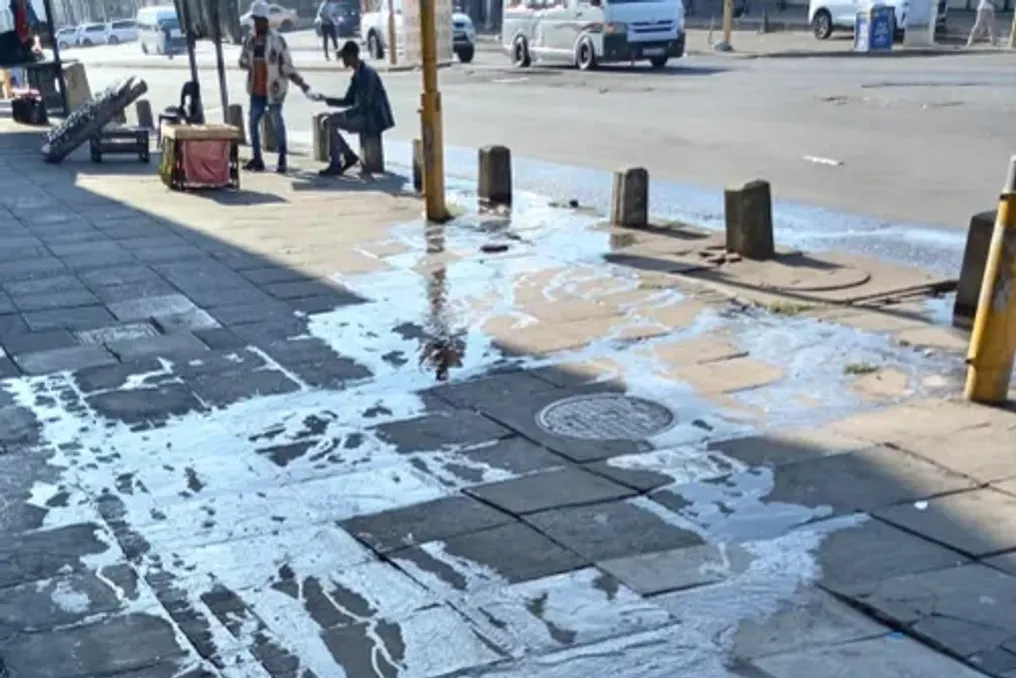
Significant areas in the west and south of the city of Durban are facing serious water scarcity issues, forcing residents to rely on water tankers.
Significant areas in the west and south of the city of Durban are facing serious water scarcity issues, forcing residents to rely on water tankers.
DA Councillor Tabani Ndlovu reported that in southern areas such as Umbumbulu, Folweni, Mufume, eKhahleni, and Umgababa, residents have lived for years without access to water and are heavily dependent on cisterns. He noted that in central parts of the city, water sometimes appears for a day or two before disappearing again, and frequent supply interruptions are observed in places like Umlazi and parts of Ntuzuma.
The municipality yesterday presented information on the steps being taken to address the water supply problems. The progress of the R1.2 billion modernization of the Southern Aqueduct in Chatsworth was announced. Upon completion, the construction of a 24-kilometer main pipeline will significantly improve and stabilize water supply in the city's southern areas.
Furthermore, the modernization of the Ogunjini Water Treatment Plant will increase water accessibility for approximately 3000 households in Ogunjini, including Osindisweni Hospital. Mduduzi Nkosi, the head of the trade services department overseeing water supply, confirmed the existence of difficulties but assured that work is underway.
Nkosi explained that the southern aqueduct required replacement due to its age and potential danger to residents; a leak could damage residential homes. This single pipeline supplies nearly one million people, and after commissioning, which is expected by the end of the year, pressure on the supply system will ease.
The scale of the water problem was highlighted by the Department of Cooperative Governance and Traditional Affairs, which announced plans to send water tankers to seven municipalities in the province. Yesterday, Minister KZNCOGTA Thulaseze Buthelezi held a meeting with district mayors at KZNCOGTA offices in Durban, where an operational plan was approved to deploy over 20 provincial water tankers to provide immediate assistance to communities suffering from acute water shortages.
The targeted intervention aims to support seven key district municipalities that are currently facing severe limitations in service provision: eMbe District Municipality, uGu District Municipality, Amajuba District Municipality, uThukela District Municipality, Zululand District Municipality, uMsinyati District Municipality, and uMkhanyakude District Municipality.
Residents of South Africa are facing rising inflation, increased food prices, and soaring electricity tariffs, yet the issue of the country's water crisis remains underestimated.
South Africa ranks 33rd globally in terms of aridity. The Food Indaba 2026 conference, themed 'Water and Food Systems,' was held this week. During this event, experts, scientists, and stakeholders from various sectors discussed ways to prevent the depletion of the country's water resources.
Deshni Pillay, Head of the Nature, Climate, and Energy Portfolio at the UN Development Programme in South Africa, noted that the water crisis has gone beyond simple water scarcity and has begun affecting the cost of food on tables. Pillay recalled the 'Day Zero' situation in Cape Town in 2018, when the threat of the water supply running out was real.
She explained that people tend to think a water crisis only begins when the water stops flowing, whereas in reality, it starts with rising food prices. Although the consequences of water bankruptcy may be unnoticed now, farmers are the first to feel the difficulties when they have to drill deeper wells, pumps require more effort, and yields decrease due to limited water access.
Pillay emphasized that water bankruptcy does not develop instantaneously. Similar to financial bankruptcy, it begins subtly: small deficits accumulate, natural resources are depleted, warning signs are ignored, and suddenly the entire system fails. The most dangerous aspect is that most people do not realize the approaching catastrophe until the very last moment.
The first signs of water bankruptcy are often not empty reservoirs, but an expensive loaf of bread, reduced harvests, factory closures, or a monthly decrease in a family's grocery basket. Pillay explained that the link between these phenomena is often not established because water is an invisible component of everything, even though every meal starts with it.
When water reserves decline, crop yields fall, food prices rise, farmers' incomes decrease, agricultural jobs disappear, nutrition worsens, and poverty and inequality deepen. Pillay cited the example of Cape Town, stating that food security is impossible without water security. This lesson is now manifesting across South Africa, including water supply disruptions in Gauteng, infrastructure problems in eThekwini, and recurring droughts in several provinces, which degrades the ecological state of critical catchment areas.
She concluded that South Africa's water challenge is not just a climate change issue, but also an infrastructural, ecological, managerial, and developmental one. Water bankruptcy threatens the future prosperity of the nation, affecting not only households and farms.
Pillay noted that despite the grim picture, there is hope. Various steps are being taken across South Africa: communities are restoring traditional methods, catchment areas are being rehabilitated, nature-based approaches are being implemented, and investments in climate resilience are being made. She stressed that healthy ecosystems are vital ecological infrastructure requiring more sustainable management.
The expert highlighted the importance of collaboration with communities involved in water conservation. Pillay stated that the future is shaped upstream, and efforts should be directed there. She clarified that the history of water bankruptcy is less about scarcity and more about the choices and decisions made by policymakers regarding the management of the future, food production, and investment in the economy.
Pillay added that South Africa is not starting from scratch: farmers nationwide are adopting sustainable practices, scientists are improving forecasting and developing early warning systems, and municipalities are beginning to explore new approaches to water scarcity. Businesses are investing in innovation, but most importantly, citizens are demanding change. Solutions exist, and everyone needs to unite to ensure decision-makers have the necessary knowledge to achieve water and food security.
The quality and reliability of municipal services in South Africa are declining for many citizens. Reasons for this include aging infrastructure, insufficient maintenance levels, financial strain, and management issues that are outpacing population growth.
A gap has widened between municipalities that manage effectively and those facing constant difficulties. This results in many rural communities, informal settlements, and small towns experiencing unreliable water supply, deteriorating sanitation, and limited waste collection, according to independent consultant Dianne Davis.
Dianne Davis notes that South Africa's municipal services reflect both progress and increasing strain. She emphasizes that since 2015, millions of households have gained access to electricity, plumbing, and improved sanitation thanks to ongoing investments in vital infrastructure. However, for many citizens, the quality and reliability of these services are falling due to a combination of aging systems, inadequate maintenance, financial problems, and administrative complexities that cannot keep pace with population growth.
According to Davis, rising municipal tariffs increase the burden on households. Many families are forced to pay twice: once through municipal fees and service payments, and a second time for private alternatives such as solar panels, water tanks, boreholes, and security systems.
The independent consultant believes that South Africa's problem is no longer just about expanding access, but about restoring stable service delivery. This requires competent leadership, preventative maintenance, transparent financial management, and increased accountability. She adds that with the right reforms, the country possesses the necessary technical knowledge, institutional foundations, and examples of local success to create municipalities that provide reliable, affordable, and sustainable services to every household.
According to Old Mutual Alternative Investments, the water supply issue in South Africa is simultaneously a revenue efficiency and infrastructure problem. The manager of private alternative investments argues that every lost liter reduces the municipal income needed to maintain the network from which the leaks originate. This leads to pipe weakening, reduced revenue, delayed repairs, and accelerated wear and tear.
The company points out that practical and measurable opportunities exist for investors here. It lists solutions such as smart metering, leak detection, pipe replacement, pressure management, and performance-based models that can help municipalities reduce losses and improve service delivery. In the water sector, some of the most attractive investment opportunities may lie in improving the efficiency of existing systems.
Meanwhile, Christo Owen van der Reyde, an associate professor at the Faculty of Economics and Management Sciences at the University of the Free State, notes that the construction sector, long a cornerstone of capital investment in South Africa, is undergoing a profound structural transformation.
He cites data from Statistics South Africa (Stats SA) showing that the industry's contribution to GDP has fallen from 4.2% in 2008 to approximately 2.3%. Total output has decreased from 156 billion rand in 2016 to less than 100 billion rand. Van der Reyde also notes a geographical shift in activity: Gauteng's share of construction revenue has dropped from 39% in 2020 to 35%, while the Western Cape's share has risen to 24%, reflecting a change in regional investment dynamics.
In the expert's view, South Africa's construction sector is in a difficult situation: declining investment suppresses production capacity, criminal activity on sites deters capital, and job fragmentation limits household consumer spending. To change this trajectory, decisive steps are needed: eradicating extortion on construction sites, expanding public-private partnerships (PPPs) to mitigate risks in large projects, and supporting the growth of small and medium enterprises (SMEs) to ensure long-term economic sustainability.
The water crisis in South Africa has become one of the most pressing issues facing municipalities today. Across the country, towns and settlements are grappling with rising demand, climate instability, aging infrastructure, and shrinking financial resources. These factors have placed local authorities at the center of a national emergency. However, despite the enormous scale of the difficulties, the crisis presents significant opportunities for collaboration and shared responsibility.
The crisis is viewed not as a failure of municipalities, but as a symptom of pressure on the entire nation. Experts believe the solution lies in updating the social contract between municipalities, the public, industry, youth, and national partners, which is reflected in the WRC campaign 'A WaterWise Nation.'
South Africa loses 37 percent of treated water due to leaks, pipe bursts, vandalism, and illegal connections. This volume of water was obtained, treated, and pumped at great cost, yet it disappears before reaching consumers. For municipalities, already struggling with budget shortages, such losses are catastrophic.
According to the Department of Water and Sanitation, 105 municipalities face a combined water infrastructure deficit of approximately 400 billion rand. Many treatment plants and pipelines have reached or exceeded their service life, while accelerated urbanization and climate change intensify the strain on fragile systems. Despite investments of nearly 100 billion rand over the past five years, repair and modernization efforts are not keeping pace with growing demand.
Tension is felt across all provinces. In Gauteng, residents of Mogale City, Westber, Ebony Park, Tsakana, and Johannesburg South have experienced prolonged outages due to dwindling reservoirs during periods of intense heat. In the eThekwini region of KwaZulu-Natal, more than fifty districts continue to face instability due to infrastructure failures and power interruptions. In the Eastern Cape, Nelson Mandela Bay is caught in cycles of drought, with reservoir levels frequently dropping below 20 percent.
Free State continues to battle multi-day water supply disruptions in towns such as QwaQwa, Welkom, and parts of Mangaung, often linked to pump failures and aging main pipelines. Limpopo and North West face similar issues, as frequent breakdowns occur in Polokwane, Mahikeng, and Clerksdorp due to the collapse of old networks under pressure.
Given the circumstances, municipalities must take the lead, but they cannot do so alone. South Africa requires an updated municipal social contract where responsibility is shared, not delegated. Civil society organizations, businesses, and government must act as partners in safeguarding the water future.
Municipal leadership remains a key element. Local governments are responsible for water distribution and treatment, planning infrastructure investments, and initial response to system failures. Their ability to communicate transparently, interact constructively with communities, and collaborate across sectors lays the foundation of trust that is critical for joint action.
Communities also play an increasingly vital role. When residents promptly report leaks, conserve water during peak hours, protect infrastructure from vandalism, and understand municipal limitations, water supply systems become more stable and manageable. Community forums on water issues, volunteer groups, and neighborhood patrols have already demonstrated their effectiveness in supporting municipalities in several regions.
The private sector is also a crucial part of this partnership. Local industries can implement water-efficient processes, invest in on-site reuse systems, and collaborate with municipalities on smart metering and network monitoring. These measures reduce the burden on municipal supply and support economic sustainability.
The WRC campaign 'A WaterWise Nation' provides municipalities, communities, industries, and educators with a unified framework for building a water future. The campaign emphasizes behavioral change as one of the most powerful tools for reducing demand and protecting supply. It offers municipalities informational materials, data, case studies, and tools to mobilize households and businesses. It supports communities with accessible knowledge about responsible water use, encourages industry to adopt efficient and sustainable methods, and provides young people with information and inspiration to become stewards of water resources.
Furthermore, 'A WaterWise Nation' reinforces a fundamental principle: water security is not just a government task. It is a collective responsibility shaped by the daily decisions of millions of South Africans. If every household, business, school, and community adopts even small water-saving habits, the cumulative national effect will be immense.
South African municipalities are navigating some of the most challenging conditions in democratic history, yet they remain the bedrock of local resilience. Their work deserves recognition, and their challenges require partnership, not criticism. This is a moment for collective responsibility, where residents, businesses, and government unite to protect the systems that sustain us.
The path forward will require honesty, innovation, and collective commitment. But it is a path they are fully capable of taking. If they align their goals, support local leadership, and embed water-saving behavior in society, they can change the trajectory of the crisis and create cities that are both sustainable and future-ready. South Africa's water future will be determined not only by built infrastructure but by the choices made today. Urgent action is needed, in partnership and with the understanding that water security belongs to all of us.