Xiaomi has discontinued cooperation with Contemporary Amperex Technology (CATL) and BYD as battery suppliers for its Pengcheng crossover. Instead, Sunwoda and CALB have been chosen for use in the first Longjia battery developed by the company.
The first Longjia battery, featured in the Pengcheng crossover, marks the moment when Xiaomi took on the development of the power battery for the first time. Previously, in the SU7 and YU7 models, Xiaomi delegated integration work to Contemporary Amperex Technology (CATL) and FinDreams Battery from BYD, contributing only marginally to the cell design itself. The Pengcheng program fundamentally changes this situation: Xiaomi now directs product definition, owns the battery pack design, participates in cell design, and maintains full quality control over the process, supported by a specialized team of over 220 employees and its own module production in Yichuan.
The change in supplier is the most noticeable alteration. According to documents from the Ministry of Industry and Information Technology in Catalogue No. 409 of new vehicles, the Pengcheng Kunlun N3 model in the standard N70 configuration uses Sunwoda Electric Vehicle Battery with lithium iron phosphate cells, driven by a priority on cost and reliability. Higher-end versions, N70 Max and N90 Max, are equipped with a three-cell lithium pack with a capacity of 76 kWh, designed to provide extended range, supplied by CALB (China Aviation Lithium Battery Technology).
Both companies fit well into the product roadmaps with increased range: Sunwoda is the largest supplier of hybrid cells in China by number of HEV installations, while CALB ranked third in China and fourth globally for power battery installations in 2025.
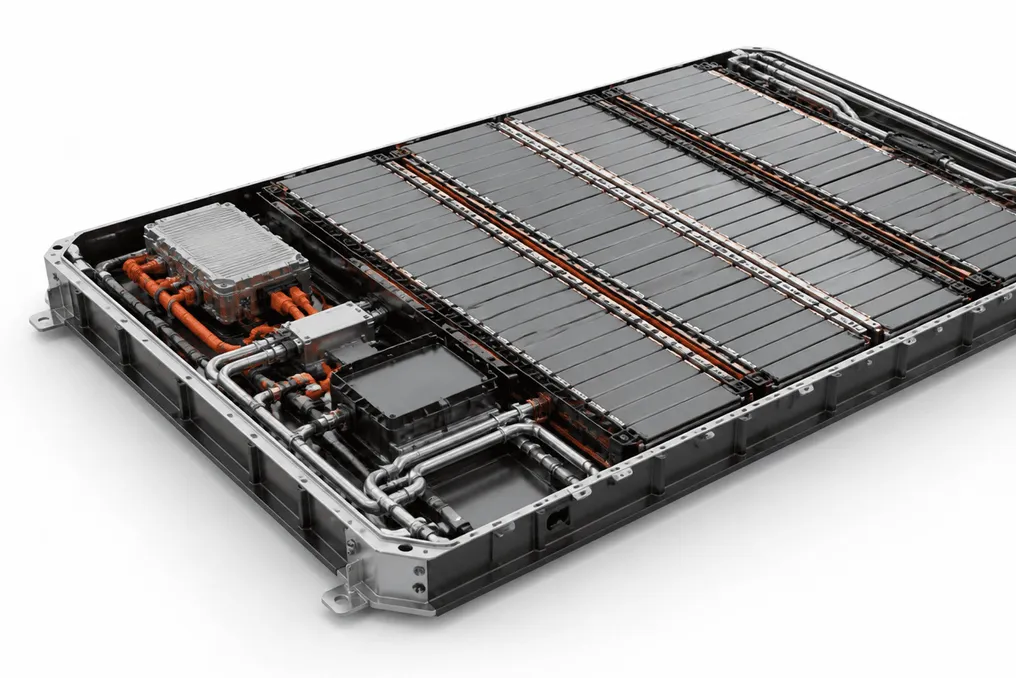
The battery pack architecture reflects a strategic shift. Xiaomi separates the BMU, BDU, and CMU into isolated compartments, with the BDU receiving dedicated liquid cooling. Sunwoda and CALB are prepared to adapt cell formats to two Xiaomi capacity requirements and adjust production line inspection, something that is structurally more difficult for large entities like CATL and BYD. Furthermore, their pricing policies give Xiaomi greater leverage in negotiations, aligning with the stated goal of returning battery development from cell manufacturers to the automaker's own capabilities.
The approach to thermal management has also changed. The SU7 model used CATL's Qilin battery, where cells were installed upside down so that thermal exhaust gases exited downwards through the chassis; this design incorporated about 165 sheets and 7.8 square meters of aerogel. In the Pengcheng, cells are mounted in the traditional manner, ventilation is directed upwards, and mica and multi-layer insulation are used above the pack. This compromise involves fewer innovations in thermal regulation in exchange for a simpler cell format that secondary suppliers can produce in high volumes and at a lower cost, which suits the positioning of the Pengcheng model.