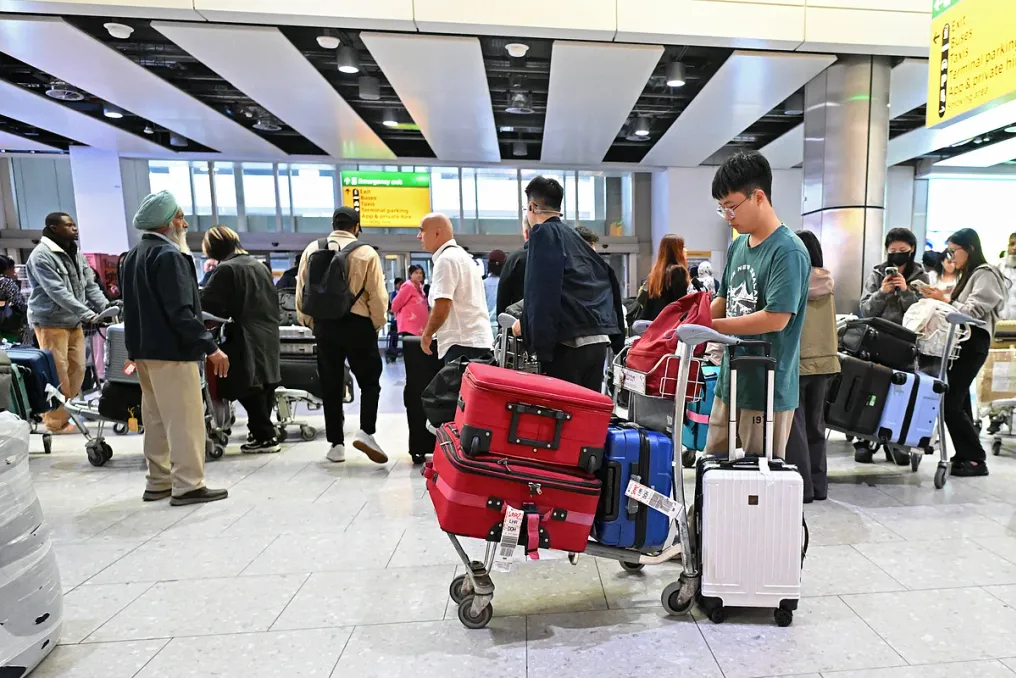
When searching for flights to the UAE, one might find offers priced at 500 dirhams, which seem very attractive. However, for many residents of the UAE planning summer trips, the initial excitement quickly turns into shock when the true cost of the vacation becomes apparent.
Hidden travel expenses
When fees for baggage, seat selection, visas, travel insurance, hotel accommodation, transfers, and daily expenses are added to the base fare, the initial low ticket price can result in the vacation costing several thousand dirhams.
Ipsita Sharma, a tourism agent from SCN Travel & More, notes: 'People often see an advertisement for a 500 dirham flight and think, 'What a cheap vacation!' But the flight itself is just a starting point. As soon as you add all the extra costs, this 500 dirham flight can easily turn into a vacation costing several thousand dirhams.'
Residents face a significant increase in costs during the peak summer season in the UAE. Although an increase in airfare prices is expected, tourism experts point out that the biggest difficulties for families are caused by unnoticed and underestimated expenses.
Visa requirements and insurance
Obtaining visas and travel insurance are two substantial but often overlooked expenses. Depending on the destination, arranging visas for a family can add significant costs even before the trip begins.
Due to increased demand for European travel, Schengen visa costs have risen. Many agencies have increased consultation fees by 40–50 percent. Although reputable platforms for obtaining e-visas maintain nominal rates of 357 dirhams plus 377 dirhams paid to VFS, the overall cost of entering Europe remains a serious issue for families.
The situation is more complex for those applying for a US visa. High demand, past embassy closures, and a shortage of new appointments have led to an increase in application fees to 1600–1800 dirhams.
The cost of travel insurance shows more variation. Standard plans with coverage of $50,000 (183,647 dirhams) remain stable across the UAE, Saudi Arabia, Oman, Europe, and Asia, as insurers maintain competitive prices. Nevertheless, premium plans with coverage of $500,000 (1,836,475 dirhams) have increased by 5–8 percent with some providers, reflecting rising medical costs and geopolitical risks.
Despite the costs, Ipsita emphasizes that insurance is necessary. She states: 'Although travel insurance may seem like an additional expense, it is one of the most important parts of your trip. It protects you against emergency medical situations, trip cancellations, lost luggage, and unforeseen disruptions—things you truly value only when something goes wrong.'
Airfare price increases
The increase in airfares to the Indian subcontinent is particularly noticeable for UAE residents. Fares to popular destinations such as Mumbai, Delhi, Hyderabad, and Kochi have risen from 1350–1500 dirhams to 2090–2440 dirhams. This increase ranges from 49 to 63 percent, depending on the choice between budget carriers like Air Arabia, flydubai, IndiGo, SpiceJet, or Air India Express, and full-service airlines including Air India, Emirates, Gulf Air, or Oman Air.
According to Pravin Choudhary, Managing Director of Al Saffron Travel & Tourism LLC, the main reasons are increased demand during school holidays and higher fuel costs related to ongoing tensions in the Persian Gulf region.
Significant growth is also observed on routes to the Middle East and North Africa. Flights to Egypt have increased from 1980 dirhams to 2670 dirhams, representing a jump of 35 percent, while tickets to Morocco have risen from 1800 dirhams to 2715 dirhams, almost 50 percent. Choudhary notes: 'There are many factors influencing the price increase, but most are related to school holidays and fuel costs due to the current situation in the Persian Gulf region.'
The actual cost of the vacation
To demonstrate the difference between expected and actual expenses, Choudhary provides an example of a Dubai to UK route for a family of four, comparing May and June with the peak summer months of July and August 2026. Return flights, previously costing from 6500 to 7000 dirhams, now cost from 8600 to 9600 dirhams, an increase of 35–45 percent depending on the carrier.
A seven-night stay in a four-star hotel, which cost about 6800 dirhams in the off-season, now costs approximately 7500 dirhams, representing an increase of 10–11 percent. The cost of local transport in the UK has also risen by 8–12 percent, depending on availability and mode of transport.
As a result, a family that budgeted based on May or June prices may find a shortfall of thousands of dirhams when traveling in July or August.
The value of an agent's services
Amid rising prices and hidden costs, travel agents are increasingly acting as financial consultants rather than just booking intermediaries. Ipsita believes that professional help is especially valuable during high season, when the gap between the stated and actual cost of the vacation is largest.
She explains: 'This is where working with a travel agent really matters. We are not just looking for the cheapest flight; we are assessing the overall value of the vacation. Sometimes small additional expenses on flights can save much more through better hotel rates, lower baggage fees, or a more sensible itinerary.'
Transparency is critical; agents ensure that clients are aware of all additional costs in advance, preventing surprises at visa processing centers or upon hotel check-in.
Ipsita concludes: 'A cheap flight does not always mean a cheap vacation. The best deal is one where you have planned the budget for the entire trip and know exactly what you are paying for.'