Before the beginning of 2020, Nokka Robotics, based at IIT Kanpur, had no connection to hospitals. This startup company developed robots that cleaned solar panels without using water. This technology was created considering the growing needs of the renewable energy sector in India.
However, during this period, the COVID-19 pandemic occurred. Due to the increase in the number of critically ill patients in Indian hospitals, there was a shortage of ventilators. Faced with this problem, Nikhil Kurele and Harshit Rathore decided to move away from their previous activities and engage in the production of ventilators, even though they had not previously worked in this field. In just 90 days, they were able to create a high-quality AI-powered ventilator, which began to be used in hospitals across the country.
Nikhil Kurele's journey began in Shadhola, Madhya Pradesh. He considered himself an ordinary student but possessed strong mathematical abilities. He showed outstanding results in mathematics in the 10th grade, scoring 96%. Seeing his talent, his parents sent him to Kota to prepare for engineering exams. After successfully passing the JEE exam, Nikhil enrolled in mechanical engineering at IIT Kanpur in 2012. During his studies, he joined the robotics club, and his interest in solving ordinary people's problems with machines grew.
In 2016, after receiving his bachelor's degree, he got a job at Bajaj Auto, but his main goal had always been to start his own business. Meanwhile, Harshit Rathore studied at Central School and received a bachelor's degree in chemistry from IIT Kanpur in 2016. After graduation, he completed a summer internship at Tata Motors and then worked as a mechanical design engineer at Nox Innovations LLP from 2016 to 2017.
The most significant change in the direction of this startup occurred in 2017 when Nikhil Kurele and his colleague from IIT Kanpur, Harshit Rathore, resigned from their jobs and founded Nokka Robotics. Their company developed a robot that cleaned solar panels without water, helping to increase the efficiency of large solar power plants. Their business thrived until 2020, but that is when the COVID-19 pandemic began.
During this period, Prime Minister Narendra Modi initiated a competition to find solutions. The IIT Kanpur incubation center approached startups asking them to propose new ideas to combat coronavirus. Despite having no experience in medical equipment, Nikhil and Harshit decided to create a ventilator. Harshit noted that he had never seen a ventilator before, but he was able to study its creation method, quickly prepare an initial model, and move forward by receiving advice from doctors.
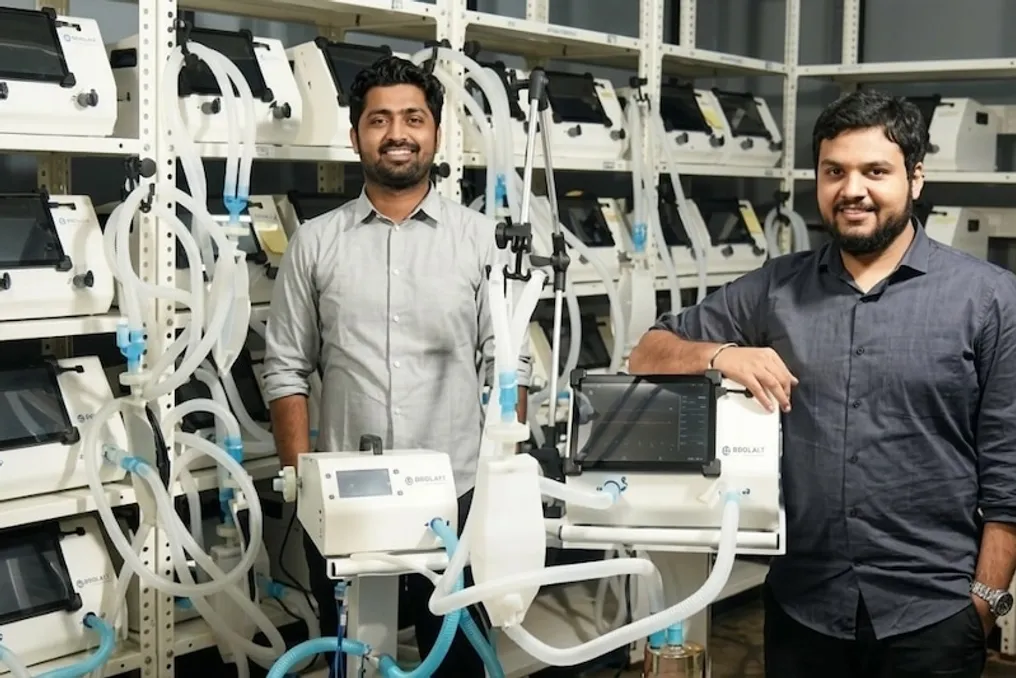
This work transformed into the Ventilator Consortium IIT Kanpur, which included doctors, scientists, engineers, and experienced consultants. The team, utilizing the laboratory and technical resources of IIT Kanpur, improved the ventilator's design. After about three months of intensive work, they presented the Nokkarq V310. It was a modern AI-powered ventilator, made predominantly from Indian components and technologies.
This device was available at a lower price compared to foreign counterparts and possessed all the necessary functions for treating critically ill patients. During the second wave of coronavirus, when the demand for ventilators sharply increased in hospitals, these devices helped treat patients. This emergency project completely changed the course of the company. Nokka Robotics was renamed Nokkarq Robotics, and the company began focusing on medical technologies instead of industrial robotics. Today, over 50 people work at the company.
The company has supplied about 260 AI ventilators to hospitals across the country and has become a successful business. Its medical equipment now competes with major international companies in the Indian market. Nikhil Kurele's work has received recognition, and he has been included in the Forbes 30 Under 30 list.
More than just a success story, the journey of Nokkarq demonstrates how quickly engineering skills can be adapted to solve real-world problems. The founders had no prior experience in healthcare, but they still decided to learn, work with doctors, and change their company's direction according to the country's needs. Today, their startup is known not only for solar panel cleaning robots but also for the fact that Indian engineers are capable of creating world-class medical technologies in difficult times.