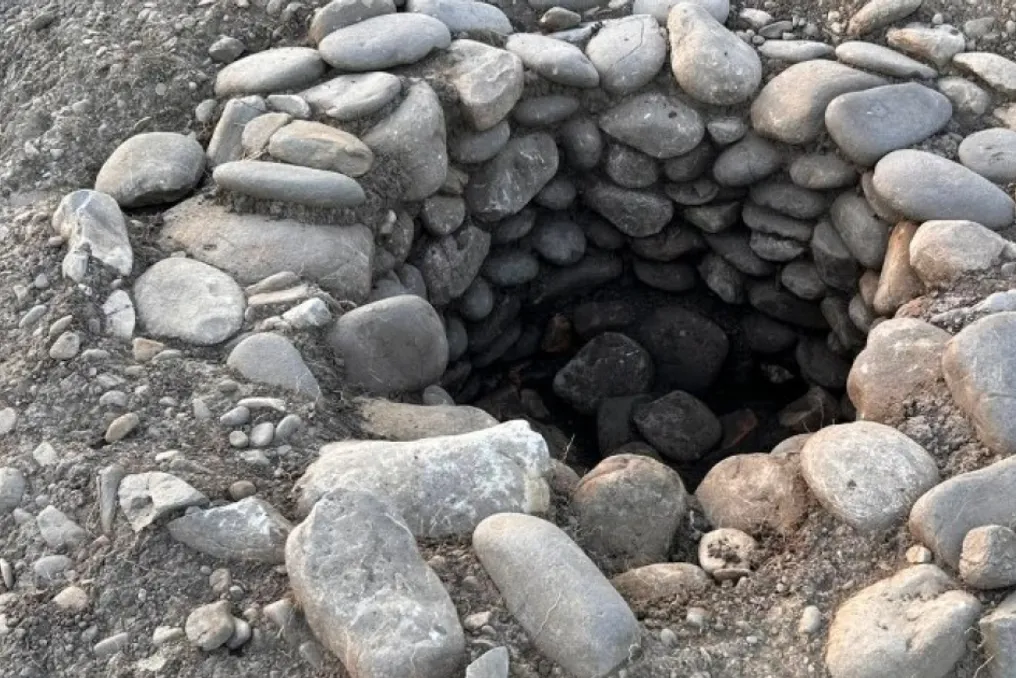
Italian archaeologists have discovered an unusual Etruscan well during excavations in the ancient city of Caianua. This structure was created approximately 2,500 years ago. Bronze votive offerings were found inside the well, which were apparently placed there before the well was put into use. Human remains were discovered in connection with the cessation of this site's function.
The region of Tuscany preserves the remains of one of the best-preserved ancient cities built by the Etruscans. According to rare inscriptions, this city was called Caianua, which may mean 'New City,' similar to Novgorod or Naples. Archaeologists working at this monument since the 19th century have been able to uncover residential quarters, roads demonstrating the city's layout, as well as ruins of artisan workshops, necropolises, and ritual structures. It is presumed that Caianua originated between the late 6th and early 5th centuries BCE.
In recent decades, research on the ancient city has been conducted primarily by specialists from the University of Bologna under the direction of Etruscologist Elisabetta Govi. She reported on the results of the last field season. Archaeologists were working in the sacred zone of the city, where temples dedicated to the goddess Uni (analogous to Greek Hera and Roman Juno), her consort Tinia (analogous to Zeus and Jupiter), and Vei — the goddess of fertility and earth, similar to Demeter and Ceres — had previously been identified.
Near these temples, researchers discovered an ancient well, to whose original bottom level they reached this year. Various artifacts were found as a result, including bronze figurines of women that have remained in good condition despite their age. According to scientists, these items were thrown into the well as ritual gifts at the very beginning of the new structure's use, about two and a half thousand years ago, i.e., at the time of the city's founding.
Other findings indicate that another ritual took place before the well ceased to be used. Archaeologists extracted two human skeletons, which, in their opinion, were intentionally left there during the ritual closing of the structure, although details confirming this have not yet been revealed. It was also noted that the well likely served not only as a water source but also held a sacred significance related to worship.
Other notable objects were found near the well. For example, the remains of a child were discovered, who was apparently sacrificed by the ancient inhabitants of the city before the construction of the temple of the goddess Uni. Analysis of these bones showed that they belonged to a local boy who died either shortly after birth or late in utero development.