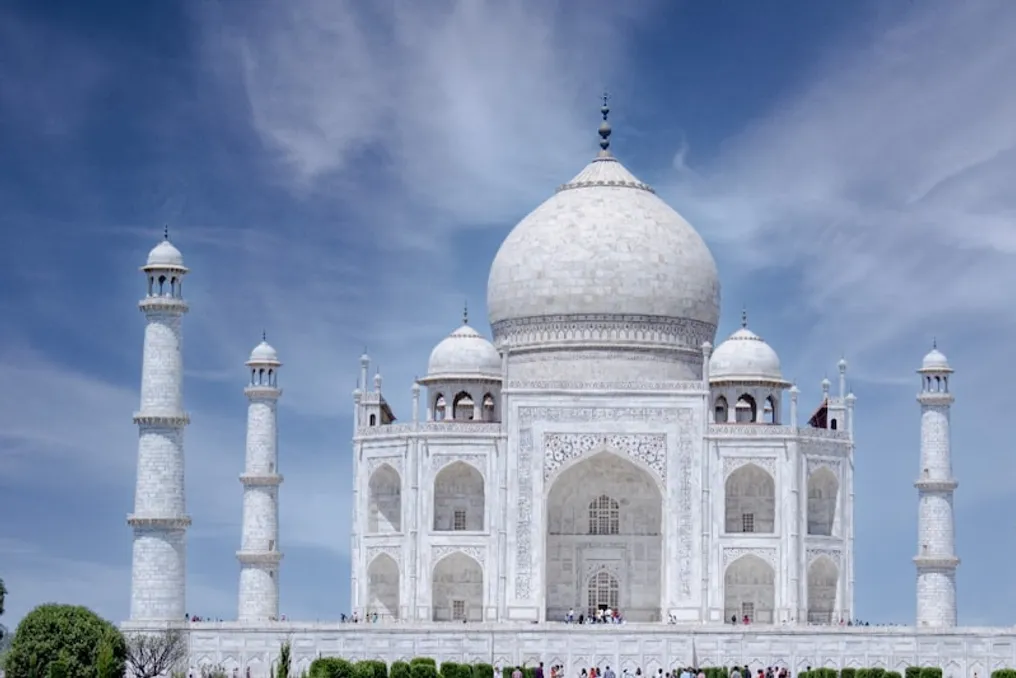
The question of whether Shah Jahan ordered workers to have their hands amputated after the construction of the Taj Mahal remains a subject of debate. The poetry of the poet Jamil Malik recalls the labor of thousands of craftsmen who created this masterpiece, which is today recognized as one of the Seven Wonders of the World for its beauty, art, and unparalleled craftsmanship.
There is a common story that Shah Jahan ordered the hands of the artisans to be cut off so they could not build similar structures again. However, historians argue that there is no evidence of this claim in historical sources.
According to historians, neither Muslim documents, official records of the time, nor descriptions by European travelers such as Jean-Baptiste Tavernier and François Bernier mention that Shah Jahan ordered the amputation of the hands of the artisans involved in the construction of the Taj Mahal.
Professor Syed Ali Nadeem Rizvi, former chairman of the Faculty of History at Aligarh Muslim University and a specialist in medieval history, noted that if anyone wanted to stop the construction, it would concern the architect, not the laborers, since the architect develops the design. The workers merely carry out the work according to this project.
He also reported that wages continued to be paid to the workers after the completion of the Taj Mahal, and there are documents confirming these payments. Today, the descendants of these masters are connected to traditional crafts in the Tajganj area of Agra.
Historians point out that after the construction of the Taj Mahal, many artisans continued to work on other projects in the Mughal Empire, including buildings such as Shahjahabad (Old Delhi), the Red Fort, and the Jama Masjid. Therefore, the story of hand amputation does not align with available historical data.
The Taj Mahal was built by the Mughal emperor Shah Jahan in memory of his wife Mumtaz Mahal. Construction took place from 1632 to 1653 and required the participation of about 20,000 workers and craftsmen. The use of marble, inlay with precious stones, and fine carving made it one of the world's most famous buildings.
According to the BBC, a significant number of workers came from the region of Kannauj, while stonemasons, stone carvers, carpenters, painters, and other skilled artisans were invited not only from different parts of the Mughal Empire but also from Central Asia and Iran.
Historian Abba Koch, a recognized leading expert in Mughal architecture, explains this story as a 'Guides' Tale,' meaning a folk legend told by tourist guides. According to him, such stories are associated with many historical monuments around the world.
Historian S. Irfan Habib believes that this story became popular especially in the 1960s. He emphasizes that there is no credible historical evidence to support this claim, and no authoritative historian has accepted it as fact.
Thus, existing historical documents, modern descriptions, and scholarly research do not confirm that Shah Jahan ordered the hands of the artisans who built the Taj Mahal to be cut off; therefore, it is considered a popular myth rather than an established historical event. The main value of the Taj Mahal lies not in a cruel story, but in the art, labor, and skill of the thousands of artisans who included it among the most beautiful buildings in the world.