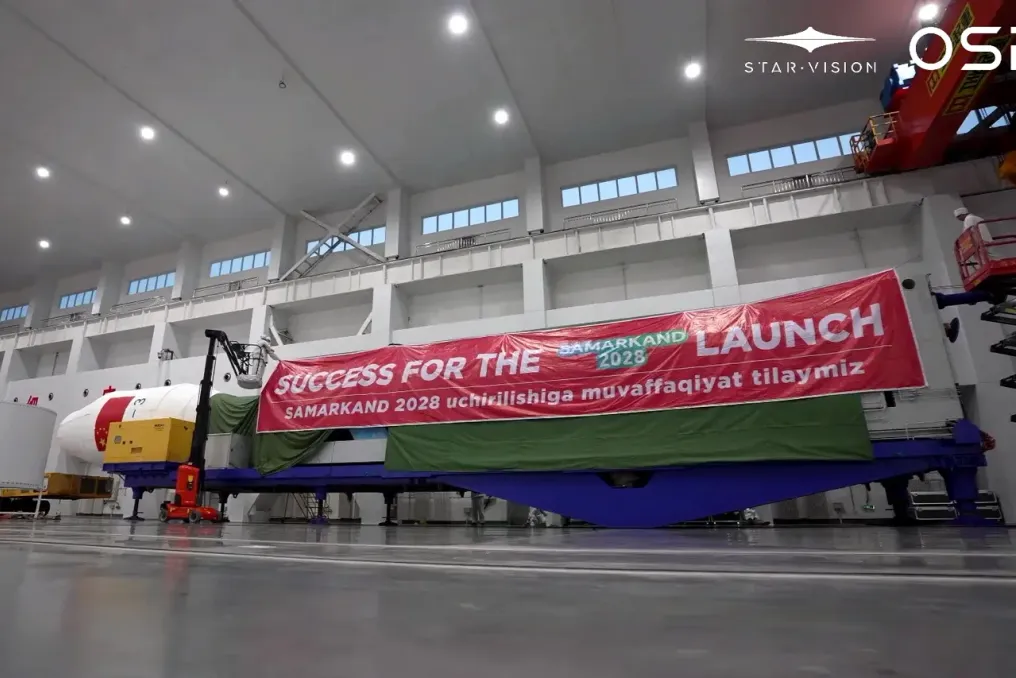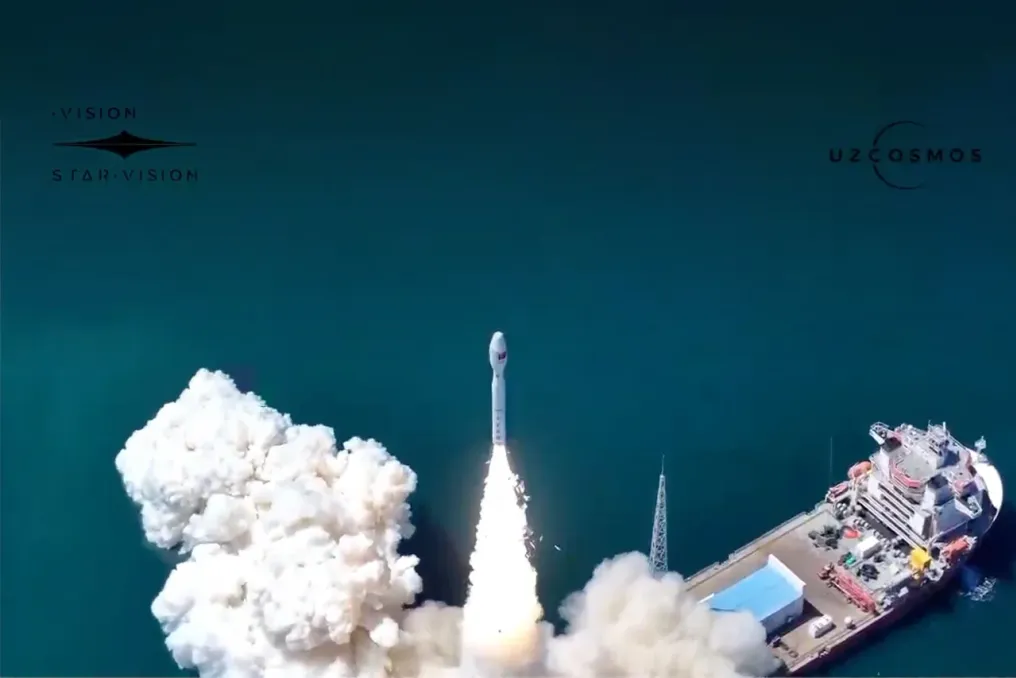
Uzbekistan, in collaboration with the Chinese company STAR.VISION, successfully placed the hyperspectral Earth remote sensing satellite Samarkand-2028 into orbit. The launch took place on August 5, 2026, from the Haiyang spaceport in China.
Uzbekistan, in collaboration with the Chinese company STAR.VISION, successfully placed the hyperspectral Earth remote sensing satellite Samarkand-2028 into orbit. The launch took place on August 5, 2026, from the Haiyang spaceport in China.
This satellite was developed by STAR.VISION with the participation of the Uzbekcosmos agency. The agency noted that this mission marks an important stage in the development of the national space program, the implementation of modern space technologies, and the strengthening of scientific and technical cooperation between Uzbekistan and China.
Samarkand-2028 belongs to the class of hyperspectral satellites. Unlike ordinary spacecraft, it is capable of analyzing radiation reflected from the Earth's surface in more than 20 spectral bands. This allows for detailed information gathering on the state of agricultural crops, water and natural resources, the environment, as well as tracking changes in land use.
A key feature of the satellite is the artificial intelligence module developed by Uzbekcosmos specialists. It is designed to process some of the satellite's data onboard before transmitting it to Earth. According to the agency, this will reduce the volume of transmitted information, speed up the acquisition of necessary data, and increase the efficiency of subsequent analysis.
The data received from the satellite is planned to be used in agriculture, water resource management, environmental and natural resource monitoring, early detection of emergencies, urban planning, and rational land use. The project is also considered a technological base for training national specialists in space engineering, artificial intelligence, and satellite data processing.
The name Samarkand-2028 is related to the fact that the 79th International Astronautical Congress will be held in Samarkand in 2028. The decision to host the forum in Uzbekistan was made in 2025 at the International Astronautical Congress in Sydney.
Uzbekistan plans to launch the hyperspectral Earth remote sensing satellite Samarkand-2028 on August 5th. The launch is scheduled to take place from 07:00 to 09:00 Tashkent time from the Haiyan Oriental Spaceport in China.
The satellite development was carried out by the Chinese company STAR.VISION in partnership with Uzbekistan's agency, Uzcosmos Agency. This mission is considered by the agency as an important stage in the country's space program, contributing to the implementation of advanced technologies and strengthening scientific and technical cooperation between Uzbekistan and China.
Samarkand-2028 is a hyperspectral satellite capable of analyzing reflected radiation from the Earth's surface across more than 20 spectral bands, significantly surpassing the capabilities of ordinary multispectral satellites. This allows for more detailed monitoring of agricultural crops, water and natural resources, environmental conditions, and land use changes.
A key feature of the satellite is the artificial intelligence module developed by Uzcosmos specialists. This onboard system is designed to process some of the collected data before transmission to Earth, which reduces the volume of transmitted information, accelerates access to critical information, and increases the efficiency of subsequent analysis.
The obtained data will be used in agriculture, water resource management, environmental and natural resource monitoring, early detection of emergencies, urban planning, and sustainable land management. Furthermore, the project aims to serve as a platform for training Uzbek specialists in space engineering, artificial intelligence, and satellite data processing.
The satellite's name refers to Samarkand's role as the host city of the 79th International Astronautical Congress in 2028. The decision to hold the congress in Uzbekistan was made during the International Astronautical Congress in Sydney in 2025.
Uzcosmos clarified that the launch schedule may be adjusted or postponed if necessary due to weather conditions or technical reasons, which aligns with standard international practice to ensure mission safety and reliable operation of all spacecraft systems.