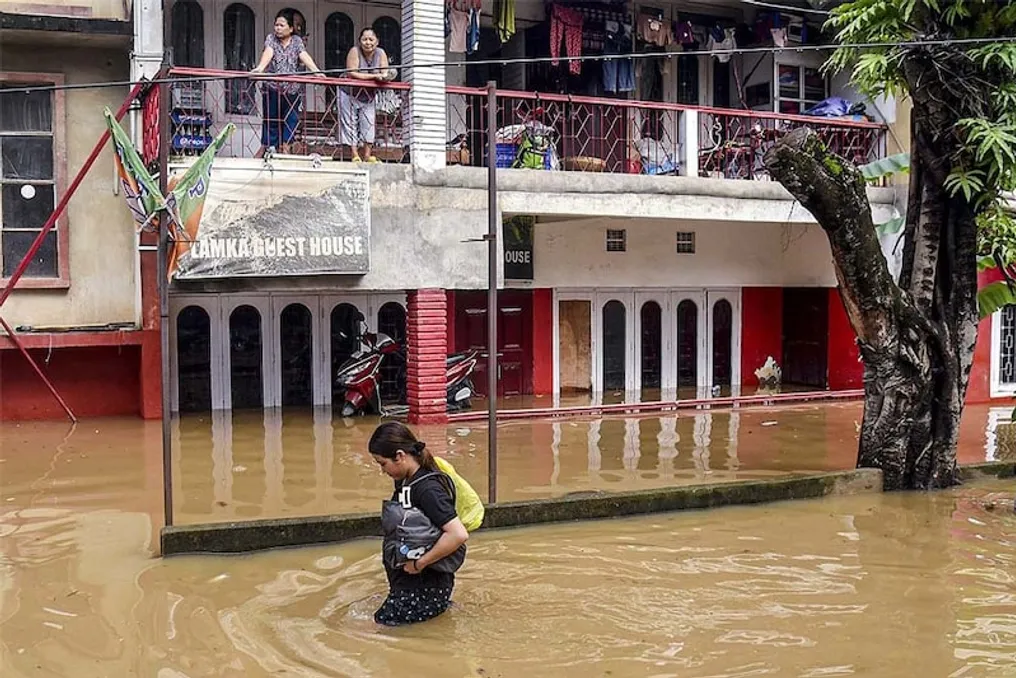
The Indian monsoon demonstrates that it does not depend solely on global weather patterns. Even in the presence of negative conditions such as El Niño, the monsoon is sustained by internal weather systems, which experts call the 'India-created Monsoon.' This situation holds significant scientific importance and also raises concerns among farmers, policymakers, and the general public.
The 2026 monsoon has reached a critical phase. Heavy rains in late July provided some relief after a devastating deficit in June, but the overall situation remains below normal. According to the Indian Meteorological Department, only 424.9 millimeters of rain have fallen so far against an average of 481.9 mm, indicating a shortfall of 57 millimeters by August. In percentage terms, this represents an 11.8% deficit, whereas in June, this deficit reached 39%, which was an alarming signal for the entire season.
In June, the onset of the monsoon was slow. Rainfall in many regions was significantly below normal, intensifying agricultural concerns. Issues arose related to moisture deficiency in fields, delayed sowing, and reduced water levels in reservoirs. However, extensive rains in the last week of July provided temporary relief, partially improving the drought situation and replenishing rivers and ponds. Nevertheless, this relief proved to be short-lived, as the overall deficit remained at 11.8% at the beginning of August, indicating the persistence of consequences from low rainfall over the previous two months.
The entire monsoon season usually runs from June to September. Under standard conditions, 868.6 millimeters of rain should fall during this period. Since 424.9 millimeters have fallen so far, approximately 443.7 millimeters must be received in the remaining 57 days to reach 100% of the normal amount. This is an ambitious task requiring joint efforts from August and September.
August is traditionally considered the most crucial month of the monsoon. Its average figure is approximately 254.9 millimeters. However, the current situation demands more. Since the country entered August with an 11.8% deficit, normal rainfall will not be enough. If there is a deficit in September, August will have to compensate with additional rainfall. For example, if there is a 20% deficit in September, August will require 121.4% of the normal amount, or about 309.4 millimeters. With a 30% deficit in September, August must deliver 128% of the normal amount, or 326.2 millimeters. In the worst-case scenario, if September shows a 50% deficit, August must provide 141.1% of the normal amount, which amounts to approximately 359.7 millimeters. These forecasts indicate that August must become a month of record rainfall.
The main reason for the monsoon's persistence despite El Niño is the internal weather systems. Active low-pressure areas coming from the Arabian Sea and the Bay of Bengal, western disturbances, and local convergence zones help balance the global influence. Scientists believe that the geographical location of the Indian subcontinent and local sea temperature patterns support the monsoon this year, preventing the rain from stopping completely despite the negative impact of El Niño. This 'Indian' aspect is important because it demonstrates the ability of local factors to play a decisive role even amidst global climate fluctuations.
If these systems remain active in August, there is hope for improvement. However, the weakening of these systems will reduce the chances of improvement in September. The July rains provided some respite, but August will be the decisive month. Water levels in reservoirs, groundwater replenishment, and water supply depend on this. A lack of rainfall in August could cause drought in many areas and increase the load on power generation, especially hydroelectric power plants. From an economic perspective, this is also critical, as rural demand, food inflation, and government support programs are linked to monsoon indicators.
Models show that rainfall in September may be below normal, placing all responsibility on August. The meteorological department is continuously monitoring and issuing recommendations for farmers. In the long term, due to climate change, monsoon patterns are becoming increasingly unpredictable. Therefore, relying on just one month is risky. Long-term measures are necessary, such as water conservation, cultivating drought-resistant crops, and improving irrigation systems. Overall, the 2026 monsoon is not yet over; although internal mechanisms saved it from complete collapse during El Niño, achieving the normal level requires August to bring record rainfall.