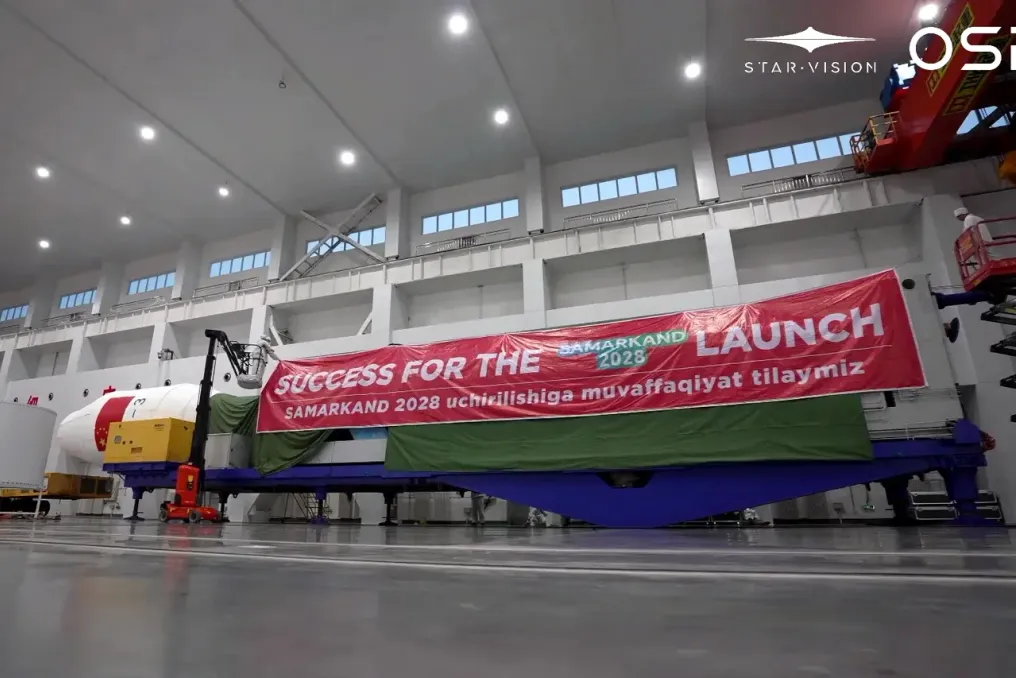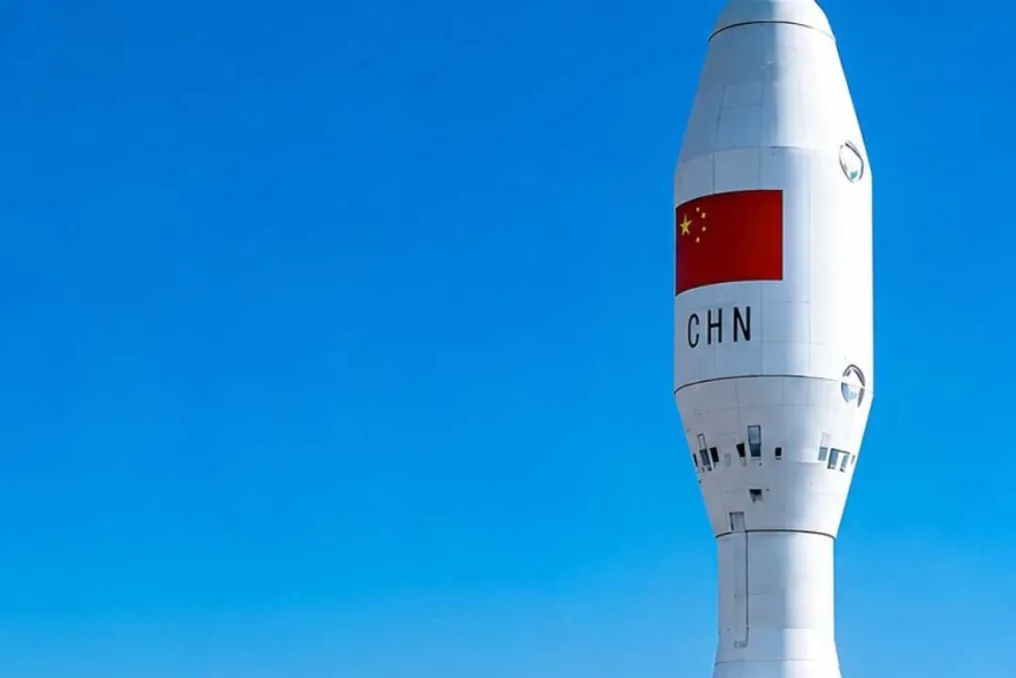
Uzbekistan's satellite Samarkand-2028, equipped with an Uzbek artificial intelligence module, was successfully placed into orbit. The launch took place on August 5 from a sea platform located off the coast of China's Shandong province.
Uzbekistan's satellite Samarkand-2028, equipped with an Uzbek artificial intelligence module, was successfully placed into orbit. The launch took place on August 5 from a sea platform located off the coast of China's Shandong province.
According to information from the republic's Ministry of Digital Technologies, this project was carried out in partnership with the company STAR.VISION. Simultaneously with the Uzbek spacecraft, the Lampung-1 satellite was also launched into orbit.
Specialists from the 'Uzbekcosmos' agency created an artificial intelligence module for the satellite's onboard system. This technology enables the processing of hyperspectral data directly in orbit, significantly improving both the transmission and analysis of the received information.
The planned mission will expand the scope of space technology applications in several fields, including agriculture, environmental monitoring, natural resource observation, water resource management, early warning of emergencies, and urban planning.
The choice of the name Samarkand-2028 is due to the planned holding of the 79th International Astronautical Congress in Samarkand in 2028. This decision was made at the congress held in Sydney in 2025.
The implementation of this project will strengthen scientific and technological cooperation with China and raise Uzbekistan's status in the global space community to a qualitatively new level.
According to a statement from the Ministry of Digital Technologies of Uzbekistan, the Chinese company STAR.VISION intends to launch the hyperspectral satellites Samarkand-2028 and Lampung-1 on August 5, 2026. The launch will take place from an offshore launch platform near the coast of Shandong province in China.
The Ministry noted that the Samarkand-2028 satellite is a practical result of strategic cooperation between the Uzbekcosmos agency and STAR.VISION, which was implemented under a signed memorandum.
The spacecraft received the name Samarkand-2028 in honor of the decision to hold the International Astronautical Congress (IAC) in Samarkand in 2028. This decision was made at the congress held in Sydney, Australia.
As part of this project, Uzbekcosmos specialists developed an artificial intelligence module for the satellite's onboard system. This module will process hyperspectral data directly in orbit, which is expected to increase the efficiency of Earth remote sensing.
The data obtained by the satellite is intended for use in agriculture, environmental monitoring, natural resource tracking, and other fields.
According to the Ministry of Digital Technologies, the rocket is already aboard the offshore launch platform and heading to the launch site. Preliminary work continues according to the approved schedule.
The Samarkand-2028 satellite project was presented to the President of Uzbekistan, Shavkat Mirziyoyev, in December 2025. At that time, it was reported that the spacecraft would be used to assess air quality, monitor agricultural lands, and control forest conditions.