The head of the Iranian Trade Promotion Organization announced the development of a new roadmap for significant growth in non-resource exports, emphasizing the strategic necessity of transitioning from exporting raw materials and semi-finished products to finished goods with high added value.
During a meeting with representatives and the board of directors of the Iranian Chamber Guilds, the head of the Iranian Trade Promotion Organization (TPO) noted that shifting the export focus from selling raw materials to finished products is a necessity.
According to the TPO's Public Relations Department, this meeting was organized to clarify the new structures for guild participation in the international supply chain and to study operational solutions to eliminate administrative, currency, and regulatory obstacles faced by guild exporters.
Highlighting the structural problem of the country's trade balance from a qualitative perspective, the head of the TPO stated that one of the fundamental and problematic tasks of foreign trade is the low average value of exported goods compared to imported ones. Currently, the average value of a ton of exported goods is about 300 US dollars, while for imported goods, this figure reaches approximately 2000 US dollars.
This significant gap indicates the persistence of a traditional approach and the country's dependence on raw material sales. He added that to strengthen Iran's position in the global value chain, most non-resource exports are concentrated in primary industries such as the steel chain, iron ore, pellets, and ingots, whose marketing and sale do not possess scientific trading complexity due to the nature of the raw materials.
In contrast, guilds involved in the production and distribution of finished and consumer goods, such as furniture, operate differently.
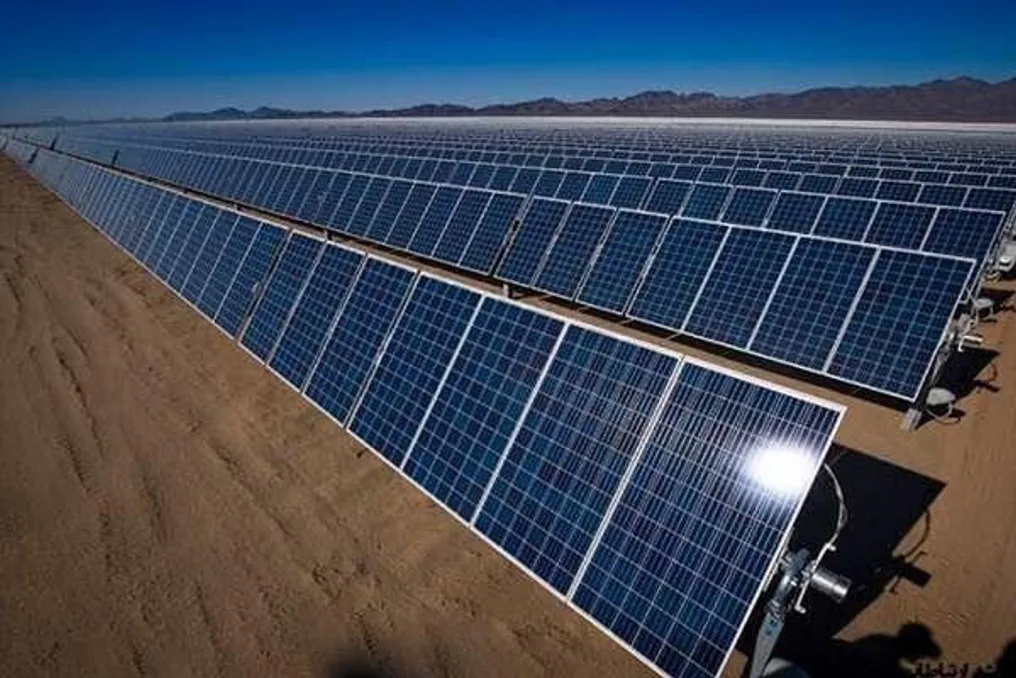
According to IRNA, Mohsen Taraztalab, during a visit to solar power plants in western Golestan, reported that since the beginning of the fourth government's term, about 4500 megawatts of new capacity have been added to the country's energy system. Furthermore, the renewable energy capacity has increased from 1250 megawatts to approximately 5800 megawatts.
He continued that according to the plan, by the end of the first half of the current year (September 20), the capacity of renewable power plants will reach 7000 megawatts, and by the end of the year (March 2027), it will reach 12,000 megawatts, and achieving this goal requires securing the necessary financial resources.
The head of SATBA, commenting on the progress of solar projects in Golestan, stated that a private solar power plant in the city of Gonbad-e Kavus is in the final stages of construction; part of its capacity will be connected to the national grid within the next 20 days, and the entire station's capacity by September 11.
Taraztalab specified that about 140 people are currently working on this project, and efforts are being made to bring the station into full operation within a maximum of one and a half months.
He named the development of household solar power plants as one of the government's priorities and noted that limitations in financial resources have reduced the ability to provide benefits simultaneously to all applicants. However, SATBA is working to secure low-interest subsidies for the development of these stations by creating a project fund and utilizing its resources.
The Deputy Minister of Energy stated that applicants who have the necessary permits, contracts, grid connection approvals, and corresponding physical progress will be directed to banks to obtain subsidies, which will activate public participation in the development of solar power plants.
During his visit to the solar power plants in western Golestan, Taraztalab assessed the progress of the province's 3, 30, and 64 megawatt projects as favorable. He added that thanks to the work of these projects, the share of clean energy in Golestan's energy supply will increase, and part of the province's needs will be met through solar energy generation.