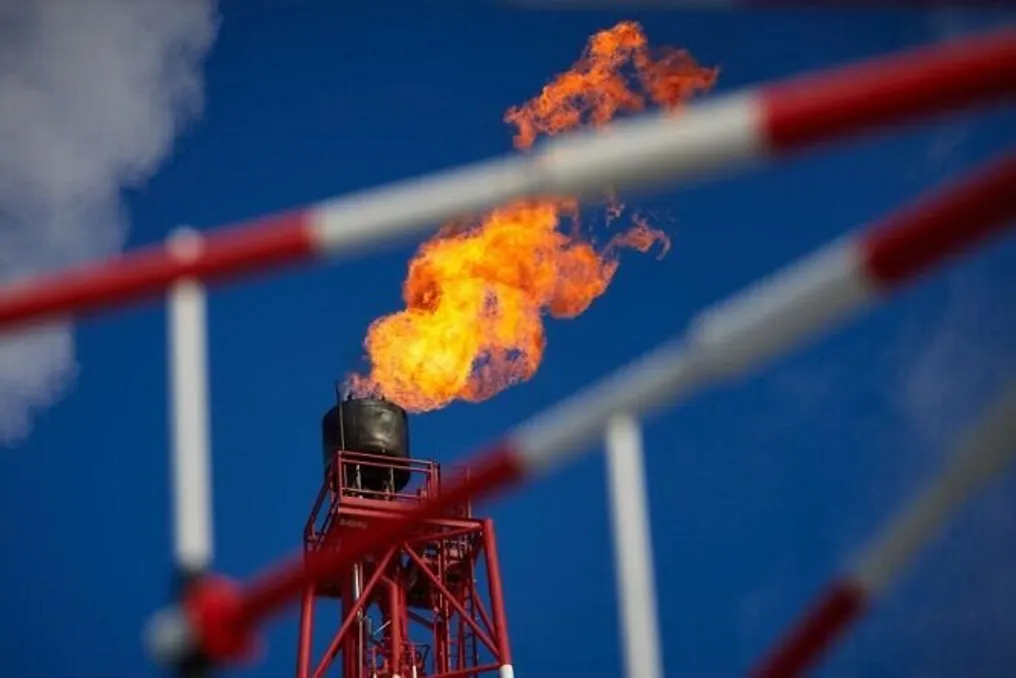
The capacity for collecting associated petroleum gases has increased due to the launch of new projects, which aim to reduce flaring to 35 million cubic meters per day.
According to Mehr News Agency, the collection of associated gas in Iran's oil and gas industry has reached over 16 million cubic meters daily. This figure is an increase compared to approximately 7 million cubic meters per day collected before the start of the fourteenth government. The growth was achieved through the operation of new processing facilities and the fulfillment of short-term tasks.
Associated petroleum gases are formed during crude oil extraction and are flared if the necessary infrastructure for their collection, transportation, purification, and processing is absent. This process not only leads to the loss of energy resources but also has a serious impact on the environment in oil-bearing regions, affecting air quality and residents' health.
Estimates suggest that about 80 million cubic meters of associated gas are produced daily in the country. Part of this volume is directed to Natural Gas Liquids (NGL) plants, subsequent facilities, and the processing network; however, depending on the level of crude oil production and operational capabilities, between 40 and 50 million cubic meters of gas are flared daily.
Increased crude oil production also leads to higher volumes of associated gas, making it crucial to simultaneously develop processing capacities and transportation lines to prevent a resurgence of flaring. In recent years, the growth in production at some fields has intensified the need to revise and expand associated gas collection programs.
The associated gas collection program is being implemented both in the short and long term. Short-term projects are designed for implementation within 18–30 months to bring part of the associated gas into the production chain more quickly by attracting private investors and buyers.
Projects such as Marun 5 at the National Iranian South Oil Company, the Dehloran gas distribution station, and the Haftkel gas injection station modification project have been commissioned under this program. The implementation of the Haftkel project allowed for the collection and injection of associated gas from this area after many years of waiting.
Five long-term projects have also been identified, aimed at creating sustainable associated gas processing capacity. These projects include two associated gas collection contracts in East Karoun, the construction of the NGL 3200 plant in West Karoun, NGL 3100 in Dehloran, and Kharg NGL for collecting associated gas from the Bahregan and Kharg regions.
The construction of refineries and large processing complexes for full flare control usually takes 7 to 10 years. Nevertheless, the commissioning of NGL 3200 in 2023 and NGL 3100 in August of this year has allowed for the introduction of part of the planned associated gas processing capacity.
Reza Kheylai, Director of Oil and Gas Production Supervision at the National Iranian Oil Company, stated that the sustainable capacity envisioned by the long-term associated gas collection plans is about 1.9 billion cubic feet per day. This capacity covers part of current emissions and the needs of future development projects.
It is estimated that this capacity approaches the production volume of one phase of South Pars and, in addition to preventing new flares, can provide more stable feedstock for the petrochemical and processing industries and part of the country's domestic consumption.
Expanding associated gas collection projects requires significant investment in the construction of pipelines, gas distribution stations, purification equipment, and processing units. The distribution of over 90 flare points across seven provinces increases the costs of transportation and the creation of collection networks.
A significant portion of the associated gas is sour, and its processing requires specialized equipment. Ensuring this equipment, especially amid foreign currency restrictions and the complexity of order registration, is one of the factors affecting project timelines.
Approximately $6 billion in investment is required to collect the main volume of associated gas, of which the private sector has already provided about $4.5 billion. The main project implementation model is based on selling associated gas to investors, meaning companies receive the gas, process it, and earn revenue from the project through the extraction of gas products and liquids.
To enhance the economic attractiveness of the projects, the base price of associated gas in tenders is determined based on the type of gas, its composition, the content of extracted liquids, and transportation costs. In some areas with high transport costs or difficult access, the base gas price has been reduced to zero to stimulate greater investor participation in the projects.
About 30 out of the more than 90 flare points in the country have already been transferred to the private sector. The transfer of the remaining points depends on the availability of investors, completion of negotiations, obtaining permits, and project financing. The Ministry of Oil has also invited petrochemical companies and downstream complexes to participate in these projects, as their involvement can increase raw material stability during the colder months of the year.
The Seventh National Development Plan mandates the annual collection of 16 billion cubic meters of associated gas, of which 14 billion cubic meters falls under the jurisdiction of the National Iranian Oil Company, and 2 billion cubic meters under the jurisdiction of the National Iranian Gas Company. Previous plans to achieve this goal have been adjusted, and tender scopes have been expanded.
The government has set the goal of reducing associated gas volumes to approximately 35 million cubic meters per day by the end of the fourteenth government. Achieving this goal depends on the completion of current projects, resolving contractual and banking obstacles, securing equipment, and increasing investor participation.
Visual equipment and online monitoring systems are installed to track project progress, transmitting information to the national observatory. This mechanism is expected to allow for more accurate tracking of project timelines and accelerate the removal of bottlenecks in implementation.