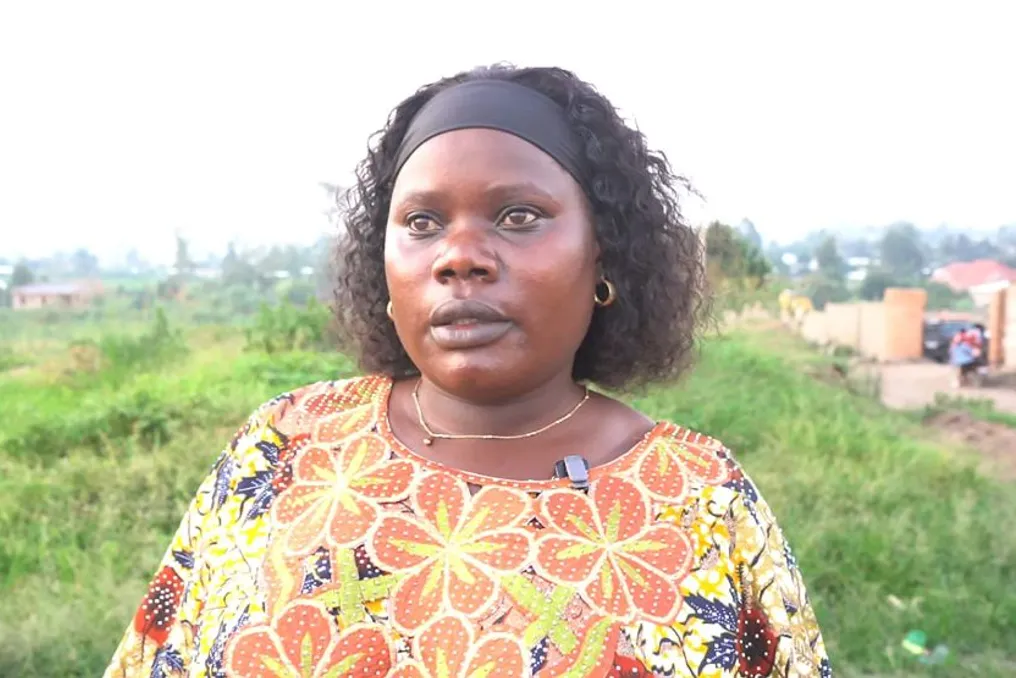
Every day, Micheline Kayimpa puts on protective gear before entering the isolation ward for Ebola patients in the Democratic Republic of Congo (DRC), aware that the slightest mistake could cost her life. At the Ebola treatment center in Bunia, the nurse spends days caring for patients with the Ebola virus—one of the deadliest viruses in the world—administering medication and assisting those too weak to feed themselves.
Since Ebola is transmitted through bodily fluids, even routine care exposes healthcare workers to constant risk, whether treating patients or cleaning contaminated areas. Kayimpa told CNN: 'I am very afraid for my safety. Sometimes a small detail we overlook can prove fatal.'
However, as the outbreak grows at an alarming rate, healthcare workers state they are not only fighting the virus. After months of treating Ebola patients, Kayimpa reports that she has yet to receive any payment from the government. This mother of four is among dozens of health workers who have protested wage delays and threatened to boycott their work.
The situation has reached a critical point. Kayimpa works on the front lines of what the World Health Organization calls 'the largest Ebola outbreak ever recorded' in the DRC. According to data published Wednesday by the Congolese Ministry of Health, since the virus appeared in mid-May, it has infected at least 3,874 people and claimed 1,751 lives.
The outbreak was jointly detected in the DRC and neighboring Uganda. Although Uganda has since declared itself Ebola-free, the transmission of the virus continues to accelerate in eastern Congo. This surge reached such a scale in just over two months, surpassing the last major Ebola epidemic in the country, which lasted nearly two years from August 2018 to June 2020. Only the 2014–2016 Ebola epidemic in West Africa was larger and deadlier, infecting over 28,600 people and killing 11,325 in Guinea, Sierra Leone, and Liberia.
Bunia, where Kayimpa works, is the capital of the northeastern province of Ituri, the epicenter of the outbreak, where over 90% of confirmed cases have been registered. The response is already struggling, even without the threat of healthcare workers withdrawing in protest. Unlike previous Ebola outbreaks, the current one is caused by the less common Bundibugyo strain, for which there are no proven vaccines, and treatment options remain limited. Ongoing fighting in eastern DRC also hinders healthcare workers' access to affected communities.
Lancelot Mermet, Director of Humanitarian Aid Programs at Mercy Corps, noted: 'This outbreak is entrenched in communities already weakened by conflict and displacement, which have inherently weak health, water, and sanitation systems.' He added to CNN that 'when people cannot quickly get help or do not sufficiently trust the system to reach out, the virus spreads faster,' pointing out that healthcare workers are still identifying cases that cannot be linked to known infections.
Humanitarian agencies report that distrust, misinformation about Ebola, and resistance to restrictions on traditional burial practices have increased hostility towards healthcare workers and complicated efforts to contain the outbreak. This hostility became evident in late May when demonstrators seeking the bodies of two relatives broke into the Ebola treatment center. This was the third such attack since the start of the outbreak, forcing healthcare workers to move patients to a safe location amid nearby gunfire.
Violence continued. Similar attacks were recorded in June and July, and the United Nations stated last month that 'at least a dozen facilities have been attacked, mainly due to fear, misinformation, and deep community distrust of external authorities.'
At the Ebola treatment center in Bunia, Elikya, the response system is operating at its limit. A 90-bed isolation unit, managed by the international humanitarian organization Médecins Sans Frontières (Doctors Without Borders, or MSF), is already functioning at full capacity, with many patients arriving only when they are in critical condition. Kayimpa stated: 'We don't have enough staff. We only have two or three nurses caring for patients with more than ten different illnesses.'
Even with protective equipment, danger does not disappear. 'Accidents can happen while I am working here,' she said. 'Some aggressive patients might attack you and infect you. We sacrifice our lives for people.'
Healthcare workers already paid a high price in the early days of the outbreak, she recalls. 'When the disease first appeared, we didn't know it was Ebola. We treated patients without any protection. Many of us got infected, and some died.'
Despite these risks, Kayimpa asserts that it wasn't the virus that pushed many healthcare workers to the limit. MSF provides bonuses, she says, but these payments do not replace the government salary upon which she depends. 'I have been working here since June but have not received a single penny of salary,' she said, adding that her name was incorrectly listed on the payrolls. 'I was told that processing my case would take a long time.'
She stopped working for three days in protest but resumed it since, hoping her case would be resolved. However, if there is no progress, Kayimpa—who worked in a private medical facility in Bunia before joining the Ebola response efforts—is ready to leave again.
It is unclear whether the delays are linked to broader funding pressures affecting the response measures. The DRC Minister of Communications, Patrick Muyaya Katembe, acknowledged that payment delays triggered staff protests at several Ebola treatment centers but informed CNN that outstanding payments are now being processed. He explained that the delays were largely due to the administrative process of verifying which workers were deployed to fight Ebola and ensuring payments reached the intended recipients. 'Anyone officially listed will be paid.'
MSF, which manages several Ebola treatment and isolation facilities across the DRC, stated that the protests relate to government compensation, not payments from the humanitarian organization. In a statement to CNN, the organization reported: 'MSF continues to fulfill its obligations to staff working within the response,' adding that 'healthcare workers play a vital role in responding to this outbreak, and it is important that they receive timely compensation for their work in extremely difficult conditions.'
Humanitarian workers argue that the success of the Ebola fight depends on people risking their lives to keep it running. One aid worker familiar with the situation told CNN: 'These are the people who bear the greatest burden of the outbreak, caring for and treating patients, preventing infections, and maintaining public trust in the healthcare system, all while taking significant risks themselves.' He added: 'With the rapid movement of this outbreak and its further spread from the epicenter, frontline workers need equipment, protection, timely payment, and support to perform their jobs safely. Any interruption gives the virus more time to spread and forces the response to chase a fire burning behind them.'
Whether workers like Kayimpa receive the necessary support may determine how many of them remain on the front lines, fighting to save patients and contain the virus. 'Until I get my salary, I will boycott work until I am paid,' she stated. 'What's better, I will quit this job to try other activities that will bring me money.'