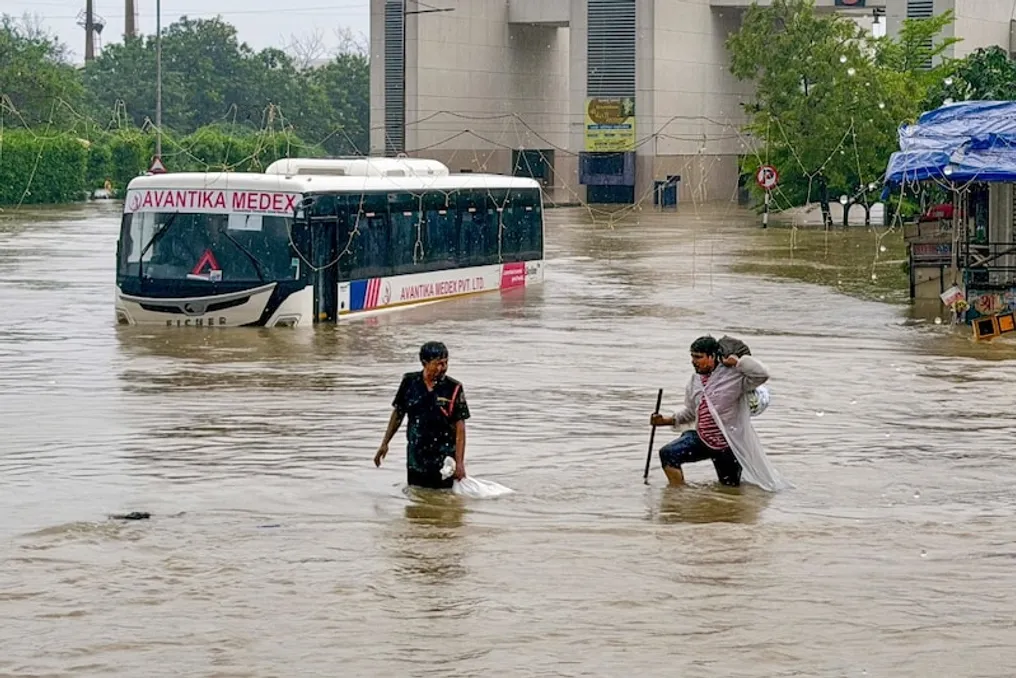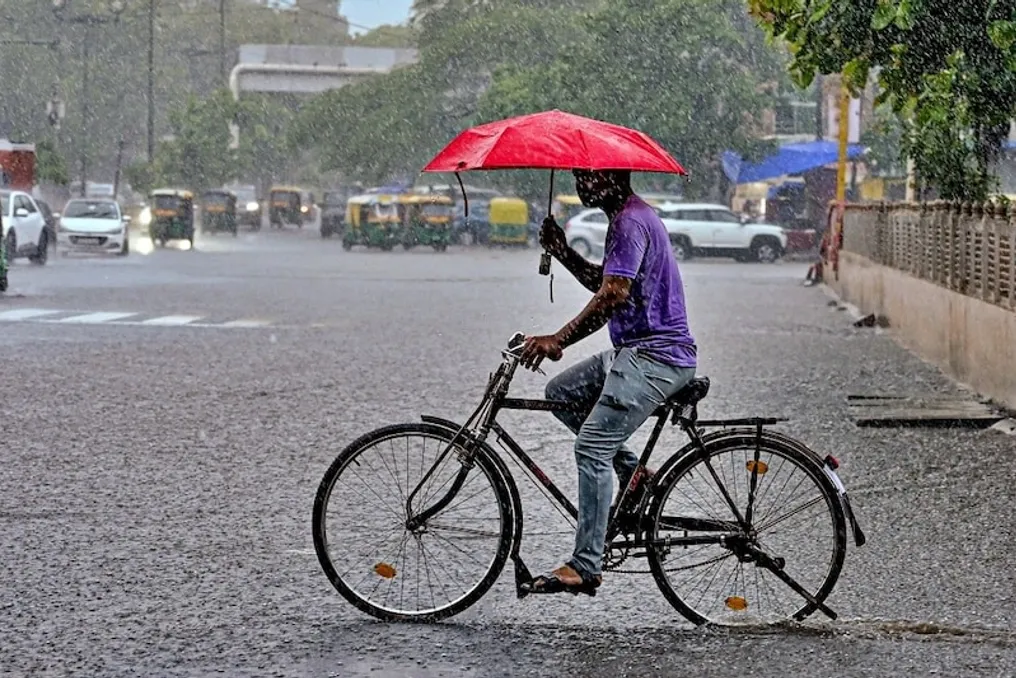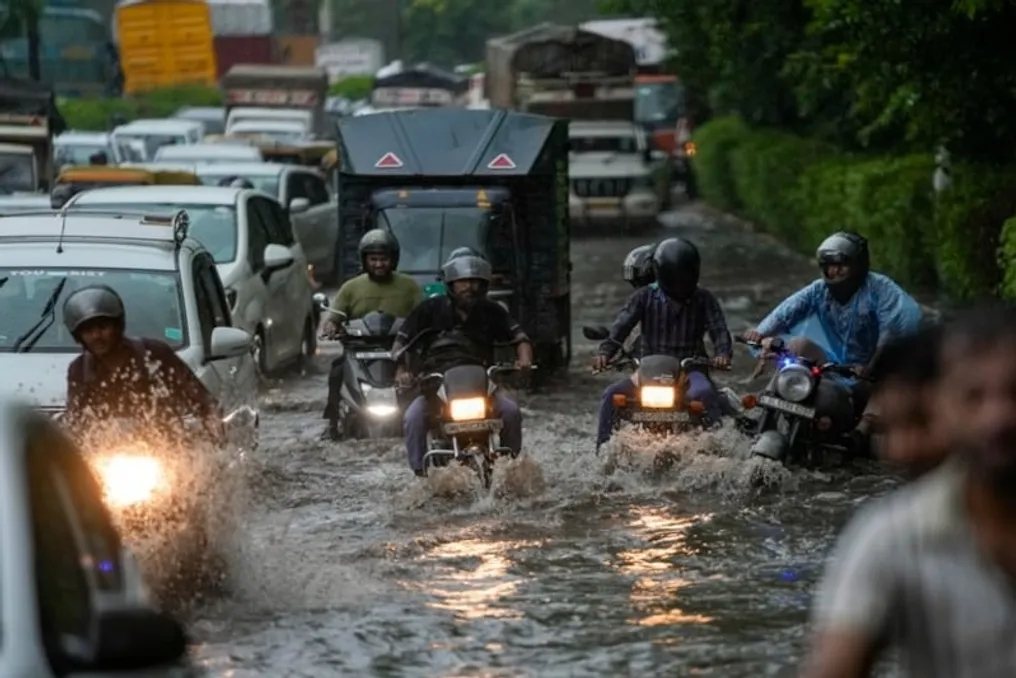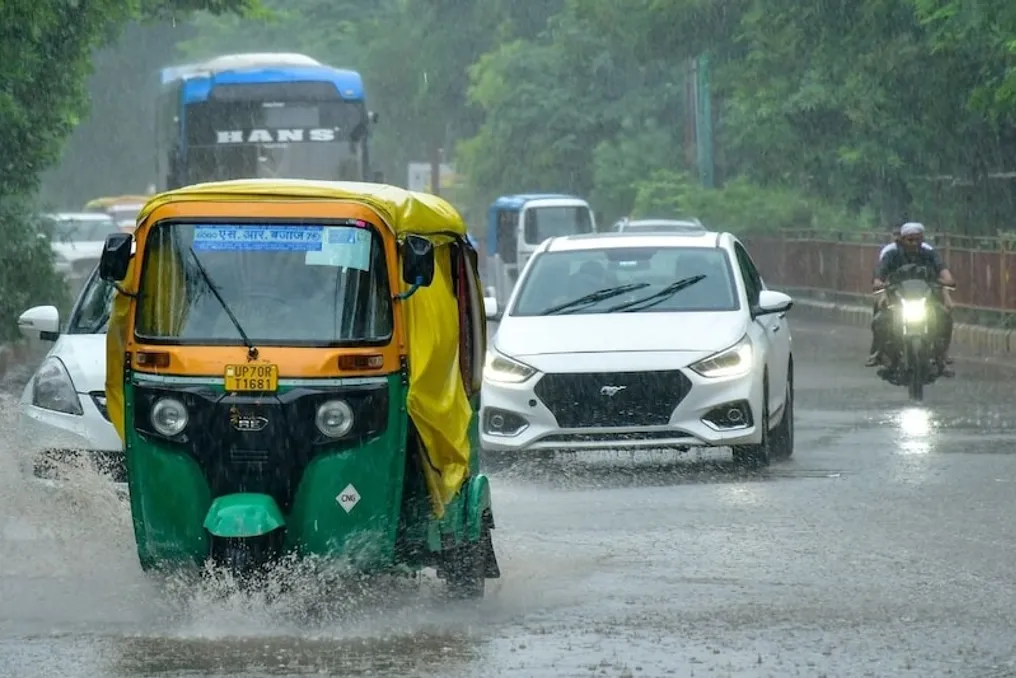
The pace of the monsoon season in the country remains slower than normal, with a recorded decrease in precipitation of 12 percent so far. Nevertheless, the morning in Delhi-NCR began with drizzling rain typical of the Sawan season. The Meteorological Department forecasts that intense rains will continue for the next week in many regions, especially in the northeastern, eastern, and some southern parts of the country.
The Meteorological Department (IMD) is closely monitoring the situation in several states, including Delhi, Uttar Pradesh, Bihar, Jharkhand, West Bengal, Assam, Kerala, and Telangana. IMD has issued warnings for heavy and very heavy rainfall for 50 districts in the eastern and western parts of the capital, Uttar Pradesh, starting from Wednesday until Friday. A warning for strong winds up to 40 kilometers per hour and thunderstorms has also been issued in about 36 districts.
According to IMD data, heavy or very heavy rains may be observed in the northeastern and adjacent eastern districts over the next two days. It is predicted that heavy rain will continue in several places for another five days. On August 5, Assam and Meghalaya are expected to receive 21 centimeters or more of rainfall. From August 5 to 10, extensive rains are forecast in Nagaland, Manipur, Mizoram, Tripura, and Arunachal Pradesh.
Additionally, good and very heavy rains may occur in the Andaman and Nicobar Islands, in the Gangetic plains of West Bengal, in Odisha, as well as in the foothills of the Himalayas in West Bengal and Sikkim. Heavy rains are expected in Jharkhand from August 5 to 8 and on August 10, while in Bihar, on August 5 and 6. Heavy precipitation is also possible in several locations in Kerala, coastal Karnataka, and inland South Karnataka over the next three days.
Given the heavy rainfall, IMD has issued a low to moderate flash flood warning for the next 24 hours for the northeastern districts, the foothills of West Bengal, Sikkim, and some parts of the Western Himalayas. All districts of Darjeeling, Jalpaiguri, Cooch Behar, and Sikkim are on high alert. Many districts of Assam and Meghalaya, including Kokrajhar, Bongigaon, Dubri, Kamrup Raman, Daring, Nagaon, Golaghat, Jorhat, Dibrugarh, Tinsukia, as well as Hasi, Garo, and Jaintia Hills, are also included in the warning zone. In Manipur, the districts of Senapati, Ukhrul, Thoubal, Chandel, and Churachandpur have been warned, and in Nagaland, Kohima, Dimapur, Phak, Tuensang, Wokha, Mokokchung, Longleng, and Mon.
Furthermore, the risk of flash floods is also predicted for some parts of Himachal Pradesh, Jammu and Kashmir, Ladakh, and Uttarakhand. Warnings have been issued for the districts of Chamba, Kangra, Mandi, Shimla, Solan, and Sirmaur in Himachal Pradesh; Doda, Kathua, and Udhampur in Jammu and Kashmir; and Dehradun, Tehri Garhwal, Chamoli, Bageshwar, Pithoragarh, Nainital, Champawat, and Pauri Garhwal in Uttarakhand. The Meteorological Department has urged people to exercise extra caution in low-lying areas, along rivers and streams, and in landslide-prone zones, and to monitor local weather updates.
In Himachal Pradesh, no quick relief from the rains is expected either. According to Sandeep Sharma, a scientist from the Shimla meteorological center, the monsoon season will remain active in the state for the next five to six days, with light or moderate, and in some places heavy, rains possible until August 7. Rain is forecasted to continue in the mid-mountain and plain areas on August 8 and 9. According to the Meteorological Department, heavy rains are likely in the districts of Kangra and Mandi on August 5, Bilaspur, Hamirpur, Kangra, Solan, and Sirmaur on August 6, and Kangra, Chamba, and Mandi on August 7. Visibility in some parts of Solan, Shimla, and Sirmaur may be significantly reduced due to dense clouds and heavy rain.
According to the July monsoon data, Himachal Pradesh recorded 6 percent more rainfall than normal. The maximum increase was noted in Kullu, where rainfall increased by 62 percent, while Hamirpur and Leh-Spiti recorded a decrease of 43 percent. However, over the entire monsoon season from June 1 to August 3, the state saw an overall decrease in precipitation of 9 percent. Sandeep Sharma noted that despite the intermittent nature of the rainfall, no significant drop in temperature is expected. Maximum temperatures in Shimla and Manali will be 20–22 degrees Celsius, in Solan and Dharamshala—28–30 degrees, and in Mandi, Hamirpur, Bilaspur, Una, and Pauri Sahib—from 32 to 35 degrees Celsius.
Amidst the continuous rains across the country, footage of floods, inundations, and landslides appears from various regions. Even ten days after the flood in Vansada, Navsari district, Gujarat, all traces of destruction are visible. Many houses have collapsed, roads are damaged, and permanent and temporary dwellings have been swept away by the strong current. Approximately 21 people died in this disaster, and the situation in villages such as Champavari and Navadat has not yet normalized.
In Godadar, Surat, motorcyclist Sandeep Yadav died after falling into a deep pit on the road during the rain. In Asod village, rural Vadodara, a risky rescue operation was conducted to safely extract a buffalo stuck between the overflowing Vishwamitri river and crocodiles. In Vikasnagar, Uttarakhand, a sudden strong current completely covered the road in the Johdi area, Kalsi district. Many vehicles were blocked in mud and water, and one driver attempted to cross the surging stream, endangering his life.
In Rajasthan, the incessant rain has continued since Tuesday evening, the fifth day of Sawan. Due to heavy rains, one vehicle sank in an underpass at the Hanumangarh railway junction. In Silesarh, Alwar, a strong current was observed in the Garhwa Ji waterfall for the first time this season, attracting a large number of locals and tourists. At the same time, in Gonda, Uttar Pradesh, despite the heavy rains, women stood in long queues to buy fertilizers for rice, corn, and sugarcane cultivation, which was actively featured on social media.