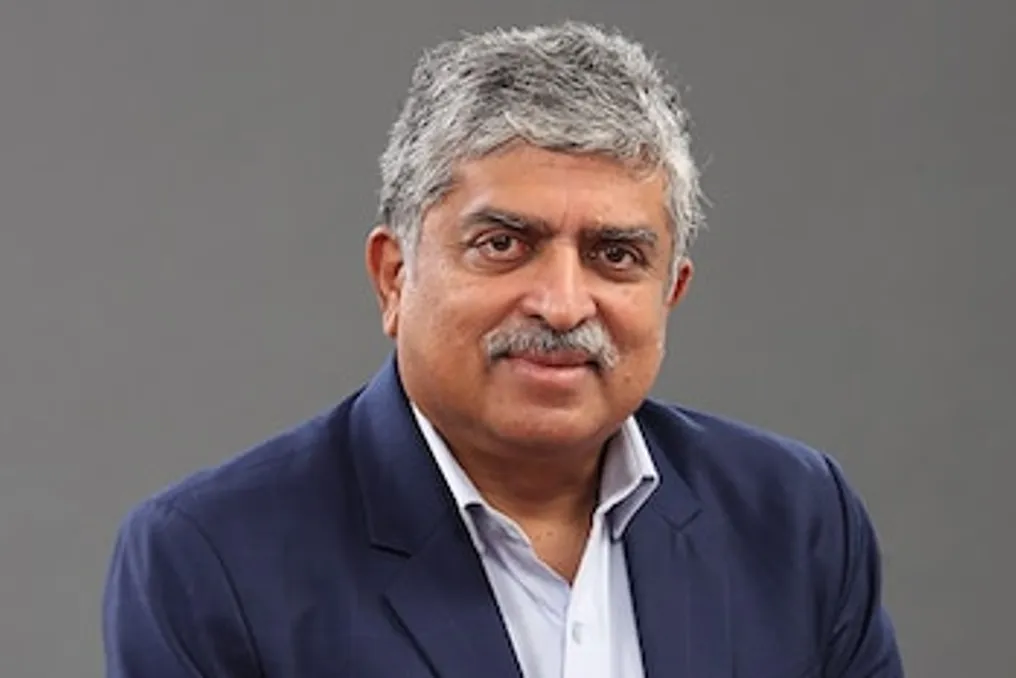
Infosys co-founder Nandan Nilakani stated on Thursday that the future of job creation in India will depend on millions of small businesses rather than large corporations. He argued his position by stating that artificial intelligence (AI) makes highly structured companies more vulnerable to automation.
Speaking at an event organized by the National Council for Applied Economic Research (NCAER), Nilakani noted that large companies are likely to become 'net job losers' as AI takes over routine tasks. Meanwhile, employment will increasingly be generated by small firms where employees perform multiple functions.
Nilakani explained that small enterprises will be the future sector for job creation because well-structured large companies are most susceptible to job losses. He added that since every position in such companies boils down to several defined tasks, they are easily automated and jobs can be eliminated. Consequently, large firms are likely to incur a net loss in terms of employment in the coming years.
He also called for simplifying regulatory norms, easing access to credit and markets, and utilizing AI tools to support small business growth. Nilakani mentioned that initiatives like the Account Aggregator framework can improve access to formal credit, while the Open Network for Digital Commerce (ONDC) can help small businesses reach wider markets. These measures, combined with deregulation and AI-based business support, have the potential to empower millions of entrepreneurs.
These statements are particularly significant as they came after the Center appointed Nilakani as chairman of a high-level examination reform commission following the Neet-UG document leak and mass student protests. On Thursday, he emphasized that India should apply AI to improve learning outcomes and expand access to knowledge through Indian language interfaces and voice interfaces.
He asserted that the country can become a global 'AI use case capital' if it implements this technology in areas such as education, agriculture, and healthcare, instead of focusing solely on AI infrastructure. Nilakani added that India can become a leader precisely in the field of applied AI, as the country actively adopts and makes AI useful. He believes that applying AI to change the lives of Indians on a population scale, similar to how digital public infrastructure was done, is the right direction for development, as it demonstrates the real utility of AI, not just its status as a technology.
Nilakani insisted that India's focus should be on solving real problems with AI, rather than competing in AI infrastructure sectors such as chips, data centers, and large language models. He also stated that AI must be available in Indian languages and through voice interfaces so that people can access knowledge regardless of whether they read in English. He noted that providing AI in users' native languages, accounting for the natural code-mixing in Indian conversations, will significantly expand access to technology and boost productivity.
Furthermore, he advocated for the introduction of portable social benefits and digital credentials that workers could carry with them when changing employers, given that workforce mobility and the gig economy are becoming increasingly common. According to him, workers should retain benefits such as pensions, insurance, and healthcare when moving to a new job, rather than having them tied to a single employer. Nilakani concluded that the key to success lies in creating portable credentials and portable benefits, ensuring complete portability of all benefits—savings, pensions, insurance, unemployment benefits, and healthcare.