The country's five largest banks recorded profits exceeding 2.5 billion euros during the first half of this year.
The country's five largest banks recorded profits exceeding 2.5 billion euros during the first half of this year.
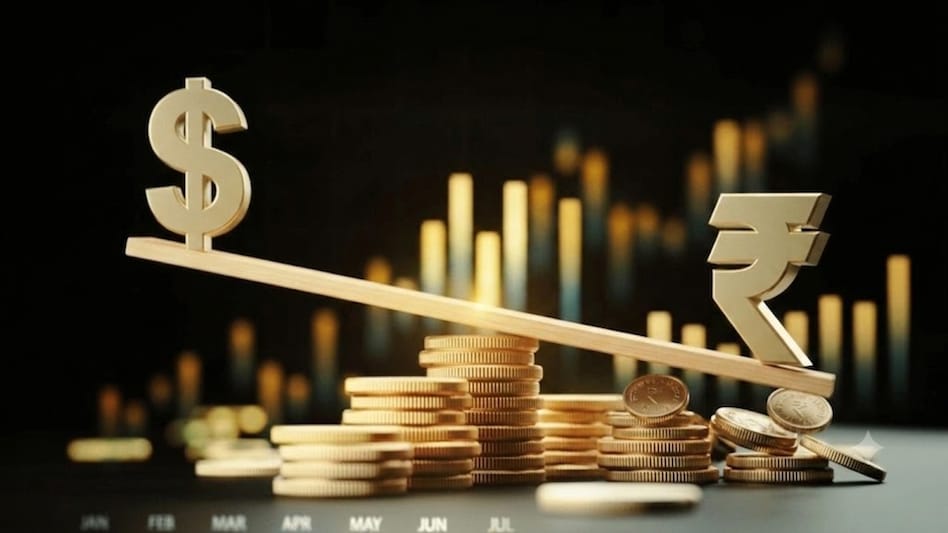
India's currency, the rupee (₹), closed at 95.08 against the US dollar, showing a strengthening of 20 points compared to the previous day. Thus, the rupee demonstrated growth for the ninth consecutive trading session. Since July 23, when the rate was 96.73 per US dollar, the rupee has strengthened by 165 points, which is approximately 1.7%. This is the longest continuous growth trend for the Indian rupee against the US dollar in over a year. A similar rise was previously observed between June 5 and June 12 last year.
The rupee's strengthening occurred against the backdrop of the Reserve Bank of India (RBI) deciding to keep the key repo rate at 5.25% for the fourth consecutive time. The six-member Monetary Policy Committee (MPC) of the RBI also made no changes to its 'neutral' policy stance. This decision, taken amid the ongoing conflict in the Middle East, signaled stability to the market.
In the interbank foreign exchange market, the Indian rupee opened at a rate of 94.90 to the US dollar. During trading, it fluctuated between 94.89 and 95.25. Ultimately, it closed at 95.08, representing an increase of 20 points compared to the previous session. Prior to this, on August 4, the rupee had also strengthened by 9 points, closing at 95.28.
According to currency market analysts, the rupee received support due to the drop in crude oil prices overnight, the weakening of the dollar in the global market, and the easing of US Treasury yields. These three factors contributed to positive investor sentiment and strengthened the Indian currency. Furthermore, the RBI maintained confidence in the measures announced in the previous monetary policy aimed at increasing foreign capital inflow and supporting the rupee.
After reviewing the policy, RBI Governor Sanjay Malhotra noted that despite a strong inflow of foreign capital, the rupee could not rise to the expected level. He expressed the view that further strengthening of the rupee is possible if the conflict in the Middle East subsides. He also emphasized that the RBI will ensure the orderly and balanced movement of the rupee.
Market expert Anuj Choudhary believes that the reduction in tensions between the US and Iran has improved global risk sentiment, which could benefit the rupee. He added that market attention is now focused on the Purchasing Managers' Index (PMI) from the US Institute for Supply Management (ISM), which may play a key role in determining the direction of the dollar. According to his forecasts, the spot USD-INR rate may remain in the range of 94.80 to 95.50 in the short term.
At the end of the trading day, the dollar index stood at 99.82, recording a fall of 0.03%. Meanwhile, Brent Crude traded at $80.75 per barrel, showing a rise of 1.75%, although this figure is significantly below the level above $100 per barrel recorded in July. Strengthening was also observed in the domestic stock market. SENSEX closed at 78,581, up by 152.05 points, while NIFTY finished trading at 24,624.65 with a gain of 9.75 points. According to exchange data, Foreign Institutional Investors (FIIs) recorded net sales of 943.42 crore rupees on Wednesday.
The impact of the Free Trade Agreement between India and the United Kingdom (India-UK FTA) has become evident in the luxury car market. The British company Aston Martin has announced a significant price reduction on several of its models in India, with some models becoming cheaper by more than 40 million rupees.
The company has adjusted prices for the Vantage, DB12, DBX, and Vanquish lineups. Aston Martin attributes this decision to the easing of import duties following the entry into force of the India-UK FTA. The company aims to pass this discount directly to its customers, joining a number of British luxury car manufacturers that have begun offering FTA benefits directly to buyers.
The most substantial price reduction affected Aston Martin's most expensive model, the Vanquish Volante. Its price was reduced from 10.92 crore rupees to 6.90 crore rupees, representing a direct saving of 4.02 crore rupees. Additionally, the price of the Vanquish Coupe decreased by 3.71 crore rupees. Reductions were also recorded for the DBX S by 2.65 crore rupees and the DB12 S by 2.64 crore rupees, providing significant savings for buyers.
In the segment of more affordable sports cars, such as the Vantage S, the new price is set at 3.15 crore rupees, which is a decrease of 1.84 crore rupees. The Vantage S Roadster will now cost 3.35 crore rupees, an reduction of 1.91 crore rupees.
Following the introduction of the India-UK FTA, other British luxury car manufacturers have also changed their pricing policies. Jaguar Land Rover first lowered prices on the Range Rover SV and Range Rover Sport SV. McLaren subsequently made its 750S series more affordable. Bentley has also started taking orders for the Bentayga at new prices, while new prices for its other models are expected.
Experts believe that this agreement will intensify competition among British luxury car manufacturers. Previously, these vehicles had a very high cost due to high import duties, but now their price will significantly decrease thanks to this deal.
The India-UK FTA is a trade agreement between India and the United Kingdom aimed at simplifying and reducing trade between the two countries. Under this agreement, customs duties on many goods have been reduced or will be gradually reduced, benefiting companies and consumers in both countries.
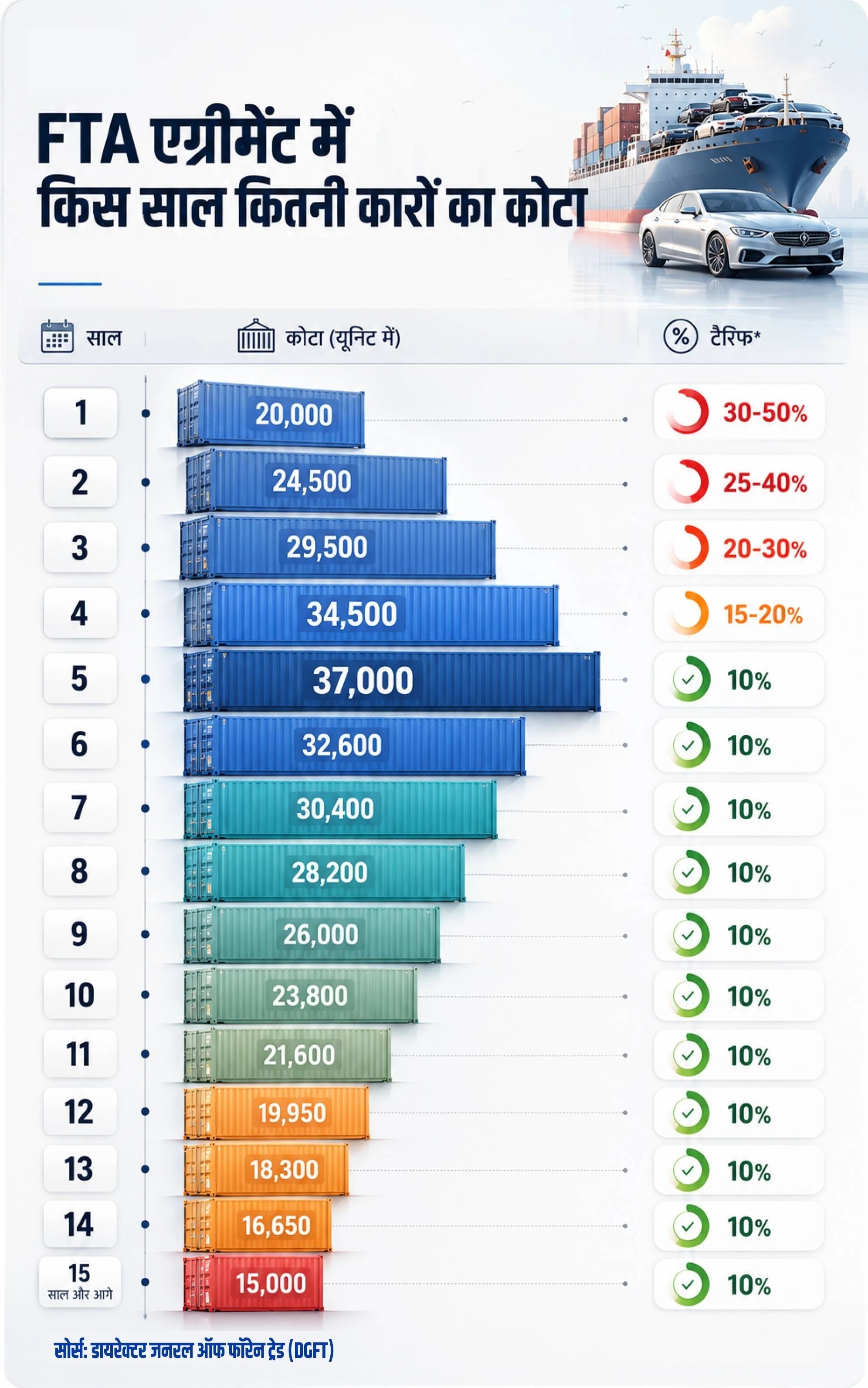
This agreement has the greatest impact on the market of luxury cars imported from the UK into India. The reduction in import duties allows British companies such as Aston Martin, Jaguar Land Rover, McLaren, and Bentley to lower the prices of their cars, making them more accessible to Indian consumers. After the deal comes into effect, the customs duty on Completely Built Units (CBU) cars manufactured in the UK will drop from 110% to 30%. However, this benefit in the first year will only apply to a quota of 20,000 imported vehicles.
Donald Trump's tariff policy, known as the 'Trump Tariff Bomb,' began to create problems for America itself. Last year, in April, Donald Trump started applying reciprocal tariffs to all countries in the world, which provoked a state of trade war.
However, after reviewing complaints against these tariffs, the Supreme Court dealt a serious blow to Trump. As part of one ruling, most of the duties established under the International Emergency Economic Powers Act (IEEPA) were declared illegal, and the Trump administration was ordered to reimburse the funds.
According to the latest data, about $100 billion collected as tariffs has been returned. The process of returning Trump's tariffs is complete; a statement filed with US customs authorities indicates that the funds, including interest, have been fully returned through the government's customs payment reimbursement system and directed to the Treasury Department.
This refund amounts to more than half of the approximately $166 billion in tariffs that were overturned by the Supreme Court earlier this year. The historic decision, made on February 20 by a 6-3 majority, invalidated these duties.
The court ruled that Donald Trump exceeded his jurisdiction by using a 1977 act designed to combat national security emergencies to impose strict import tariffs on US trading partners. The judges concluded that this law does not grant the president the sole right to establish broad trade duties.
Despite the fact that the tariffs collected by the Trump administration have been returned, the issue of US tariff reimbursement is turning into a new political dispute. Critics argue that this money is being returned to importers and corporations that paid the tariffs, rather than to American consumers who bore increased costs due to the price hikes caused by Trump's trade war.