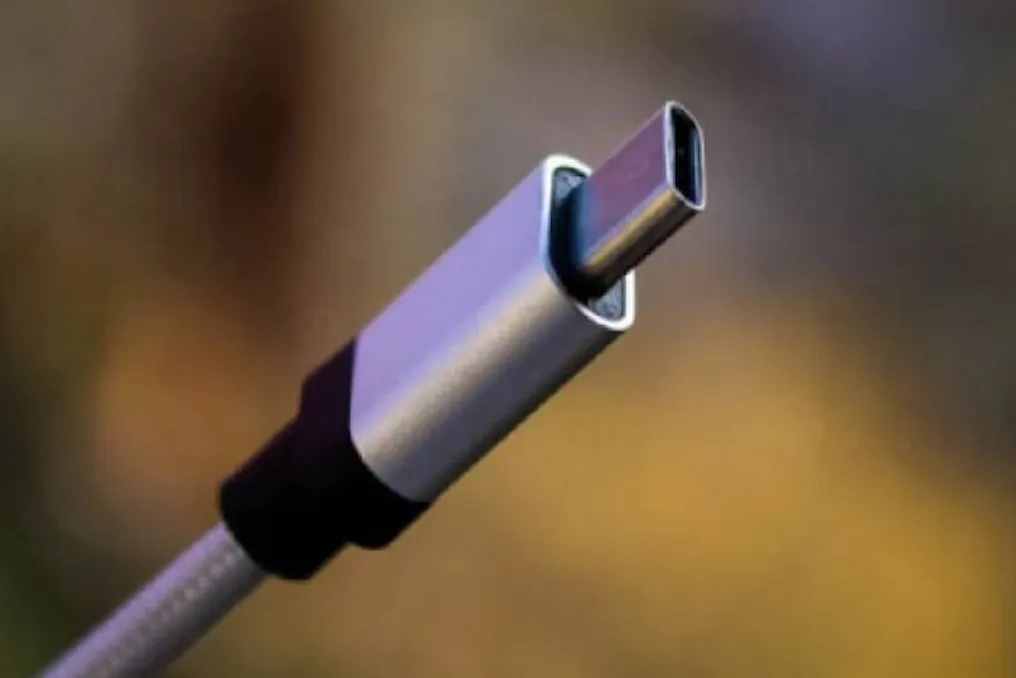
When buying a phone, people often spend significant amounts of money, but when choosing a charging cable, they often opt for the cheapest option. Many mistakenly believe that all USB Type-C cables are identical. The question arises: why buy an expensive cable if the phone is just charging? This is a common misconception.
Although two USB Type-C cables may look the same, internal components such as wires, chips, data transfer capacity, and safety features can differ significantly. This is why one cable might only be usable for charging a phone, while another can charge a laptop, power a 4K monitor, and ensure fast data transfer.
To understand the difference between budget and expensive cables, you should pay attention to the internal construction. The true power of the cable is inside, not on the outside. Quality cables use thick, high-quality copper wires, which minimizes energy loss and ensures the safe delivery of more power.
Cheap cables sometimes use thin wires or low-quality materials. Such cables can handle regular charging, but their performance drops when high power is supplied. A common myth is the assertion that any USB-C cable supports fast charging.
USB Type-C is just a connector name, which does not mean that every Type-C cable will support fast charging at 100W or 240W. Some cables are rated only for 15W or 18W, while others can handle power from 60W to 100W and even 240W.
If you have a 100W charger but the cable is only rated for 18W, you will not get the full charging speed. A significant difference is also observed during data transfer. Many assume that data transfer speed is the same in all cables, but this is not the case. Some USB-C cables only support USB 2.0 speed, which is about 480 Mbps.
Other cables support USB 3.2, USB4, or Thunderbolt standards, allowing large files to be transferred much faster. This difference becomes apparent, for example, when copying a video from a phone to a laptop. Expensive cables may be equipped with a special chip. Many USB-C cables capable of supporting 100W or more have a built-in E-Marker chip.
This chip informs the charger and the device about the maximum power the cable can safely handle. Without this chip, high-power charging is either impossible or limited.
The question of whether expensive cables are safer has no definitive answer, as price itself does not guarantee safety. However, quality cables may have improved insulation, more reliable connectors, and a better heat management system.
If a cable is manufactured according to standards such as USB-IF and passes necessary safety tests, the probability of its long-term safe operation is higher. Quality and certification are more important than just a high price.
Regarding durability, good cables often feature reinforced braided sheaths, stronger connectors, and a design that protects against breakage from repeated bending, which can extend service life compared to ordinary cables. Nevertheless, this does not mean that every expensive cable will last forever.
The most frequent question concerns phone damage. If you use a cable from a reputable, standard-compliant company, the fact that it is cheap or expensive will not cause your phone to break. However, very low-quality or counterfeit cables can reduce safety levels, potentially causing issues with charging speed, overheating, or premature cable failure.
When choosing a cable, you should not rely solely on the price. You need to check what charging power it supports. If you need to charge a laptop, you may require a cable capable of supporting 100W or more. When transferring large files, it is better to choose a cable that supports USB 3.2 or USB4. If only phone charging is required, purchasing an excessively expensive cable is not always necessary.
The difference between cables costing 100 and 1500 rupees is not just in price. It is determined by the power the cable can handle, the speed at which it can transfer data, the wires and chips inside, and how reliably it will operate over time. Therefore, next time you choose a USB Type-C cable, do not just look at the external appearance; the internal differences determine whether you will get the correct charging, fast data transfer, and reliable long-term use.