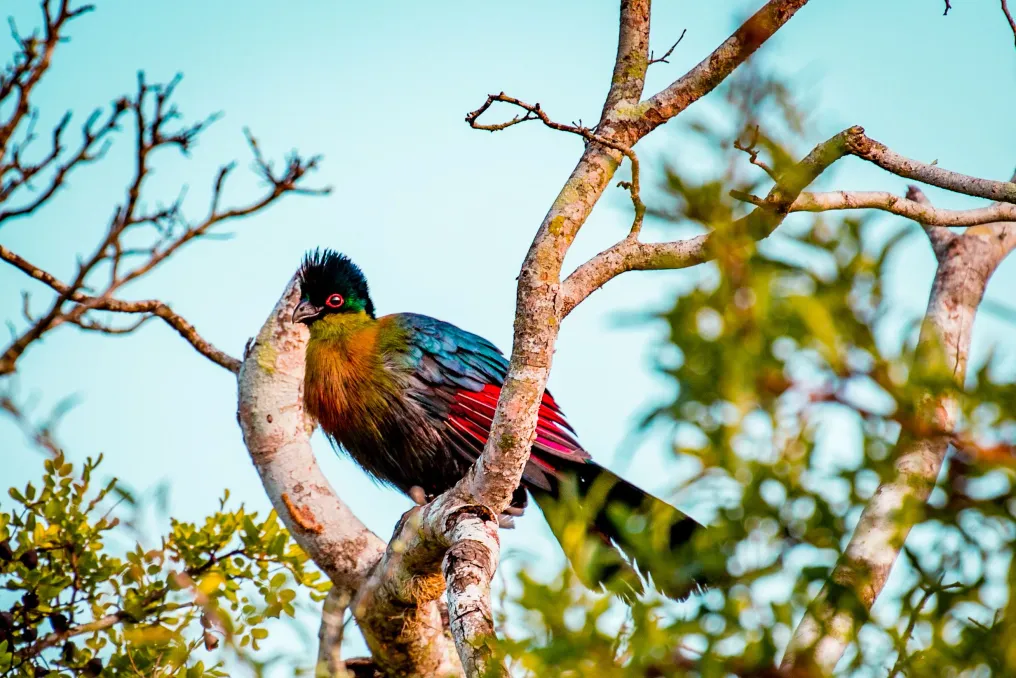
South Africa has long been recognized as one of the world's premier destinations for ornithology enthusiasts. With over 870 registered bird species inhabiting mountains, wetlands, forests, coastal areas, and open savannas, the country demonstrates astonishing diversity across a relatively small area. In fact, one can find nearly one out of every ten bird species on the planet here, making South Africa a desirable destination for both seasoned observers and curious travelers.
The charm of birdwatching lies in its encouragement of a more unhurried travel pace. Instead of rushing between sights, one begins to notice the rustling in the reeds, flashes of color on a flowering tree, and the characteristic cry echoing through the forest. Whether you hope to spot a Fish Eagle or simply spend a quiet morning in a hide overlooking wetlands, here are some of the best places in South Africa for it.
Kruger National Park
Kruger National Park is famous for its 'Big Five,' but many experienced visitors claim that its birdlife is equally impressive. Established in 1898 as the Sabie Reserve and later becoming South Africa's first national park in 1926, the park protects an exceptional range of habitats supporting over 540 bird species.
The northern areas around Pafuri and Punda Maria are internationally recognized among ornithologists for several species found nowhere else in South Africa. The park is also home to the famous 'Big Six' birds, including the Saddle-billed Stork, Martial Eagle, and Southern Ground Hornbill.
The best time to visit is from November to April for migratory species and breeding plumage. May to September offers easier viewing as the vegetation thins out. Tip: Spend sunrise in one of Kruger's bird hides instead of immediately driving onto the roads. Water bodies attract everything from kingfishers and cormorants to fish eagles and storks before the day gets too hot.
iSimangaliso World Heritage Site
The first UNESCO World Heritage site in South Africa protects one of Africa's most vital wetland ecosystems. This area was declared a protected zone in 1895 and later gained international recognition for its ecological significance. iSimangaliso supports over 520 bird species in its lakes, estuaries, forests, and coastal dunes.
Visitors can expect to see flamingos, pelicans, African fish eagles, kingfishers, cormorants, and many other waterfowl. The diversity of habitats means that birdwatching opportunities can change drastically over short distances between trips.
The optimal time to visit is from October to March, when migratory birds arrive and activity in the wetlands peaks. Tip: Join an early morning estuary cruise from St. Lucia. The slower pace provides excellent opportunities for photographing fish eagles, herons, and kingfishers.
West Coast National Park
West Coast National Park, originally established to protect the Langebaan Lagoon ecosystem, has become one of the main birdwatching spots on the South African coast. The lagoon is internationally recognized as a Ramsar site of international importance and serves as a vital stopover for thousands of migratory birds along the East Atlantic flyway.
During migration season, the tidal flats teem with waterfowl, and flamingos, African black ostrichbills, and numerous seabirds are common sights.
The best time to visit is from August to March, when migratory coastal birds are present. Spring also coincides with the renowned wildflower season. Tip: Bring binoculars and spend time in the Geelbek and Abrahamskraal bird hides instead of just driving through the park.
Garden Route
The lakes, forests, and estuaries of the Garden Route create ideal habitats for both waterfowl and forest species. Some of the wetlands are part of an internationally recognized Ramsar site, making this area particularly important for nature conservation.
The Rondedlei bird hide is especially popular among photographers, where waders, herons, rollers, and ducks are regularly seen. Forest walks also offer the chance to spot the elusive Knysna Turaco.
The best time to visit is year-round, although spring and summer bring greater bird activity. Tip: Combine a canoe trip on the Touws River with a stop at the Rondedlei bird hide for two completely different birdwatching experiences in one day.
Wakkerstroom
Several towns in South Africa do not host birdwatching to the extent of Wakkerstroom. This small farming town, founded in the 1880s, has become one of the country's most famous birding centers due to its surrounding highland wetlands and grasslands.
It hosts several endangered grassland specialists, including the Botella Warbler and the Radd's Warbler, as well as the Yellow-breasted Pipit, attracting ornithologists from around the world.
The best time to visit is from September to February, when breeding birds are most active. Tip: Hire a local bird guide. Many desired species are masters of camouflage, and experienced guides significantly increase your chances of spotting them.
Marakele
Marakele is located in the transition zone between the Waterberg Mountains and the bushveld, creating an impressive combination of habitats. The park, established in 1994, gained special significance due to its Cape vulture colony, one of the largest in the world. The park's rocky cliffs, open plains, and river systems also support eagles, hornbills, and numerous forest birds.
The best time to visit is winter for clearer visibility, while summer brings breeding activity. Tip: Go to the Lenong viewpoint early in the morning to enjoy panoramic views and soaring raptors utilizing mountain thermals.
Mkuze
As part of the larger Mpumalanga biodiversity hotspot, Mkuze has earned a reputation among ornithologists for its exceptional diversity in acacia woodlands, fig forests, and wetlands. A network of well-placed hides overlooking ponds makes birdwatching particularly accessible even for beginners. Species such as the African Finch, Narina Trogon, and Pink-breasted Double-spot are regularly recorded.
The optimal time to visit is from October to March. Tip: Spend several hours in the Nsumo Pan hides instead of moving too quickly between locations. Patience is often rewarded.
De Hoop
De Hoop, known for its dramatic coastline and seasonal whale watching, is equally interesting for bird lovers. The reserve, protected since 1957, includes fynbos, dunes, wetlands, and estuaries that support over 260 bird species. Ornithologists can see Blue Storks, Denham's Sandgrouse, and a wonderful variety of waterfowl, while the surrounding fynbos attracts many sunbirds and sugarbirds.
The best time to visit is spring and early autumn. Tip: Combine a morning birdwatching walk with the reserve's coastal hiking trails. It is one of the few places where exceptional birdwatching combines with ocean views.
The best birdwatching spots in South Africa share a common trait: they encourage travelers to pause, listen, and look closely. You don't need to identify every species to appreciate the experience. Sometimes the most memorable sight is simply watching a fish eagle take off from a riverbank at dawn or spotting your first brightly colored cormorant sitting quietly on a branch.
Whether you are planning a specialized ornithological vacation or adding a pair of binoculars to your next trip, these places prove that the skies of South Africa are as magnificent as its landscapes. From coastal wetlands and ancient forests to mountain grasslands and iconic national parks—there is always another bird waiting to be discovered.