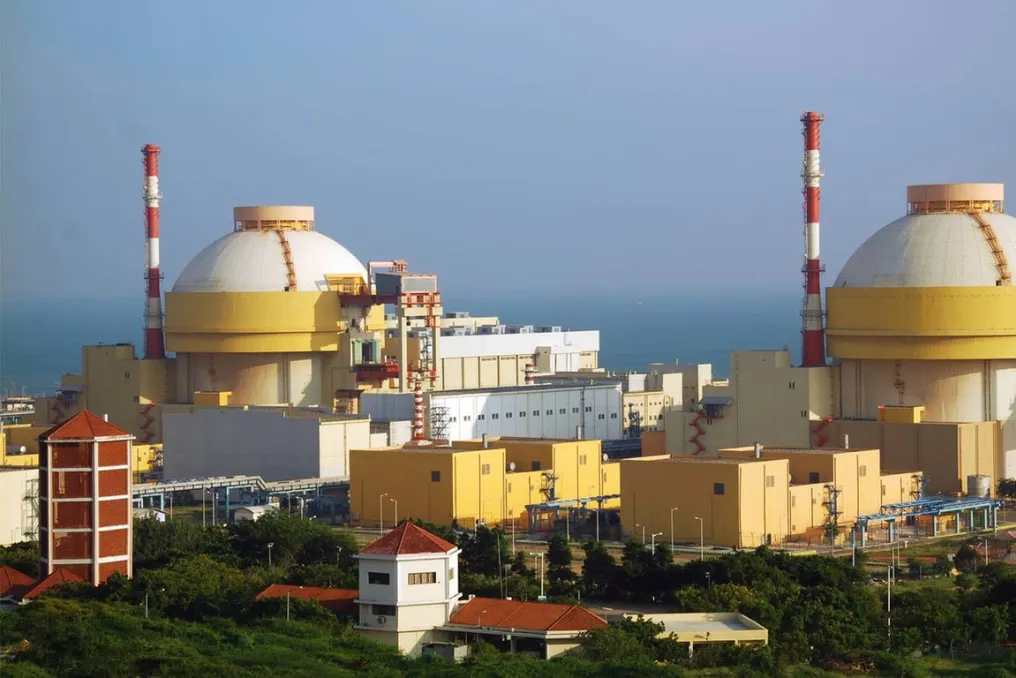
As part of achieving a significant milestone in the field of clean energy, the Nuclear Power Corporation of India Limited (NPCIL) has collectively produced over 1000 billion units of nuclear electricity.
NPCIL reported on Tuesday that since the commercial operation began, its nuclear power plants have collectively generated over 1000 billion units of clean electricity, which has prevented more than 860 million tons of CO2 equivalent from entering the environment.
The company noted that this achievement demonstrates NPCIL's firm commitment to providing safe, reliable, and sustainable nuclear energy, thereby strengthening India's energy security and supporting the country's transition to clean energy and achieving climate goals.
To illustrate the scale of carbon emissions prevented, it was pointed out that a typical passenger car emits about 4.6 metric tons of CO2 annually. Thus, preventing 860 million tons is equivalent to taking approximately 187 million gasoline-powered cars out of service for an entire year. Furthermore, 860 million tons is approximately equal to the annual greenhouse gas emissions of a major industrial country such as Germany or Japan.
The government has developed a roadmap to achieve a nuclear power capacity of 100 GW over the next two decades by 2047, as announced in the Nuclear Energy Mission in the Budget 2025-26. This will increase the share of reliable, low-carbon baseload nuclear energy in the country's energy balance and help achieve the goal of net-zero emissions by 2070.
The current nuclear power capacity of 8.78 GW is projected to reach about 22 GW by 2031-32 due to the gradual completion of projects at various stages of implementation. An additional 32 GW of nuclear capacity is planned to be built after 2032 under the administrative control of the Department of Atomic Energy (DAE).
These new capacities will include indigenous Pressurized Heavy Water Reactors (PHWRs) and Light Water Reactors (LWRs) scheduled for construction by 2047, which will increase NPCIL's nuclear capacity to 54 GW. The remaining 46 GW, including reactors of various technologies, is expected to be implemented by other state-owned enterprises, the private sector, and joint ventures under various business models. Thanks to the government's adoption of the SHANTI Act (Sustainable Harnessing and Advancement of Nuclear Energy for Transforming India Act, 2025) last year, the new law provides the legal framework for this expansion of 46 GW.