
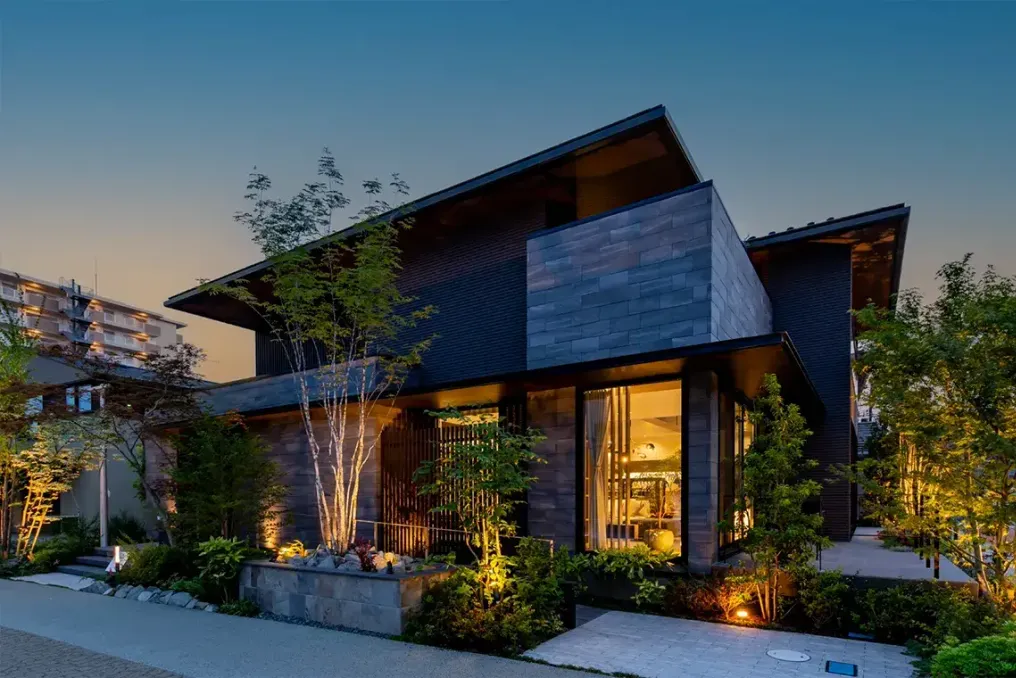
Toyota has been producing residences in Japan using the assembly line methodology since the 1970s. These homes are not built with masonry, but rather with three-dimensional steel modules that leave the factory in an almost finished state. After being transported by truck to the site, these modules are assembled with the help of cranes.
According to the automaker, the total time for a house to be ready is approximately 45 days, which is less than half the time required for a traditional wooden construction in the country.
The difference lies in transferring most of the work to the factory environment. About 85% of the production takes place inside the factory, where each steel unit, measuring about 14 m², receives finishes such as walls, windows, and electrical and plumbing installations before being shipped.
A medium-sized residence in Japan requires about 12 of these modules, which are arranged on the construction site like pieces of a set.
Seismic tests replace collision tests
In addition to the construction method, the structure of the houses undergoes rigorous tests that replicate earthquake conditions, a procedure analogous to impact tests performed on motor vehicles. Furthermore, anti-corrosion treatments originally developed for cars are applied. This process underpins the structural warranty of up to 60 years offered by the company.
This warranty period holds significant meaning in the Japanese context, as conventional wooden houses tend to be demolished and rebuilt on average every 30 years, thus doubling the expected service life of the residence.
A modest business that transcends Toyota
Toyota established its housing division in August 1975 and began marketing properties under the Toyota Home brand in February 1977. The origin of this initiative is credited to Kiichiro Toyoda, founder of the automotive division, who showed interest in precast concrete techniques decades earlier. He passed away in 1952, more than twenty years before the real estate venture emerged.
Even after nearly half a century of operation, the real estate segment has maintained a smaller scale compared to the automotive sector. In 2019, the company registered the sale of just over 10,000 single-family homes across all its lines, in a Japanese market where prefabrication is still a minority, as most consumers prefer hiring local carpenters or opting for apartments.
Another notable change, although little publicized internationally, occurred starting in January 2020. Toyota Housing ceased to be a wholly-owned subsidiary of the automaker and came under the control of Prime Life Technologies, an entity formed through a 50% partnership with Panasonic. This group also includes Panasonic Homes and Misawa Homes, and currently provides about 17,000 homes annually, keeping its sales restricted to the Japanese market.