Many clients of Itaú bank expressed dissatisfaction on social networks regarding an unclear change in purchase notifications. This topic was actively discussed on X and Threads on Tuesday (04).
Many clients of Itaú bank expressed dissatisfaction on social networks regarding an unclear change in purchase notifications. This topic was actively discussed on X and Threads on Tuesday (04).
Due to the initial confusion, Itaú provided an exclusive explanation to Tecnoblog: nothing changes in the official application, and users will continue to receive alerts as usual.
The message sent today to a wide base of consumers concerned another service—push notifications via SMS and email about purchases, among other things, as well as monitoring of the bank balance.
According to the company, this service will indeed be discontinued on August 17 due to a low level of user engagement.
The Itaú application, which has become a hub for various company brands in recent years, will retain familiar transaction notifications for Pix, TED, as well as credit card purchases.
Part of the disinformation originated from the bank itself, as the official profile somehow responded that the measure would take effect with the latest application update. However, according to Tecnoblog, these two points are not related at all.
Furthermore, it would be highly contradictory for a bank that places such a strong emphasis on digitalization to decide to provide less information to its depositors and clients.
The official note states: 'There are no changes in other communication and notification channels used by Itaú.' Thus, customers can rest assured.
Fixed Deposit Schemes (FD Schemes) have become quite popular from an investment perspective as they can yield significant returns over a relatively short period due to interest. Many banks offer special promotions for their clients, including the PNB program for 444 days, which is attracting wide public attention, and offers even more favorable terms for the elderly.
Punjab National Bank (PNB) provides attractive interest rates on fixed deposits to its customers, ranging from 3% to 7.40%. Customers can choose a term from 7 days to 10 years and invest an amount of their choice. Investing in FDs proves to be a beneficial option, combining investment security with good returns, especially for the elderly, who receive a higher percentage than regular customers.
The special PNB 444-day fixed deposit scheme is highly popular. For regular customers, this program offers an annual rate of 6.60%, while for the elderly, it is 7.10%. Furthermore, for individuals categorized as very elderly, Punjab National Bank provides a high return of up to 7.40%.
Calculating the benefit under the PNB 444-day scheme is quite simple. By investing 500,000 rupees, regular customers will receive 41,443 rupees in interest at a rate of 6.60%, bringing the total investment amount to 541,443 rupees.
If the return for the elderly is calculated at 7.10% for 444 days, they will receive a benefit of 44,690 rupees, making their total amount 544,690 rupees. As for the very elderly citizens, at a rate of 7.40%, they are entitled to 46,646 rupees, and their initial five hundred thousand rupees will turn into 546,646 rupees.
CE Info Systems, which operates under the MapmyIndia brand, reported an 8.6% increase in consolidated profit to 49.7 crore rupees in the first quarter ending June 30, 2026. This information was published by the company on Tuesday.
MapmyIndia's operating revenue increased by 14.9%, reaching 139.7 crore rupees in the reporting quarter compared to 121.6 crore rupees a year earlier. Previously, in the same period last year, the company recorded a net profit of 45.8 crore rupees.
Rakesh Verma, Chairman and Managing Director of MapmyIndia, noted that fiscal year 27 began with another quarter of profitable growth. He emphasized that the company continues to develop as a leader in India specializing in deep technology digital maps based on artificial intelligence, geospatial software, and IoT location-based solutions.
Rakesh Verma stated that the company's results reflect the consistent strength and competitive advantages of its products, platforms, APIs, and solutions, as well as disciplined execution and growing customer trust in the automotive, enterprise, and government segments.
During this quarter, the company announced the appointment of Rohan Verma as Deputy Managing Director of the firm, effective July 1, 2026, subject to shareholder approval.
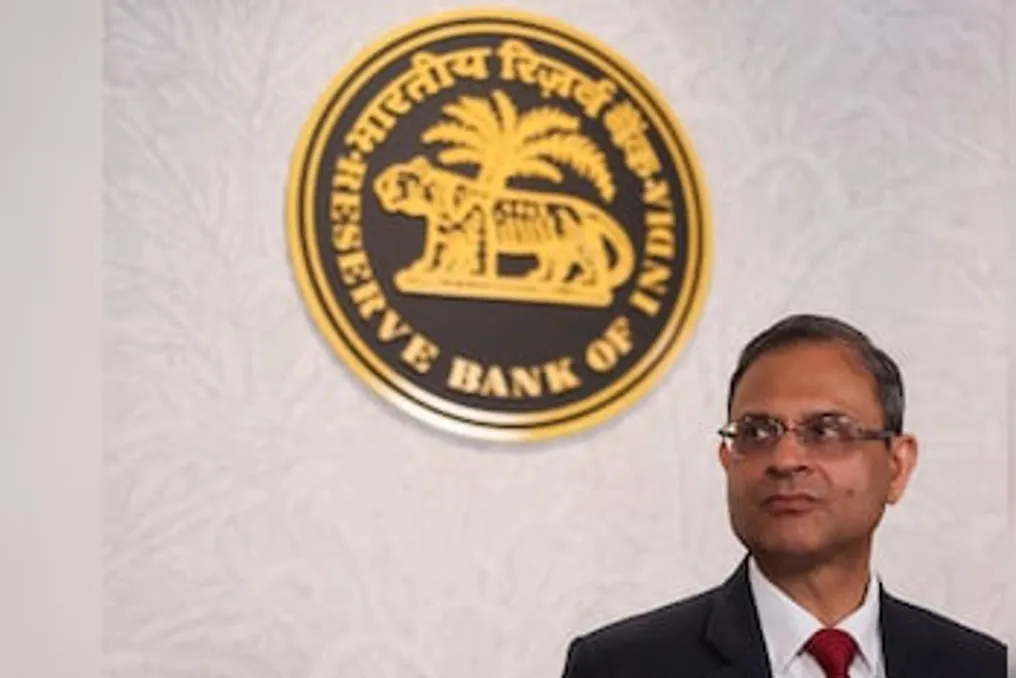
The Reserve Bank of India (RBI) is preparing to announce the results of its August monetary policy review on Wednesday, August 5. RBI Governor Sanjay Malhotra will present the decision of the Monetary Policy Committee (MPC) at 10 am, followed by a press conference at 12 pm.
The bi-monthly meeting of the RBI's MPC is scheduled from August 3 to August 5, 2026. The six-member committee will review major economic changes before deciding on interest rates and the central bank's monetary stance.
Sanjay Malhotra is set to announce the monetary policy decision at 10 am on Wednesday, August 5. The post-announcement press conference is scheduled for 12 pm. This information will be broadcast live on the official RBI website, on the RBI YouTube channel, and on the RBI X account. Readers can also track the RBI policy announcement and related events through direct coverage by Business Standard.
According to a Business Standard poll, the six-member MPC is likely to keep the repo rate unchanged for the fourth consecutive time. Economists predict that the central bank will maintain a cautious approach, citing stable domestic macroeconomic conditions and global uncertainty. Some analysts believe that if economic conditions change in the future, the review may present an opportunity for a policy shift.
During the June monetary policy review, the RBI maintained the repo rate at 5.25 percent. The MPC, which met from June 3 to June 5, also maintained its 'neutral' policy stance. The Savings Deposit Facility (SDF) rate remained at 5 percent, while the Marginal Standing Facility (MSF) and bank rate were kept at 5.5 percent.
Commenting on the world economy, RBI Governor Sanjay Malhotra noted that uncertainty continues due to the conflict in the Middle East. He stated: 'Over the past few months, the global economy has been shaped by heightened uncertainty, disruptions in key trade routes and supply chains, increased market volatility, and cautious business sentiment.' The Governor also emphasized that India is in a better position than in previous periods of external shocks to handle global difficulties and expressed confidence in the economy's resilience.
The RBI projected India's real GDP growth for the fiscal year 27 at 6.6 percent and estimated consumer inflation (CPI) for the fiscal year at 5.1 percent.
The RBI's Monetary Policy Committee meets every two months to determine the repo rate, assess inflation trends, and update the growth forecast. The repo rate is the interest rate at which the RBI lends to commercial banks. Any change in this rate affects the cost of borrowing across the entire economy. A higher repo rate usually leads to more expensive loans and increased monthly payments for home, vehicle, and personal loans. Conversely, a lower repo rate can reduce the cost of borrowing, although this may also decrease returns on savings accounts and fixed deposits.