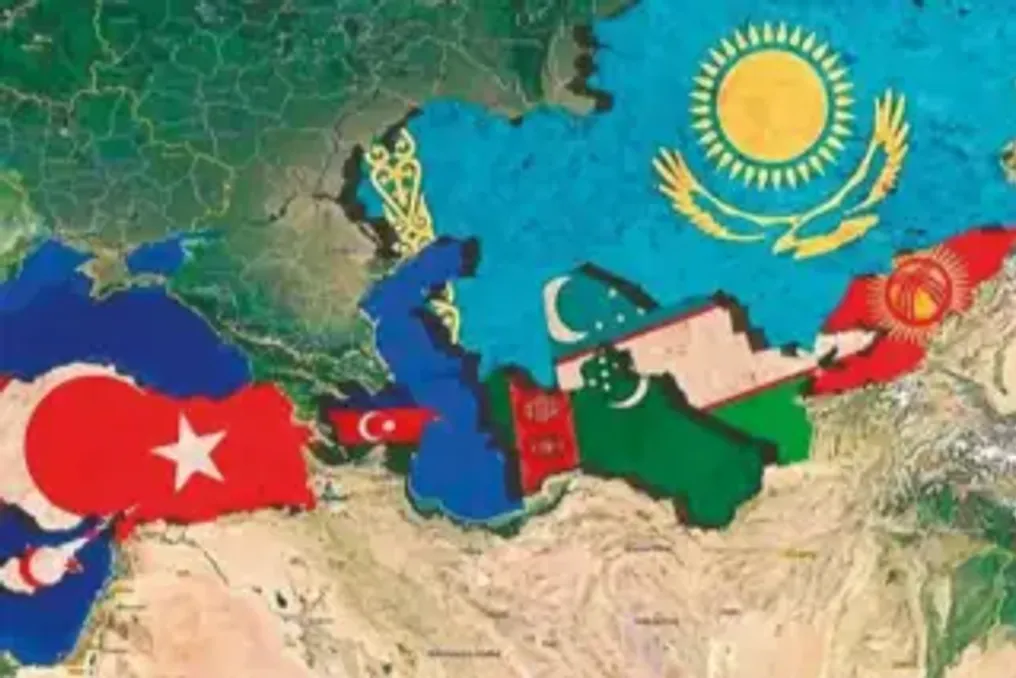
Political, economic, and geopolitical changes occurring in Central Asia are attracting the attention of the international community. In particular, the large-scale reforms being implemented in Uzbekistan, including a multi-vector foreign policy and strengthening good neighborly relations, are elevating cooperation within the Turkic States Organization to a higher level, which is giving new momentum to regional development.
Interview on Geopolitical Prospects
An Uzbek correspondent spoke with Turkish researcher, writer, and strategic analyst Gungur Yavuzaslan about the geopolitical prospects of the Turkic world, Uzbekistan's role in the region, and the future of Turkic state cooperation.
Yavuzaslan stated that he began his journalistic career in 2001 as a correspondent in local media and currently works for national and international television channels and digital information platforms. According to him, the job of a journalist is not just to report events, but to analyze the political, historical, and geopolitical factors behind them. His main research areas are related to Turkish foreign policy, the fight against terrorism, and the geopolitics of the Middle East and the Turkic world.
He considers it a matter of national responsibility and strategic vision to link the geopolitical future of Turkic peoples to the shift of the world's political and economic center from the Atlantic to the Asia-Pacific region, amidst the reshaping of global supply chains.
Uzbekistan's Role in the Region
Uzbekistan's multi-vector foreign policy and good neighborliness strategy significantly contribute to shaping a unique cooperative environment in Central Asia. As Yavuzaslan emphasizes, Uzbekistan has become one of the most active and proactive states in Central Asia in recent years. Under the leadership of President Shavkat Mirziyoyev, the country has entered a new phase of its development based on openness, mutual trust, and pragmatic cooperation.
This strategy is not just a diplomatic decision, but a strategic policy based on long-term national interests. Due to its historical heritage, population, and geographical location, the republic today plays an important bridge role between China, Russia, India, Turkey, and Europe. This foreign policy serves to strengthen regional cooperation, expand trade and economic relations, and enhance Central Asia's influence in the international community.
Geopolitical Changes in the Turkic World
When assessing the changes at the geopolitical center of the Turkic world, Yavuzaslan views this process not as a 'game of chess,' but as a historical expansion and mutual enrichment. He stresses that in today's geopolitical competitive environment, some external forces are trying to limit this integration process only to the Zangezur corridor, but Zangezur is only one part of a major strategic project.
The main goal is to form a comprehensive transport, trade, and economic space connecting Turkic states. From this perspective, the concept of the Turan route could become a vital link in the Eurasian transport and logistics system.
EAEU and Media Cooperation
Uzbekistan is one of the key participants in the Turkic States Organization, and this structure is no longer limited to general language and culture, but is also expanding practical cooperation in areas such as economy, transport, energy, digital technology, and logistics. Uzbekistan's active participation creates new opportunities for strengthening geographical and economic integrity, developing transport routes, energy networks, and digital infrastructure.
The issue of creating a unified media and information platform for Turkic states is very important from the perspective of information security. However, technically, the media infrastructure, digital technologies, languages, and alphabets are not fully harmonized. Legally, each state manages its national media system based on legislation. Therefore, the work being carried out under the joint media platform by Turkey and Azerbaijan is of great importance, and this cooperation should be expanded with the participation of all members of the Turkic States Organization.
In conclusion, today Central Asia, especially Uzbekistan, holds immense importance as a key center of international politics and economy, and the country is steadily striving to deepen solidarity that serves the common interests of the regional states.