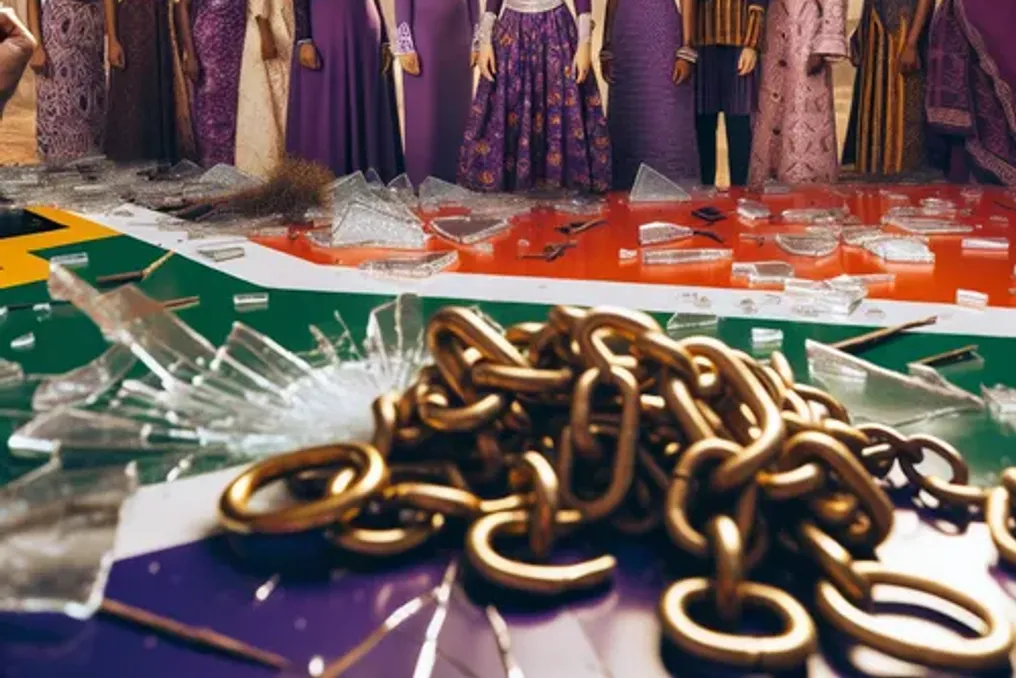
During Women's Month in South Africa, Telela Ngchentane-Vika and Rev Istoriya Seitisho analyze significant achievements in gender equality since the dismantling of apartheid, while simultaneously confronting the harsh reality of ongoing difficulties, including gender-based violence and systemic inequality.
Women's Month provides a powerful opportunity to reflect on the progress made since the abolition of apartheid: the constitution guarantees gender equality, women's representation in business and politics has increased, and the feminist movement is developing.
However, considering this process an unqualified success would be a dangerous oversimplification, as it risks obscuring the persistent problems faced by women in a country still grappling with deep inequalities and femicide.
The struggle for full emancipation must continue to avoid a colossal failure and betrayal of the women of the 1956 March, who bravely confronted Verwoerd and his apparatus. While celebrating Women's Month is important, politicians' rhetoric often masks the harsh reality.
Structural Barriers and Patriarchy
Although women hold positions in government, the corporate sector, and many spheres of life in South Africa, their opportunities are constrained by patriarchal structures in wider society. The 'glass ceiling,' though cracked, remains intact, evidenced by limited representation at the highest levels of power and the persistence of the wage gap across various sectors.
The fact that a woman has not become president after thirty years attests to the pervasive nature of patriarchy, which contradicts the narrative of empowerment and often ignores the intersectional nature of oppression and misogyny.
Women from all walks of life, especially Black women, bear the burden of unique and compounded forms of marginalization, rendering general statements about progress meaningless. A more pressing issue is the scourge of gender-based violence—an omnipresent shadow haunting South African society and standing in stark contrast to any celebration of achievements.
Shocking high rates of rape, domestic violence, and femicide demonstrate the fragility of legal protection and the deeply entrenched corruption permeating social structures. Although legislation such as the Domestic Violence Act exists, its implementation is extremely unsatisfactory due to resource shortages in the police, inefficient judicial processes, and a culture of impunity.
This persistent violence is not merely isolated incidents; it is a systemic failure requiring a radical overhaul of political will, social norms, and attitudes.
Economic Situation and the Need for Change
Economic empowerment, often presented as a key indicator of progress, presents a complex picture. While some women have achieved economic success, most remain in precarious employment, bearing a double burden due to low-paid work and unpaid domestic labor. The legacy of apartheid continues to manifest in sharp economic disparities based on race and class, disproportionately affecting women's access to resources, education, and opportunities.
Nevertheless, to truly mark Women's Month, it is necessary to move beyond celebratory rhetoric and confront uncomfortable truths. It requires acknowledging the unfinished business of gender equality, critically examining the systemic failures that perpetuate inequality, and demanding transformative change. Only then can we move away from a narrative of superficial progress and work towards a truly just future for all South African women.
The path from struggle to success requires not only gradual changes but also a fundamental and radical transformation of power structures and social norms. The fight continues—Aluta continua.