Amazon announced last Tuesday, August 4th, the start of Carrefour's sales operations on its marketplace. The American giant reported that over 1,300 products are already available on the platform's website and app.
Amazon announced last Tuesday, August 4th, the start of Carrefour's sales operations on its marketplace. The American giant reported that over 1,300 products are already available on the platform's website and app.
Aydes Marques, Chief Data Officer of Grupo Carrefour Brasil, expressed enthusiasm for the collaboration, describing it as a significant advance in the company's digital strategy and a strengthening of Carrefour's presence in an increasingly interconnected environment.
According to a joint statement, Carrefour will act as an independent seller, assuming full responsibility for all aspects of the supply chain, which includes inventory management, delivery processing, and after-sales support.
For logistics, the French retailer will use its distribution center located in Cajamar, in the Greater São Paulo region, serving as the starting point for shipments destined for all of Brazil. It was noted that there is no free shipping offer for deliveries in the city of São Paulo.
The range of products offered by Carrefour on Amazon is diverse, covering home appliances, electronics, smartphones, and non-perishable grocery items. The list of items includes printers, coffee makers, headphones, socks, toys, spirits, and dog snacks, among others.
This move follows a trend observed in Brazilian retail, where opening stores on competitors' marketplaces has become a common practice, generating closer ties between companies that previously seemed distant.
A previous example of this strategy was Magazine Luiza, which began selling 12 thousand items on Amazon in June, with studies underway for Magalog, the retailer's logistics arm, to become a service provider for Amazon, or to offer Magalu products on Amazon Prime with free shipping.
Previously, in 2024, Magazine Luiza had established a partnership with AliExpress, allowing catalogs from both platforms to be displayed on each other's e-commerce sites. In the following year, it was Casas Bahia's turn to make its products available on Mercado Livre.
In addition to conventional e-commerce, some agreements focused on expanding the variety of goods for consumers. Magalu, for example, began selling on its marketplace items found in Americanas' physical stores, such as confectionery, cleaning, and personal hygiene items.
Additionally, Mercado Livre maintains partnerships with Carrefour itself and with Assaí Atacadista, among other companies, for the sale of supermarket products.
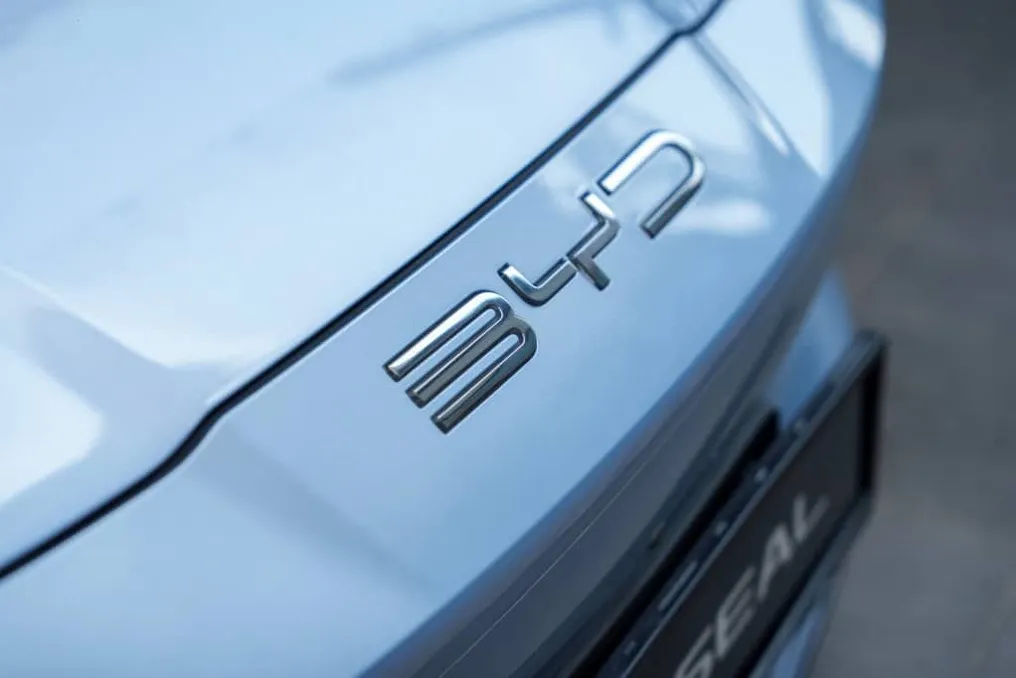
BYD introduced its first locally manufactured flex plug-in hybrid vehicle on Tuesday (4th). The Song Pro Super-Hybrid Flex Fuel model will be available at Brazilian dealerships starting Wednesday (5th), marking an advancement in the Chinese automaker's strategy to increase its national presence through local production.
In conversation with Reuters, Alexandre Baldy, Senior Vice President of BYD in Brazil, detailed that the car can operate using electricity, gasoline, or ethanol. He specified that the GL version has a range of up to 60 kilometers in purely electric mode, while the GS version reaches up to 120 kilometers.
This vehicle was built at the BYD unit located in Camaçari (BA) and represents the first project resulting from collaboration between the company's R&D teams in Brazil and China. Baldy described this achievement as a highly symbolic project for BYD, as it is the first development partnership that resulted in a product specifically adapted for the Brazilian market.
Additionally, the executive mentioned that the automobile meets the automaker's goal of incorporating more than 50% national components in all vehicles produced in Brazil by January 2027.
Initially, BYD operated in Brazil by assembling semi-finished vehicles, but now it is accelerating the shift to full manufacturing in the country. This strategic change aims to comply with Brazilian regulations and position Brazil as an export hub for other regions. Currently, the company already uses national suppliers for items such as tires and plans to begin battery manufacturing at the Camaçari plant, inaugurated in October 2025, in addition to expanding local production of other parts.
Despite being created with Brazil in mind, Baldy emphasized that the Song Pro Flex has the potential to be sold in other locations in the future, such as India, as global ethanol usage expands.
The Camaçari factory is part of a total investment of R$ 5.5 billion made by BYD. The company expects to produce about 180,000 vehicles at this unit this year alone. According to Baldy, approximately 150,000 of these cars will be destined for the Brazilian market, where the automaker projects selling around 200,000 units in 2026.
The manufacturer is also experiencing a period of strong growth in sales. In July, BYD achieved its best performance since arriving in the country. The Dolphin GS was the best-selling car in the Brazilian retail market that month, with 5,861 units sold, according to the company. In total, BYD sold 23,465 vehicles in July, more than double the 9,680 units sold in the same period last year. With this result, the automaker secured the fourth position in the Brazilian market, achieving 9.1% of national sales share.
Caoa Chery has implemented a price reduction on the Tiggo 5X 2027, decreasing it by up to R$ 5,000, after the SUV reached the milestone of 100 thousand units sold and produced in Brazilian territory. These new prices are part of a commemorative promotion valid only during the month of August, according to the automaker's announcement.
The entry-level Sport version had its price adjusted from R$ 126,990 to R$ 124,990, representing a saving of R$ 2,000. The Pro version received a more significant discount, dropping from R$ 144,990 to R$ 139,990. Both configurations continue to benefit from the brand's seven-year or 150,000-kilometer warranty.
The manufacturer also assured that both models are ready for immediate delivery at all dealerships. Caoa Chery attributes this increased availability to the rise in manufacturing pace at the Anápolis (GO) plant, where capacity was expanded to meet demand and eliminate waiting lists.
Introduced in February, the 2027 line standardized the 5X design, aligning it with the larger models, Tiggo 7 and Tiggo 8. The SUV received aesthetic updates, such as new bumpers, full LED headlights with vertical daytime running lights, and rear taillights connected by a light strip. Internally, the focal point is the 20.5-inch Full HD unified dashboard, which integrates the instrument cluster and multimedia center into a single screen, supporting wireless Android Auto and Apple CarPlay.
Starting with the Sport version, the vehicle features six airbags, a rearview camera, parking sensors, keyless entry, and electric adjustment for the driver's seat. The Pro version adds a seventh airbag, located in the front center, in addition to a panoramic sunroof, 360-degree camera system, dual-zone digital air conditioning, 50W wireless charging, 18-inch wheels, and the Max Drive 2.0 driving assistance package, which includes adaptive cruise control, autonomous emergency braking, and blind spot monitoring.
In the engine bay, the Tiggo 5X maintains the 1.5 turbo flex engine, which generates 150 hp with ethanol and 147 hp with gasoline, along with 22.8 kgfm of torque, coupled with a CVT gearbox simulating nine speeds. Caoa Chery reported that this assembly underwent recalibration aimed at improving both performance and drivability. The suspension structure is independent on all four corners, using McPherson in the front and multi-link in the rear.
This repositioning occurs in a highly competitive market, where the SUV competes directly with models such as the Volkswagen T-Cross and Hyundai Creta. It is relevant to note that the promotional price of the Sport still exceeds the R$ 119,990 practiced at the launch of the 2027 line in February. Additionally, in July, the brand had extended the model's offer in direct sales, providing tax exemptions that reduced the cost to R$ 103,180 for taxi drivers.
Many clients of Itaú bank expressed dissatisfaction on social networks regarding an unclear change in purchase notifications. This topic was actively discussed on X and Threads on Tuesday (04).
Due to the initial confusion, Itaú provided an exclusive explanation to Tecnoblog: nothing changes in the official application, and users will continue to receive alerts as usual.
The message sent today to a wide base of consumers concerned another service—push notifications via SMS and email about purchases, among other things, as well as monitoring of the bank balance.
According to the company, this service will indeed be discontinued on August 17 due to a low level of user engagement.
The Itaú application, which has become a hub for various company brands in recent years, will retain familiar transaction notifications for Pix, TED, as well as credit card purchases.
Part of the disinformation originated from the bank itself, as the official profile somehow responded that the measure would take effect with the latest application update. However, according to Tecnoblog, these two points are not related at all.
Furthermore, it would be highly contradictory for a bank that places such a strong emphasis on digitalization to decide to provide less information to its depositors and clients.
The official note states: 'There are no changes in other communication and notification channels used by Itaú.' Thus, customers can rest assured.