Madrasas in the state of Uttar Pradesh will no longer be able to issue Kamil and Fazil diplomas. The UP government plans to amend existing legislation to implement this decision. Previously, the Kamil diploma obtained from a UP madrasa was equivalent to a Bachelor of Arts (BA) degree, and the Fazil diploma was equivalent to a Master of Arts (MA) degree.
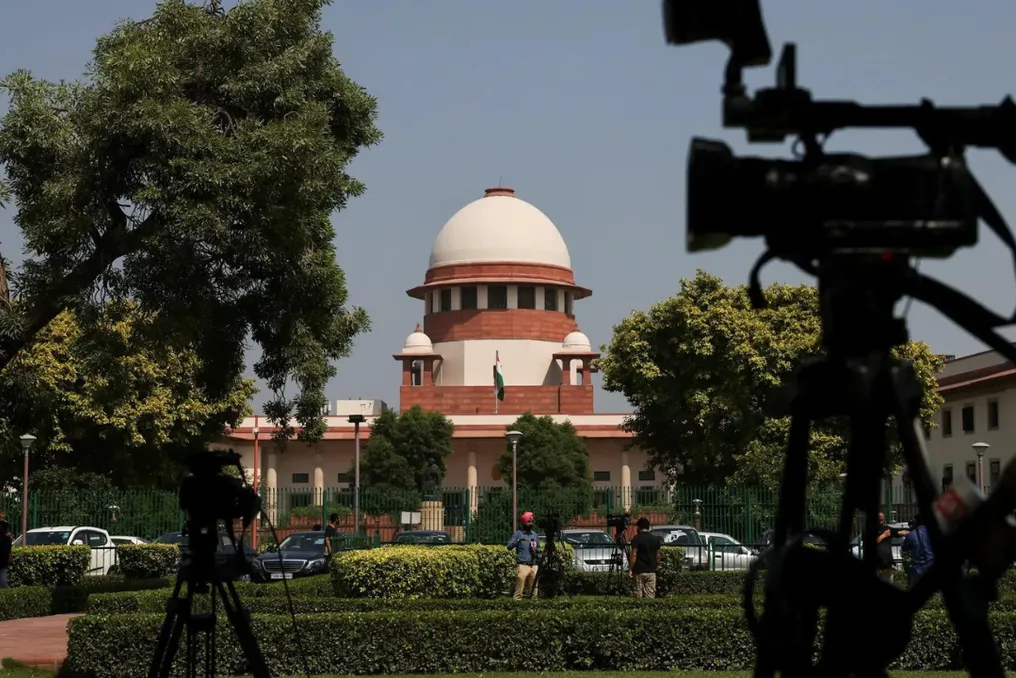
The government, under Yogi Adityanath, approved a draft amendment to the Madrasa Council Act of 2004 during a cabinet meeting on Tuesday. These amendments will subsequently be presented to the legislative assembly. This decision was made by the UP government in accordance with a Supreme Court order.
According to the government statement, the Kamil and Fazil diplomas are not recognized by the University Grants Commission (UGC) of India. Consequently, the recognition of these degrees will be revoked. The government asserts that this step is necessary to align higher education with national standards and regulations, ensuring uniformity and transparency in the madrasa higher education system after the old law is amended.
The Uttar Pradesh government intends to go further and is preparing to annul previously issued higher diplomas based on the Supreme Court's directive. This could create serious difficulties for thousands and millions of students in the region, as any government decision could render their diploma useless, preventing them from continuing their studies or seeking employment.
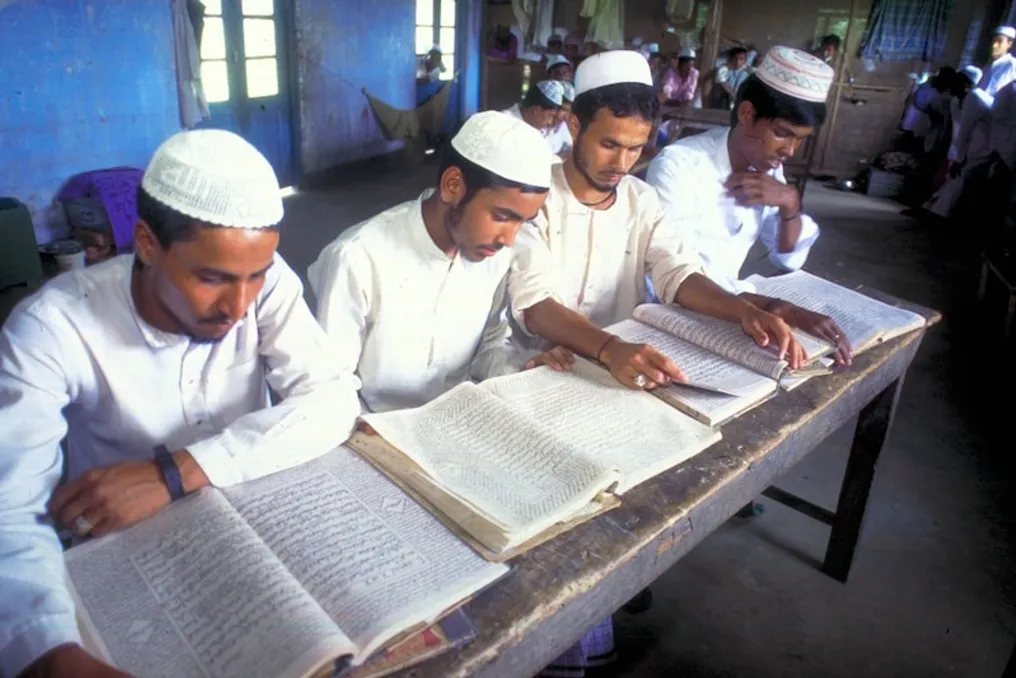
'Kamil' is a three-year course covering Arabic, Persian, and Islamic sciences. The 'Kamil' course issued by the UP Madrasa Board was previously considered equivalent to a Bachelor of Arts (BA) degree. 'Fazil' was a two-year advanced course taken after completing 'Kamil'. The Fazil diploma obtained from the state madrasa board was equivalent to a master's degree.
The Uttar Pradesh government made this decision following the Supreme Court's order dated November 5, 2024. This ruling was delivered while hearing the case of 'Anjum Qadri versus Union of India'.
The case 'Anjum Qadri versus Union of India' concerned the constitutional legitimacy of the Uttar Pradesh Madrasa Education Act of 2004. The situation arose after the Allahabad High Court declared the entire act unconstitutional on March 22, 2024. The court ruled that the act contradicted the secular nature of the Constitution, as well as Articles 14 and 21A. An appeal against this decision was filed in the Supreme Court, including Anjum Qadri and other petitioners.
On November 5, 2024, the Supreme Court made a crucial decision, overturning the Allahabad High Court's ruling that declared the Madrasa Act unconstitutional. In its judgment, the apex court upheld the validity of the Madrasa Act. This decision was rendered by a bench comprising Chief Justice D.Y. Chandrachud, Justice J.B. Pardiwala, and Justice Manoj Mishra.
The court held that the act regulates education in madrasas, teacher qualifications, examinations, and administrative matters. The court noted that the mere fact of teaching religious disciplines in a madrasa does not render the Madrasa Act unconstitutional.
Furthermore, the court emphasized that Article 30 of the Constitution guarantees religious and linguistic minorities the right to establish and administer educational institutions of their choice. However, the state has the right to set rules to ensure quality and necessary secular education in such institutions.
The Supreme Court indicated that the Allahabad High Court erred in striking down the entire act; instead, if certain provisions are unconstitutional or violate rules, only those provisions should be separated, not the entire act abolished.
However, within the scope of this same decision, the Supreme Court made an important observation regarding the Kamil and Fazil diplomas issued by madrasas. The court ruled that the issuance of such higher diplomas by madrasas does not comply with constitutional norms. The court stated that the regulation of higher education standards falls under the jurisdiction of the central government under the UGC Act, making this part of the Madrasa Act unconstitutional.
The Uttar Pradesh government is now using this Supreme Court ruling as the basis for banning the issuance of 'Kamil' and 'Fazil' higher diplomas by madrasas. Subsequently, students who planned to obtain a BA degree after completing 12th grade in a madrasa will have to enroll in universities where they will undergo the admission process alongside other students.
The Madrasa Act was enacted in Uttar Pradesh in 2004 to streamline the madrasa education system. It covers subjects such as Arabic, Urdu, Persian, Islamic sciences, traditional medicine, and philosophy. As of November 2025, 25,000 madrasas operate in UP, approximately 16,000 of which are recognized by the UP Madrasa Board, and another eight thousand five hundred madrasas have not received such recognition. The Madrasa Board conducts annual examinations for the Munshi and Maulli levels (10th grade), as well as Alim (12th grade), Kamil (BA), and Fazil (MA). The goal of the Madrasa Act is to integrate religious education with general education subjects so that students are equipped with both Islamic and modern knowledge.