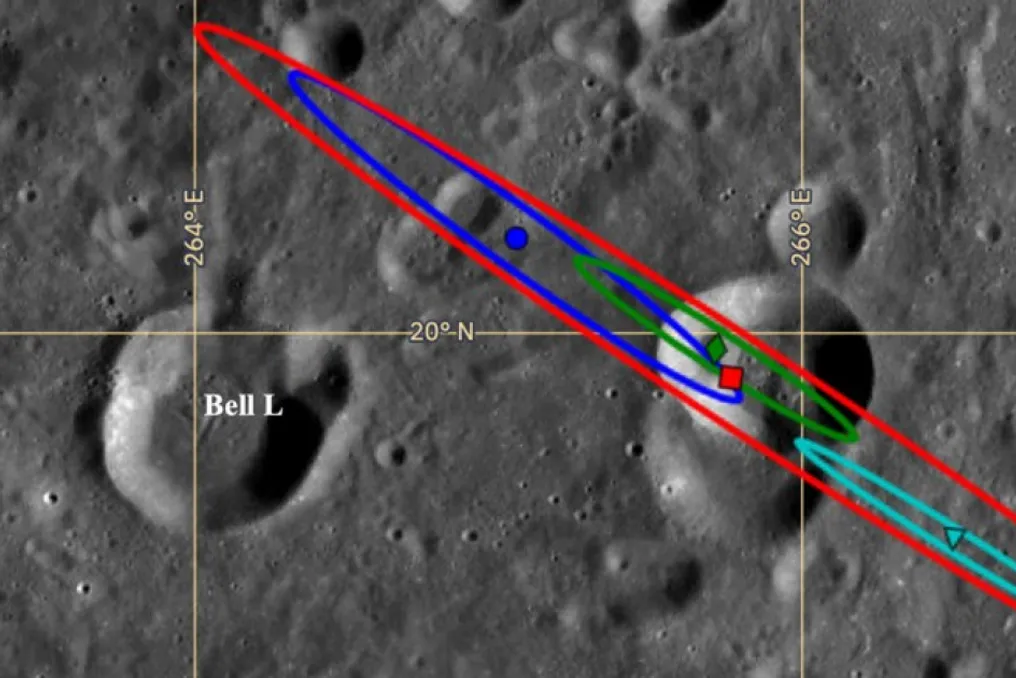
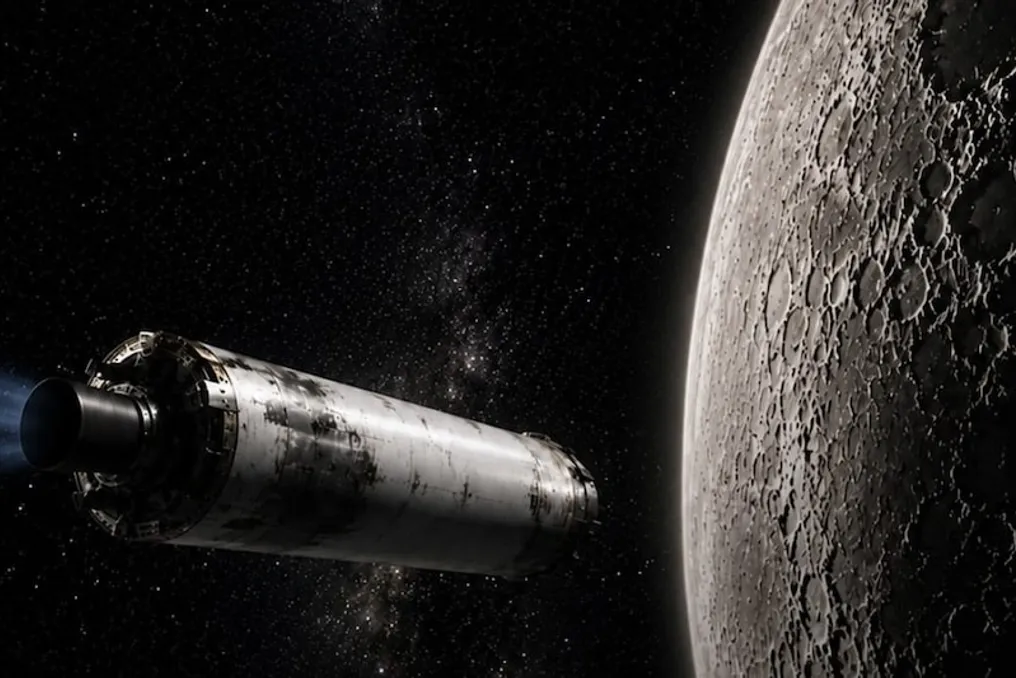
A fragment of a SpaceX rocket that deviated from its course eventually collided with the Moon. This debris was part of a SpaceX Falcon 9 rocket used to launch two lunar landers. Scientists reported that after this fragment began deviating from its trajectory about a year ago, it struck the Moon around Wednesday.
The size of this fragment was comparable to a school bus, and its mass was estimated at four metric tons (4000 kilograms). Although official confirmation of the collision at a speed of 5400 miles per hour (8700 km/h) has not yet been received, space tracking experts believe that the rocket remnant was bound to hit the Moon.
It was hypothesized that the impact of this space debris would cause a cloud of lunar dust to rise. This dust might shine under sunlight, but observing it with the naked eye from Earth is difficult.
This is another instance of debris accumulation on the Moon. Many fear that this problem could worsen due to the race between America and China to send astronauts to the Moon. In 2022, a Chinese rocket accidentally collided with the Moon after a lunar mission, and there is a suggestion that many other rocket fragments may have hit the Moon over the past decades without scientists knowing.
Juliana Shaiman from SpaceX stated that the company is cooperating with NASA to prevent similar incidents in the future. She emphasized that the collision was not intentional. According to her, a combination of solar activity and gravity led the object onto a collision course with the Moon.
The approximate collision site was in the sunlit western part of the Moon, near the Einstein crater. This area on the edge of the near and far sides of the Moon is very difficult to see from Earth. McDowell noted that, in his opinion, the rocket has now broken up into small fragments near the Einstein crater on the Moon. He also added that even if an asteroid had collided with the rocket during its final flight stage, its pieces would have fallen in the same location on the Moon.
Visual confirmation requires waiting for images from NASA's Lunar Reconnaissance Orbiter flying over the accident zone and showing the formed crater. The space agency does not expect this to happen before next week.