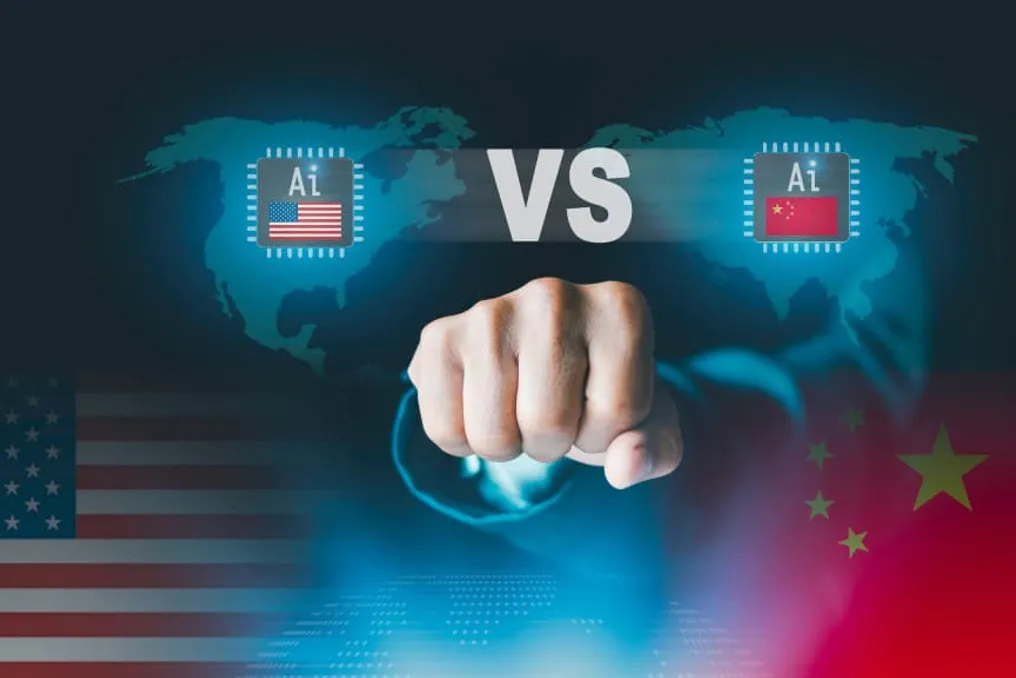
The Chinese artificial intelligence industry has experienced a renewed momentum in recent weeks, driven by a series of releases that have narrowed the gap with major US developers. Companies such as Alibaba, Moonshot AI, DeepSeek, Z.ai, and ByteDance are now competing among the most sophisticated available models.
This movement began earlier this year when Chinese companies started presenting systems capable of handling complex tasks, including programming, reasoning, and video creation. The adopted tactic combined technical improvements with lower prices compared to those practiced by American competitors.
This expansion of models has intensified pressure on giants like OpenAI and Anthropic, forcing them to face a scenario where both high performance and cost efficiency have become crucial for attracting users and developers globally.
The new phase of the AI efficiency battle
This recent wave from China signals a transformation regarding the initial impacts caused by the advancement of DeepSeek. The sector's progress is no longer seen as an isolated event but is interpreted as the result of an ecosystem capable of generating successive competitive models in short periods.
Notable releases include Qwen3.8-Max, developed by Alibaba and presented as the company's most advanced model; Kimi K3, from Moonshot AI; V4 Flash, from DeepSeek; GLM-5.2, from Z.ai; and new iterations of ByteDance's Seedance tool, focused on AI video generation.
The main focus of the rivalry has shifted from simply developing the most powerful system to prioritizing cost reduction. Independent evaluations mentioned in the text indicate that certain functions performed by DeepSeek V4 Flash could cost mere cents, while comparable American solutions would reach significantly higher values.
This landscape has put pressure on intermediate market companies. Companies that cannot offer greater capacity at the same price or reduce their costs risk losing market share, as users have begun to directly compare the value offered versus the performance.
The competition has also changed how some corporations utilize various models. According to Dermot McGrath, founder of the consultancy ZenGen Labs, some professionals have opted to integrate American and Chinese tools: using US models for planning and Chinese systems for executing specific tasks.
The Chinese advance carries both a technological and political dimension. Washington has expressed concern over issues such as intellectual property and the effect of these developments on its sectoral leadership, while simultaneously discussing methods of control without harming its competitive position.
Another factor highlighted in Chinese growth is the willingness of companies to accept lower financial returns in the short term with the goal of capturing users, developers, and international relevance. This strategy has fueled an intense price war within the Chinese market itself.
Beyond language models, the video creation area exemplifies this expansion. ByteDance has increased its investments in Seedance, while Kuaishou has progressed with its Kling AI tool, which received financial support from Alibaba and Tencent in a $2.8 billion round.
At the heart of this race lies the dispute over technological supremacy. While American laboratories maintain plans for large market valuations based on high-margin business models, Chinese competition questions to what extent these prices can remain high against more accessible alternatives.