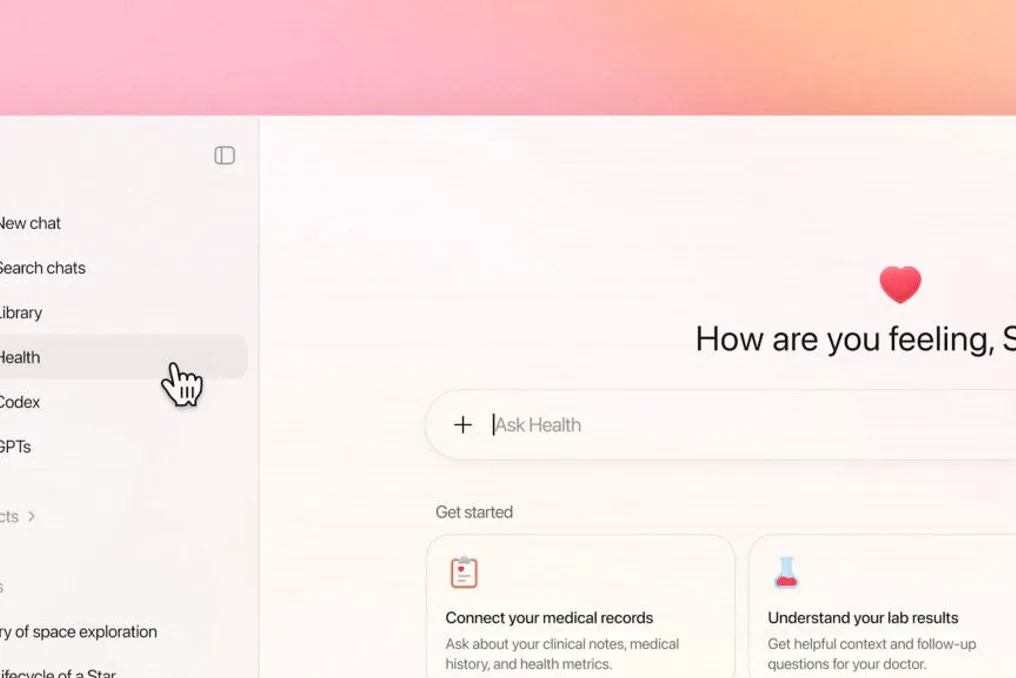
Artificial intelligence is transforming how people search for health information. People are increasingly turning to chatbots like ChatGPT to figure out the cause of persistent headaches, understand blood test results, or assess symptom severity before making an appointment with a doctor.
Although these tools can explain medical terms and provide general useful information in seconds, they are not designed to diagnose conditions or replace qualified medical advice. The technology companies behind these platforms openly warn that their responses may be inaccurate or incomplete, especially when it comes to personal health status.
Healthcare professionals insist that AI should be viewed as a supplementary guide, not a substitute for clinical expertise. According to Dr. Jess Morris, a general practitioner at Mediclinic Morningside, a correct diagnosis requires much more than just a set of symptoms. It includes medical history, physical examination, diagnostic tests, and clinical judgment—factors that no chatbot can fully replicate.
The main danger is that AI can sometimes give a false sense of security, leading people to postpone treatment for conditions that might progress silently until they become critical.
The Danger of 'Silent' Diseases
The primary risk of relying on AI is not only receiving an incorrect answer but also receiving 'false reassurance.' AI is incapable of interpreting factors such as blood pressure trends, cholesterol profiles, or pre-diabetes risks as individually as a healthcare specialist can.
Dr. Morris notes: 'In some cases, this can cause unnecessary stress, but in others—it can create a false sense of calm, delaying professional help when early intervention could have been crucial.'
There are three common health questions that 'AI Doctors' simply cannot answer with the necessary nuance.
Do I have high blood pressure?
Hypertension remains one of the most challenging conditions for self-diagnosis via chatbot, as it often shows no obvious signs until dangerous levels are reached. Dr. Morris explains that by the time symptoms like chest pain, blurred vision, or anxiety appear, a person may already be in a hypertensive crisis.
He emphasizes that 'a single measurement or online reference range cannot show how pressure behaves over time or during sleep, nor can it reflect individual risk of stroke or heart disease.'
Should I worry about my cholesterol level?
AI can state what the 'normal' range looks like on paper, but it does not know you personally. It cannot assess how your readings interact with your personal medical history or lifestyle. Dr. Morris points out that many people with abnormal lipid levels feel perfectly fine until they experience a heart attack or stroke.
Doctors consider results alongside your weight, age, and other conditions such as diabetes to determine whether you need a diet or a prescription.
Am I prediabetic?
'Prediabetes is a gray area where AI often errs. A slightly elevated blood sugar level does not guarantee the development of diabetes, but it is also not a 'safe' zone.' Dr. Morris says that prediabetes often progresses without symptoms and is usually detected through screening tests, such as HbA1c, which reflects sugar levels over several months, not at a single point in time.
Clinical specialists must correlate these results with weight changes and activity levels to develop a plan that can truly reverse the condition.
Use AI as a map, not as a destination
AI is a brilliant tool for understanding terminology or learning the theoretical principles of how a certain medication works. It is useful in helping formulate better questions for a doctor, but it cannot replace clinical judgment. Dr. Morris concludes: 'Medical test results are parts of a larger mosaic, not final answers in isolation.' He adds that 'when it comes to understanding your health, there is no shortcut that can replace a conversation with a qualified healthcare professional who can consider the entire context and direct you to appropriate treatment.'