When people imagine the ideal beaches of Africa, they first think of destinations like Zanzibar, Mauritius, and the Seychelles. However, one of the continent's most valuable coastal spots is located hundreds of kilometers from the ocean.
}} , 3. {When people imagine the ideal beaches of Africa, they first think of destinations like Zanzibar, Mauritius, and the Seychelles. However, one of the continent's most valuable coastal spots is located hundreds of kilometers from the ocean.
}} , 3. {Lake Malawi, stretching nearly 580 kilometers in the heart of Malawi, is one of Africa's Great Lakes and ranks among the world's largest freshwater lakes. Its crystal-clear water, sandy beaches, colorful fish, and relaxed village settlements on the shore create an astonishingly tropical place. It is no wonder that early explorer David Livingstone popularized it as the 'Lake of Stars' after seeing the shimmering lights of fishermen above the water at night.
For those seeking adventure, relaxation, and authentic cultural interaction away from the crowds of more famous island destinations, Lake Malawi offers an experience unlike any other in Africa. August, with its dry, sunny days and calm waters, is considered one of the best times to discover its numerous merits.
Despite being deep inland, Malawi boasts one of Africa's most impressive beach destinations. The lake covers about one-fifth of the country's area and is part of the Great Rift Valley, forming breathtaking landscapes where forested hills slope down to golden beaches and sheltered bays.
The water is exceptionally clear most of the year, especially during the dry season from May to October. Gentle waves caress the sandy shores, while palm trees, traditional fishing boats, and rocky islands enhance the tropical atmosphere. Unlike saltwater beaches, swimmers can spend hours in the lake without feeling the sting of salt, making it particularly attractive to families and water sports enthusiasts.
The pace of life here is also refreshing. Instead of noisy resorts, many coastal communities maintain a measured rhythm centered around fishing, small guesthouses, and warm local hospitality.
The lake's famous nickname dates back to the Scottish missionary and explorer David Livingstone, who visited the area in the 19th century. As darkness fell, hundreds of tiny lights appeared across the water as fishermen set out in wooden boats with lanterns to attract fish. From a distance, these shimmering lights resembled stars scattered across the lake's surface, inspiring the poetic name that has endured to this day.
Even now, the sunset is one of the main highlights of any visit. As the sky paints itself in shades of gold, pink, and orange, fishing boats drift across the horizon before the lake begins to sparkle with lantern light after nightfall.
Diving in One of the World's Richest Freshwater Ecosystems
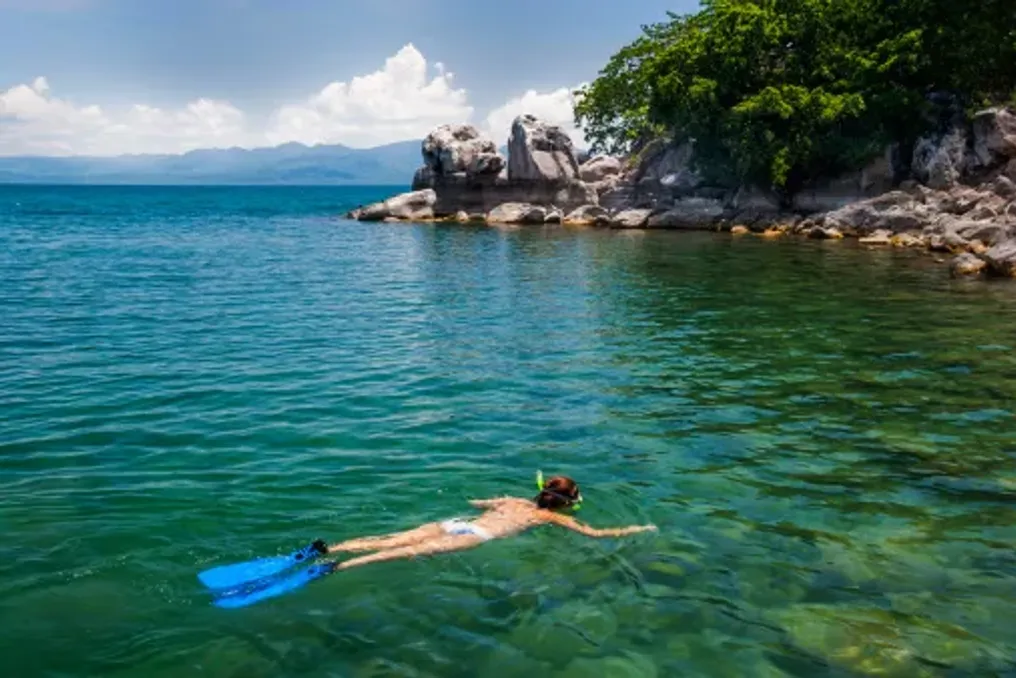
Lake Malawi is often compared to a freshwater counterpart of the coral reef. It hosts more species of fish than almost any other lake on Earth, including hundreds of cichlid species found nowhere else. Many of these fish display vibrant blue, yellow, orange, and red colors, creating an underwater spectacle that amazes snorkeling beginners.
The best snorkeling can be found near rocky outcrops and sheltered bays, where the exceptionally clear water provides excellent visibility. Unlike many marine destinations, appreciating the lake's biodiversity does not require expensive diving excursions—much of this wealth can be enjoyed with just a mask and snorkel.
The lake's unusual aquatic life is one reason why Malawi National Park became the first UNESCO World Heritage site established primarily to protect a freshwater ecosystem.
One of the most enjoyable ways to experience Lake Malawi is by traveling on the water itself. Calm morning conditions make kayaking suitable for paddlers of all skill levels. Quiet routes pass along secluded bays, hidden beaches, and rocky headlands, where one can sometimes spot kingfishers, eagles, and otters along the shoreline.
Longer organized expeditions allow visitors to paddle between villages, camp on remote beaches, and enjoy unobstructed views of the vast lake, while shorter trips offer a tranquil way to watch the sunrise over the water. Due to limited shipping outside the main fishing areas, kayaking here feels wonderfully unhurried.
Although Malawi does not have ocean islands, Lake Malawi compensates with beautiful freshwater islands.
Likoma Island, located in the northern waters of the lake, may be the most famous. Despite its proximity to Mozambique, the island remains Malawian territory and offers a peaceful retreat with sandy beaches, boutique hotels, and a wonderfully relaxed atmosphere. One of the most unexpected attractions is the majestic St. Peter's Cathedral, one of the largest churches in Central Africa. Combined with cycling routes, snorkeling opportunities, and friendly villages, Likoma offers visitors a slower, deeper island experience.
Smaller islands scattered across the lake provide additional opportunities for picnics, birdwatching, and secluded swimming.
The greatest strength of Lake Malawi lies not only in its scenery but also in the warmth of its people. Many communities welcome visitors through village tours that provide insight into traditional fishing methods, local crafts, and daily life along the lake shore.
Markets are abundant with fresh produce, colorful fabrics, and handmade goods, and local restaurants serve freshly caught Chambo—a prized tilapia often considered the national fish of Malawi. These cultural encounters add depth to the vacation, reminding visitors that Lake Malawi is as connected to its people as it is to its landscapes.
Several lakeside locations offer different experiences depending on your travel style.
Located within Malawi National Park, Cape Maclear is known for snorkeling, kayaking, boat trips, and easy access to nearby islands. Its relaxed atmosphere makes it one of the lake's most popular destinations.
Further north, Bai Nkhata attracts adventurers with its dramatic rocky coastline, lively backpacker atmosphere, and opportunities for diving, sailing, and hiking.
Ideal for those seeking tranquility, Likoma combines boutique accommodation with beaches, history, and excellent leisure opportunities.
The park protects both the shoreline and underwater habitats, making it a must-visit for nature lovers and anyone interested in the lake's remarkable biodiversity.
August falls within Malawi's dry, cool season, bringing sunny days, low humidity, and comfortable temperatures, ideal for outdoor activities. Calm conditions improve visibility for snorkeling and diving, and kayaking and boat trips become more pleasant due to lighter winds. Hiking trails are dry and accessible, and evenings remain pleasantly cool.
For travelers combining a trip to Lake Malawi with safaris in nearby national parks such as Liwonde or Majete, August also offers excellent wildlife viewing opportunities, as animals gather around permanent water sources.
Lake Malawi does not try to compete with Africa's well-known beach destinations—it offers something entirely different. Instead of luxurious resorts and bustling coastlines, visitors discover crystal-clear freshwater, colorful underwater worlds, hospitable communities, and a pace of life that encourages travelers to slow down and savor every moment.
Whether you are paddling along quiet bays, snorkeling among dazzling cichlids, watching lantern-lit fishing boats, or simply relaxing on a golden beach, it is easy to understand why visitors often wonder why more people haven't discovered this wonderful corner of Africa. For travelers seeking an alternative to typical island getaways, Lake Malawi may be Africa's most underrated lake.
Significant parts of the city of Durban are experiencing prolonged water shortages, forcing residents to rely on water tankers. The most affected areas are the western and southern parts of the city.
City advisor Tabani Ndlovu reported that in the southern districts, such as Umbumbulu, Folweni, Mfumme, eKhahleni, and Umgababa, residents have lived for years without access to water and are heavily dependent on cisterns. He noted that in central areas, water may appear for a day or two before disappearing again. In places like Umlazi and parts of Ntuzuma, water is available, but frequent interruptions can last for several days.
The municipality presented information on steps being taken to resolve the water supply issues. Work on modernizing the R1.2 billion Southern Aqueduct in Chatsworth has been announced. Upon completion, the construction of a 24-kilometer main pipeline will significantly improve and stabilize water supply in the city's southern districts.
Furthermore, the modernization of the Ogunjini Water Treatment Plant will increase water availability for approximately 3,000 households in Ogunjini, including Osindisweni Hospital. Mduduzi Nkosi, head of the trade services department overseeing water supply, confirmed the existence of difficulties but assured that work is underway to resolve the problem.
Nkosi explained that the southern aqueduct required replacement due to its age and potential danger to residents; a leak could damage homes. This single pipeline supplies nearly one million people, and after commissioning, expected by the end of the year, pressure on the supply system will ease.
The scale of the water problems was highlighted by the Department of Cooperation and Traditional Affairs, which announced the dispatch of water tankers to seven municipalities in the province. It was reported that yesterday, Minister of Water and Sanitation Tulasize Butelezi held a meeting with district mayors at the Department of Water and Sanitation offices in Durban. At this strategic meeting, an operational plan was approved to deploy over 20 provincial water tankers to provide immediate assistance to communities suffering from acute water shortages.
The targeted intervention aims to support seven key district municipalities that are currently facing serious service delivery constraints: eMbe District Municipality, uGu District Municipality, Amajuba District Municipality, uThukela District Municipality, Zululand District Municipality, uMzinyathi District Municipality, and uMkhanyakude District Municipality.
The landscapes of Africa have been shaped by powerful geological forces, which are most vividly displayed in crater lakes. These bodies of water, formed by volcanic eruptions or ancient meteorite impacts, combine fascinating geology with stunning scenery, attracting hikers, photographers, birdwatchers, and adventurers.
From emerald-green waters in the hilly terrain of Uganda to volcanic lakes rising in the mountains of Rwanda, these unique places offer more than just beautiful views. They tell stories of Earth's mighty past and provide unforgettable outdoor experiences.
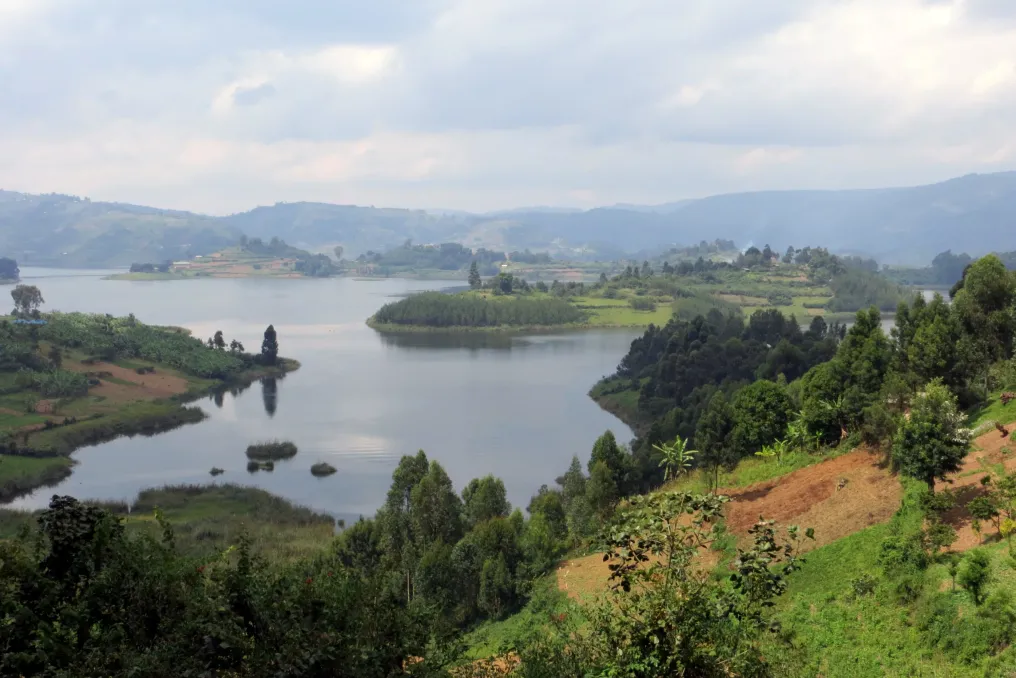
Located among steep terraced hills in southwestern Uganda, Lake Bunyonyi is often cited as one of Africa's most beautiful lakes. Although not its entire area is within a volcanic crater, it is situated in a landscape shaped by ancient volcanic activity, and numerous crater lakes are scattered around it in the Kigezi highlands. The calm waters of the lake are adorned with 29 lush islands, each possessing its own legend and history. Visitors can explore the islands by canoe or kayak, hike from viewpoints, engage in birdwatching, or simply relax at lakeside lodges overlooking the serene landscape.
Lake Nyos is located inside a volcanic crater in northwestern Cameroon and is one of the world's most scientifically significant crater lakes. It attracted international attention after a rare limnic eruption in 1986, which ejected a massive cloud of carbon dioxide. Today, a controlled degassing system continuously releases gas from the lake, making it an important site for geological research. Tourists interested in geology can admire the dramatic crater landscape, learn about the lake's fascinating history, and hike through the surrounding volcanic highlands with local guides.
Lake Kivu stretches along the border between Rwanda and the Democratic Republic of Congo and is situated in the picturesque Albertine Rift, surrounded by volcanic mountains and lush green hills. Nearby Virunga volcanoes create one of Africa's most scenic backdrops, making the lake a popular spot after gorilla trekking. Here, visitors can take a boat cruise, kayak along the shoreline, visit coastal towns such as Gisenyi and Kibuye, or climb nearby trails offering panoramic views of the water.
Located in the Tigray region of Ethiopia, Lake Asheng occupies a volcanic crater surrounded by dramatic cliffs and rugged mountainous terrain. The deep blue lake contrasts beautifully with the surrounding highlands and offers a peaceful retreat away from busier tourist routes. Its elevated position also attracts diverse birdlife throughout the year. Visitors can enjoy scenic highland drives, photograph the surrounding cliffs, watch birds along the shore, and get acquainted with traditional Ethiopian villages nearby.
On the island of Santo Antão lies the impressive Kova Crater, which is a dormant volcano whose fertile floor has been converted into small farms growing corn, sugarcane, and vegetables. Although there is no lake inside the crater today, seasonal water collection and mist often create an atmospheric landscape unlike anything else in Cape Verde. Tourists can walk the famous Kova-tu-Pol trail, enjoy extensive views of the volcanic mountains, and experience one of the country's most rewarding trekking routes.
Crater lakes form when volcanic craters or calderas fill with rainwater or groundwater after eruptions. Over millennia, these lakes develop unique ecosystems, often supporting rare plants, birds, and aquatic life found nowhere else. The steep crater walls also create magnificent viewpoints, making them some of the continent's most photogenic natural attractions. Regardless of what draws visitors—dramatic landscapes, fascinating geology, or rewarding hiking trails—Africa's crater lakes offer unforgettable journeys into the continent's volcanic past.