The European Union (EU) expressed praise for the way Spain managed the migration crisis that occurred in Ceuta. Laurent Nuñez, at a press conference, stated that all Member States demonstrated solidarity with Spain, applauding the administration of the Spanish government, its president, Pedro Sánchez, and its Minister of the Interior.
This informal meeting of European ministers, focused on Internal Affairs, was called as an emergency request by Madrid and 22 other EU countries, and took place via video conference. According to Nuñez, there was a consensus among participants regarding support for Spain, despite disagreements about European migration policy and the necessary measures to prevent new mass arrivals.
The ministers also agreed that the Schengen Area was not the core of the problem, but rather part of the solution, ensuring that no member country questioned Spain's presence in the European free movement area. Previously, the Danish Prime Minister, Mette Frederiksen, had argued that the EU should evaluate all alternatives, including the possible exclusion of Spain from the Schengen Area.
Nuñez mentioned that during the meeting, some countries raised concerns about policies that could attract migrants, which was rejected by Spain and other Member States, who opposed internal divisions within the EU. The French minister emphasized that none of the migrants who entered Ceuta, the Spanish enclave in North Africa, on July 30th, reached continental Europe.
In parallel, Paris decided to intensify controls on the Franco-Spanish border to prevent possible 'secondary movements' of migrants who might enter France and subsequently try to reach the United Kingdom. In addition to the 334 agents already deployed on the border with Spain, another 186 will be sent starting Wednesday, as announced by Nuñez, who also confirmed the reinforcement of controls on the French border with Italy.
The official recalled that the French President, Emmanuel Macron, had already offered assistance to the Spanish government chief, Pedro Sánchez, during a phone conversation held on Friday. Nuñez expressed regret over the use of images of the massive influx of migrants into Ceuta by 'other countries to criticize the EU's migration policy and sow discord.'
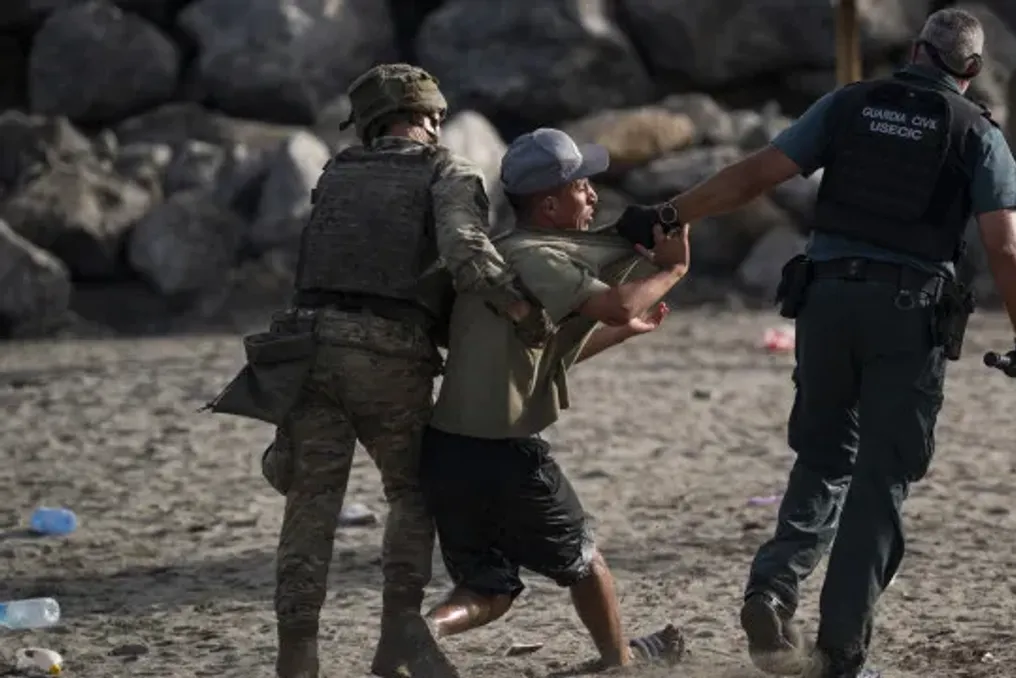
Denmark also praised the actions of the Spanish authorities, even after initial critical positions from Copenhagen. Morten Bodskov, the Danish Minister of Immigration and Integration, expressed satisfaction with the speed of the Spanish action, including the mobilization of the police and army, and with the return of many migrants to Morocco.
However, Bodskov considered it 'unsustainable' that tens of thousands of migrants could cross an external EU border in a short period, advocating for the strengthening of European control mechanisms. He warned that pressure on external borders requires an immediate and firm response from all countries, stating that uncontrolled immigration represents a threat to both Europe and Denmark, and that a repetition of the 2015 situation will not be accepted.
At the end of the meeting, the ministers of the 27 countries expressed 'firm solidarity' with Spain and praised 'the quick and effective action of the Spanish authorities in response to the situation,' according to an EU Council statement. The Member States also reached an understanding on the need to reinforce external borders, intensify the fight against migrant trafficking networks, improve the capacity to prevent future crises, and establish 'solid alliances with third countries.'
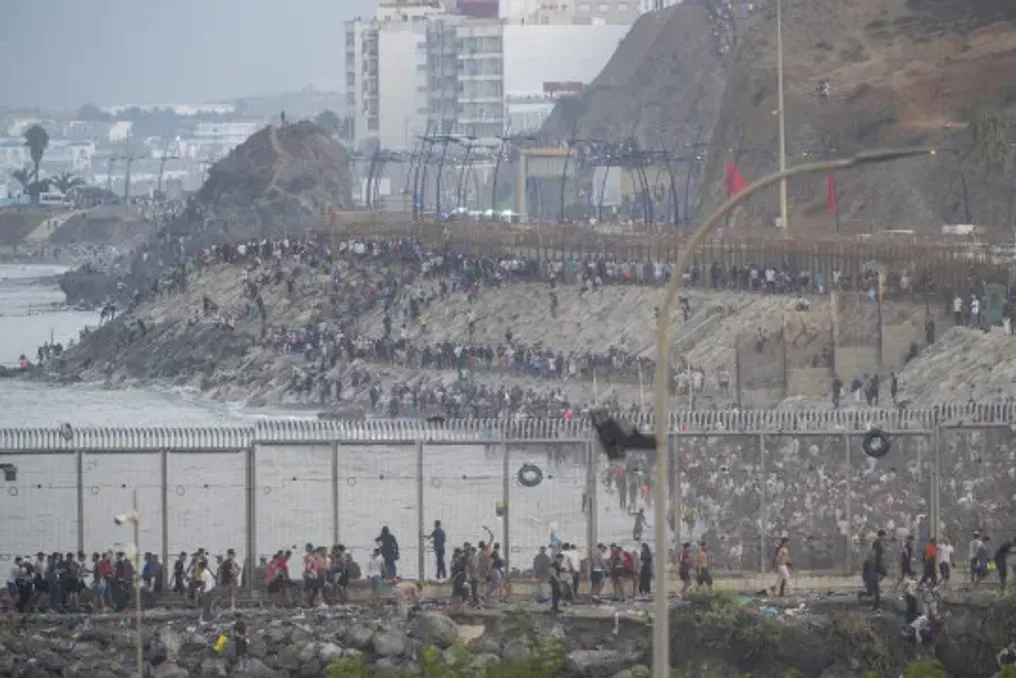
Data updated by Spanish authorities indicates that about 72,000 people entered the Spanish autonomous city of Ceuta in 24 hours the previous week, and 70,000 have already returned to Morocco. At least 75 people died while trying to reach Ceuta by swimming. Ceuta, a small territory of 80,000 inhabitants located in the northernmost tip of Morocco, bathed by the Strait of Gibraltar, constitutes one of the two land borders between Africa and Europe, along with the other Spanish enclave of Melilla.