The Tourism Committee of Uzbekistan, together with relevant ministries and agencies, has prepared a draft presidential decree aimed at promoting active tourism. This document has been submitted for public discussion.
The Tourism Committee of Uzbekistan, together with relevant ministries and agencies, has prepared a draft presidential decree aimed at promoting active tourism. This document has been submitted for public discussion.
During the development process, practices from Switzerland, Austria, France, Georgia, Kazakhstan, and Kyrgyzstan were studied. Consultations were also held with representatives of the tourism business, non-profit organizations, and volunteer rescue services.
The project defines six key areas for the development of active tourism: enhancing tourist safety, effective utilization of regional natural potential, implementation of national and international safety standards, digitalization and simplification of permit acquisition procedures, improving the training of guides and instructors, and supporting entrepreneurs and non-governmental organizations.
The document provides for the creation of a list of 162 natural sites with high potential for active tourism in the Tashkent, Suni, Samarkand, Kashkadarya, and Jizzakh regions. These sites include mountain ranges, lakes, waterfalls, caves, and peaks. A special roadmap for infrastructure development and service expansion will be approved for these locations.
After the decree is adopted, the Tourism Committee will prepare unified regulations concerning active tourism within one month. A separate system will be introduced for extreme tourism sites, which will include state registration, commissioning, and monitoring. Standardized rules will cover attractions such as zip lines, alpine sleds (toboggans), bungee jumping, rope parks, and suspension bridges.
The project also stipulates the application of international standards in the training of mountain instructors and guides. The Ministry of Emergency Situations and the Tourism Committee will jointly develop training and certification programs in accordance with international requirements. Specialized courses are planned to be opened in Karakalpakstan, as well as in the regions of Jizzakh, Kashkadarya, Namangan, Samarkand, Syrdarya, Suni, and Tashkent.
Procedures for obtaining permits to visit mountainous and border areas will be simplified. Local residents and foreign tourists will be able to obtain electronic permits through the Unified Portal of Interactive Government Services within ten days.
A separate section of the proposal is dedicated to the development of small aviation. The Civil Aviation Service is designated as the main state regulator in this field, receiving powers for aircraft registration, certification, technical maintenance, pilot training, and flight safety supervision. The Ministry of Transport has been tasked with developing simplified rules for registering small aircraft and introducing mandatory civil liability insurance.
Plans also include the creation of the 'Small Aviation' digital platform, launching a Cadet Program for pilot training, restoring regional airfields for tourism purposes, and leasing certain facilities to private operators.
To support commercial operators, the project proposes exempting the import of about 40 types of vehicles, mechanisms, and equipment used in active tourism from customs duties between January 1, 2027, and January 1, 2030. This exemption applies to quad bikes, SUVs, campers, jet skis, parachutes, paragliders, hang gliders, mountaineering gear, and other specialized equipment.
Furthermore, starting in 2027, state programs will gradually include projects for developing road, utility, and tourism infrastructure in active tourism areas. Additional provisions include establishing an insurance system for tourism services and introducing special traffic management rules for buses and minibusses on popular mountain routes such as Charvak, Zaamin, and Kamchik Pass.
According to the developers, the implementation of these measures will accelerate the growth of active and extreme tourism, stimulate the emergence of new tourism products, increase the attractiveness of the regions, and create new jobs.
The Ministry of Economy and Finance of Uzbekistan has prepared a draft law aimed at improving the regulatory framework for leasing services. This document has been published for public discussion on the portal of normative legal act projects.
The proposed changes also provide for the abolition of the requirement from the Civil Code and the Law 'On Leasing' that leased assets must be used strictly for business purposes. The draft law clarifies the definition of the lessee, which may include individuals, individual entrepreneurs, and legal entities that receive and use leased property for payment under a lease agreement.
When concluding lease agreements with individuals or individual entrepreneurs, the document requires specifying the legal and property status of the leased asset, the party holding the asset on its balance sheet, as well as the amortization calculation procedure and the organization responsible for its accounting.
According to the proposed rules, leasing organizations can only begin their activities after notifying the Ministry of Economy and Finance. The Ministry will maintain a state register of leasing organizations, establish requirements for asset classification and valuation, and gain the authority to determine maximum interest rates and other commission limits.
Furthermore, the Ministry of Economy and Finance will supervise the activities of leasing companies, ensure compliance with legislation, and have the right to suspend their activities or apply to court with a demand to suspend, resume, or terminate these activities.
The draft law also proposes establishing minimum charter capital requirements for leasing organizations: no less than 2 billion soms by April 1, 2027, and 3 billion soms by January 1, 2029. Public consultations on this draft will continue until August 5.
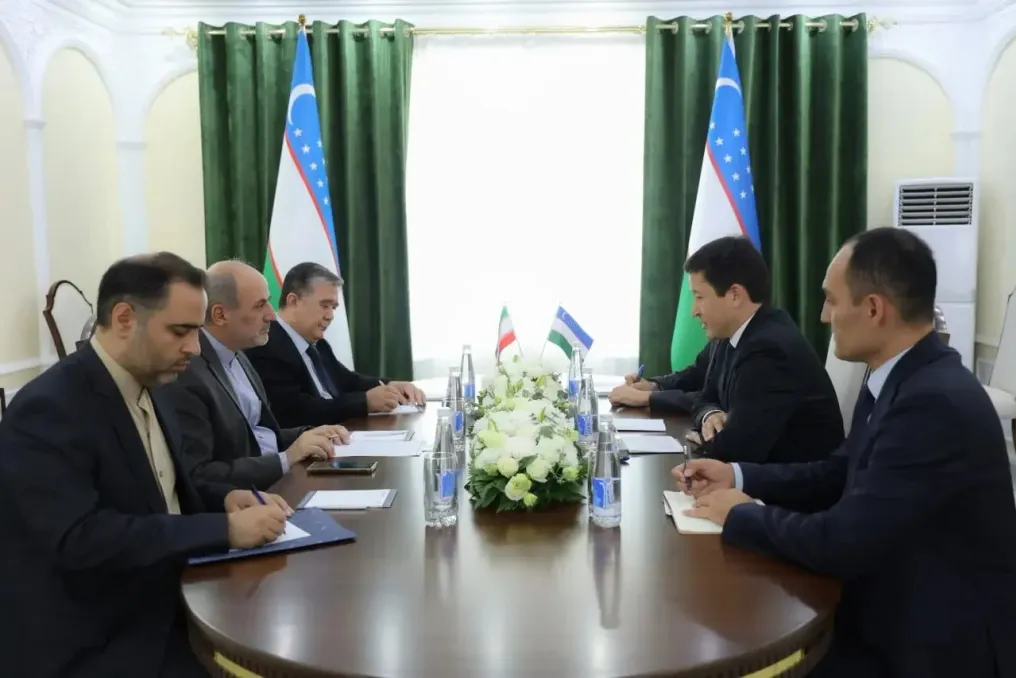
The Chairman of the Tourism Committee of the Republic of Uzbekistan, Abdulaziz Akkulov, held a meeting with the Ambassador of the Institute of the Islamic Republic of Iran in Uzbekistan, Mohammad Ali Eskandari.
During this meeting, the parties discussed in detail the further strengthening of partnership between the two states in the field of tourism, aimed at effectively utilizing existing potential and increasing mutual tourist flows.
In particular, the participants exchanged views on promoting the tourism opportunities of both countries, increasing the number of tourist trips, expanding direct air connections, as well as developing joint work in the field of medical tourism.
The Iranian side put forward a proposal to simplify visa procedures for Iranian citizens. Furthermore, an agreement was reached on more active promotion of Uzbekistan's tourism potential in the Iranian market and continuous increase in mutual tourist exchanges, based on the rich historical and cultural heritage of the two countries.