Second-generation ethanol (E2G), which is generated from sugarcane residues, offers an alternative to expanding biofuel production without requiring more cultivated areas. Unlike traditional ethanol, this type of fuel uses materials remaining after the production of sugar and first-generation ethanol.
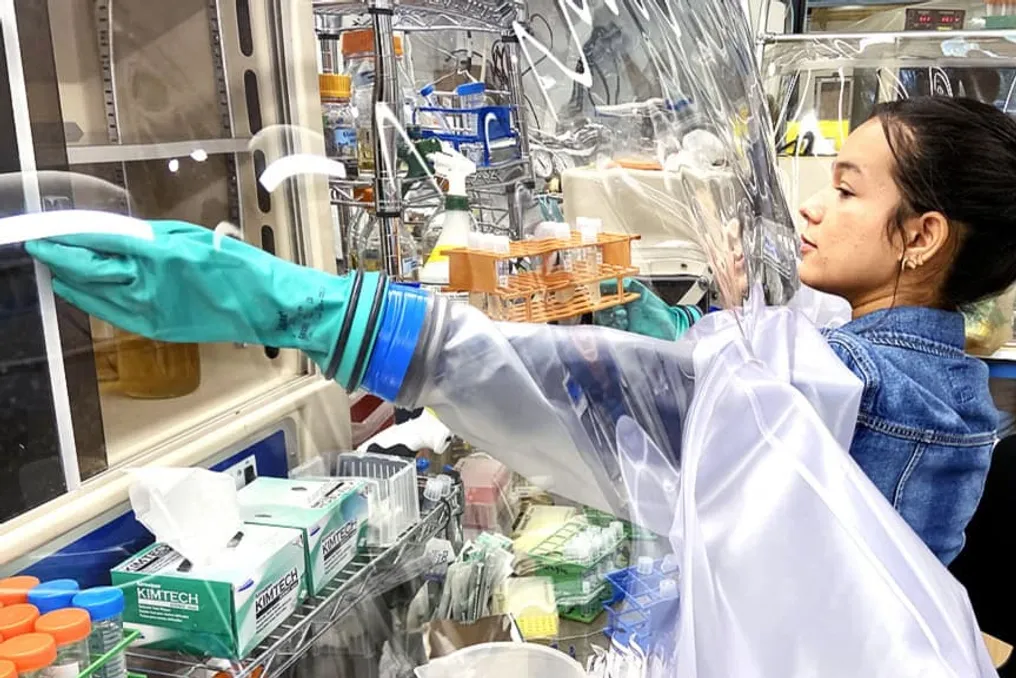
Research conducted at the State University of Campinas (Unicamp), in collaboration with institutions in the United States, aims to overcome one of the biggest hurdles for this technology: the costs and efficiency of the production process. The study focused on creating bacteria that underwent genetic modifications, with the goal of increasing ethanol production yield.
This work was carried out at the Center for Molecular Biology and Genetic Engineering (CBMEG) at Unicamp and resulted in a patented and licensed technology for the American company Terragia Biofuel. Preliminary tests demonstrated a yield increase of up to almost 30% compared to unaltered bacteria.
E2G uses bagasse and other vegetable debris remaining from sugarcane processing as raw material. These materials contain sugars trapped in fibrous structures, which can be released through treatments and hydrolyses to produce more ethanol.
The fundamental distinction from first-generation ethanol lies precisely in the utilization of this residual material. While the classic model primarily focuses on sugarcane juice, the second generation seeks to convert previously discarded parts into an extra energy source.
In addition to increased biomass utilization, E2G has a lower environmental impact. This is because its greenhouse gas emissions can be up to 80% lower than those of common ethanol and up to 93% lower than gasoline.
Despite these advantages, industrial-scale production still faces financial difficulties. The usual method of producing E2G depends on biomass treatment phases and the use of enzymes to release the sugars necessary for fermentation, which increases operational costs.
The research conducted by Unicamp proposes a distinct approach, called Consolidated Bioprocessing (CBP). This strategy employs thermophilic anaerobic bacteria capable of decomposing biomass and performing fermentation in a single step, reducing the need for prior procedures.
The study involved the bacterium Clostridium thermocellum, known for its ability to decompose cellulose, and Thermoanaerobacterium thermosaccharolyticum, a microorganism with high efficiency in ethanol generation. The researchers' intention was to combine complementary attributes of these organisms through genetic engineering.
The doctoral research by Layse Costa de Souza, developed at Unicamp's CBMEG, investigated which proteins were linked to the high performance of the ethanol-producing bacteria. Based on this identification, the genes relevant to these proteins were incorporated into the bacteria used in the CBP process.
The result was a modified strain with expanded production capacity. In laboratory tests, one of the created versions showed a yield increase of 59.8% to 88.5% of the theoretical maximum after the inclusion of a specific hydrogenase.
The study also provided a new perspective on the role of hydrogen in the metabolism of these bacteria. The team found that an enzyme called HfsD, previously considered a potential competitor to ethanol production, participates in crucial mechanisms for the chemical balance required in biofuel formation.
This discovery may help improve future metabolic engineering tactics, as it indicates that optimizing ethanol production is not just about intensifying the activity of certain proteins, but also about controlling the balance of molecules involved in cellular reactions.
The experiments are still limited to bench scale and require further evaluations before being applied industrially. Future challenges include testing the performance of the modified bacteria in bioreactors and confirming whether the results obtained in the laboratory hold up at larger volumes.
The project was developed at Unicamp's Second Generation Advanced Biofuels Laboratory, involving Brazilian and American scientists. The technology has been granted patent protection and will proceed to expansion phases supervised by the licensed company.