In times of financial difficulty, people are advised to return to basics to manage their money effectively. The combination of rising interest rates and the increasing cost of living creates challenges for consumers in meeting basic needs.
In times of financial difficulty, people are advised to return to basics to manage their money effectively. The combination of rising interest rates and the increasing cost of living creates challenges for consumers in meeting basic needs.
Stan de Wet, Head of Financial Planning at NMG Benefits, noted that setting realistic annual goals can help individuals feel more in control of their finances during a difficult economic climate. He emphasized that when setting financial goals, pragmatism must be shown, and fundamental principles must be adhered to.
Below are five recommendations that can help restore the fundamentals when dealing with personal finances.
Any financial goal begins and ends with a budget that should be reviewed regularly. De Wet pointed out that expenses for mortgages, car payments, and debt servicing have likely increased compared to last year, making it crucial to know one's income and expenditures for proper budgeting.
If you have any debts, it should be considered that with each increase in interest rates by the South African Reserve Bank, the cost of these debts rises. According to De Wet, every spare amount should be directed towards repaying debts, starting with those carrying high interest rates. It is also advisable to quickly eliminate unsecured debts, such as credit cards.
Since many people find themselves in a situation where they only have one month left before running out of funds, having an emergency fund is vital in an unstable world. De Wet advised having funds for unforeseen circumstances. If possible, considering a credit limit as a last resort is an option, but it should categorically not be used to cover daily expenses. It is generally recommended to have reserves covering three to six months of expenses; if this is not possible, one can start by setting aside R10,000 to R15,000 into a separate savings account, which will provide significant peace of mind.
De Wet recommended that if a person has a Retirement Annuity (RA) or medical insurance, they should ask their employer to deduct these payments from their salary. This way, the individual will effectively pay tax on a smaller monthly amount.
If you have investments, it is important now to study them carefully and consult a financial advisor, as market turbulence creates opportunities for savvy investors. As master investor Warren Buffett states, rich people buy when others sell, and sell when others buy. De Wet noted that residential real estate is an asset class presenting significant opportunities in the coming year. As interest rates rise, demand for rental property increases. If the financial situation allows, this is a favorable time to make substantial deposits in rented properties and begin generating income.
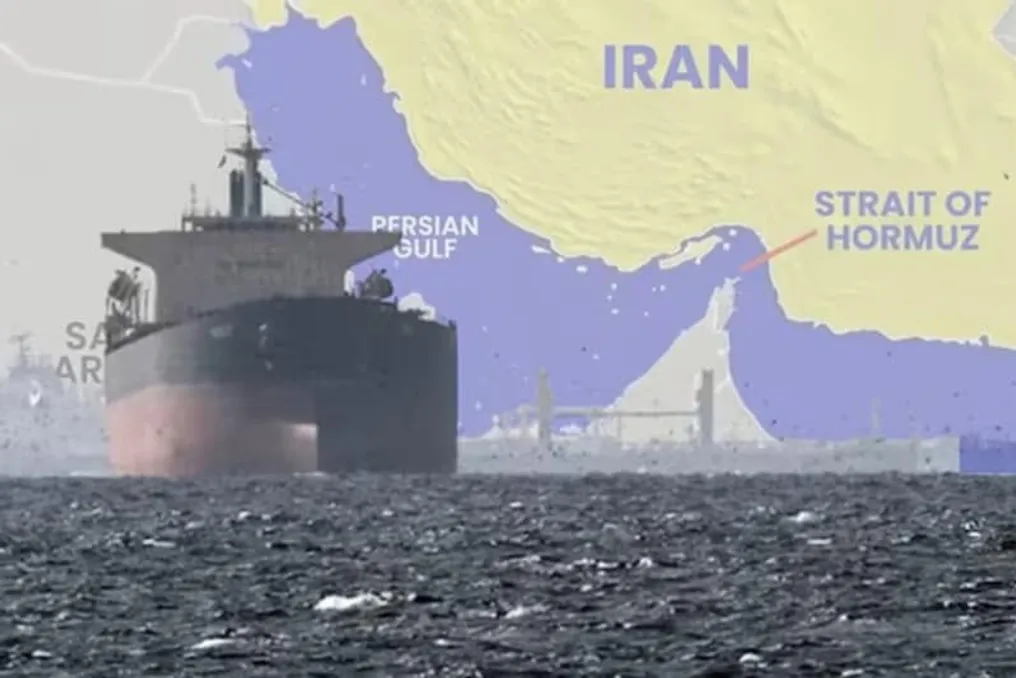
An agreement has been reached between Iran and Oman regarding the Strait of Hormuz. If the process is successfully completed, this vital and strategically significant waterway, which was halted due to the conflict between the US and Iran, may soon resume. Previously, commercial vessels used this route without any transit fees or permits from any single country, but the situation may change in the future.
According to reports from Reuters, Iranian officials and regional sources confirm that under the proposed scheme, ships entering the Persian Gulf via the Strait of Hormuz will be under Iranian control.
Ismail Baghai, a representative of the Iranian Ministry of Foreign Affairs, stated that Tehran and Muscat have agreed on the geographical coordinates of a new shipping route through the strait. According to him, both countries are currently finalizing a joint statement that highlights the main provisions of this agreement.
Kazem Garibabadi, Deputy Foreign Minister of Iran, reported that negotiations have reached the stage of 'fundamental agreements' and that the process is on the verge of completion. Iran also specified that the proposed system is designed so that commercial vessels pass through Iranian waters both upon entry and exit.
Currently, vessels entering or leaving the gulf use internationally recognized shipping lanes without obtaining permits from Iran or Oman. However, the proposed scheme may require substantial changes to the system. According to Reuters, ships entering the gulf will pass through maritime areas under Iranian control, giving Tehran the right to monitor maritime traffic in the gulf. Nevertheless, it remains an open question whether Iran will apply the same level of control to vessels leaving the gulf.
Kazem Garibabadi, Iran's Deputy Foreign Minister for Legal and International Affairs, noted that Tehran and Muscat are working on a 'new model' for managing shipping in the Strait of Hormuz. Under the presumed system, most of the agreed route will pass through Iranian waters, and a smaller part through Omani waters. Existing temporary shipping lines, including the northern route near the island of Larak in Iran and the southern route through Omani waters, will be gradually abolished and replaced by a new corridor.
He added that the new route will initially be operational for two to four months, although its extension may depend on further developments.
The Strait of Hormuz is often called one of the world's most critical 'chokepoints' for oil supplies, with about one-fifth of global oil shipments passing through it. Any country that can exert greater influence over shipping here will gain a significant strategic advantage in the global energy market. Experts believe that if Iran gains the right to control vessels entering and exiting the strait, it will be one of Tehran's largest diplomatic and strategic victories in recent years, leading to serious changes in the balance of power in the region.
The issue of who will conduct inspections has not yet been decided. Regional authorities told Reuters that the gulf countries wish for inspections to be carried out not only by Iran but also as part of regional monitoring. The parties are also discussing whether a fee or charge should be levied for passage along this route. Iran demands a transit fee of 5–7 percent of the cargo value, while Oman is negotiating a significantly lower rate—around 3 percent. Meanwhile, the US insists that vessels continue to use the strait without paying any transit fees.
Some disagreements persist. One source in Iran noted that 'the real sticking point lies in the details,' and that a tweet from Trump could ruin everything. Iranian officials also emphasized that the opening of the strait depends on Washington fully fulfilling its obligations under the Memorandum of Understanding (MoU) signed in June.
The Galaxy S25 Ultra with 256 GB capacity has been relaunched in a significant promotional offer, accessible for R$ 5,019.10 via Pix using the coupon SMART200 on the Amazon platform. This high-end Samsung smartphone, originally priced at R$ 11,999, is offered for less than half its value in this campaign called 'Found It, Run!'.
This reference model, equipped with the Snapdragon processor, incorporates the Snapdragon 8 Elite for Galaxy chip and features 12 GB of RAM, designed to support demanding applications and Galaxy AI functionalities. The 256 GB of internal storage ensures adequate space for storing media, applications, and other files.
The device features a vast 6.9-inch Dynamic AMOLED 2X screen, presenting a Quad HD+ resolution. The panel operates at a 120 Hz refresh rate and includes HDR10+ and Vision Booster features, allowing for the display of sharp and fluid images.
In terms of photography, the Galaxy S25 Ultra's quadruple rear camera is led by a 200 MP sensor, which allows recording videos up to 8K and taking photos with 100x hybrid zoom. The 12 MP front camera is intended for detailed selfies, offering Autofocus and 4K video recording.
With a 5,000 mAh battery, the Samsung flagship smartphone offers autonomy for up to 31 hours of video playback. Fast charging can reach from 0 to 65% in just 30 minutes when used with a 45W adapter, which must be purchased separately.
For users who do not plan to change devices, the phone comes pre-configured with Android 15 and will have extended operating system support until 2032. Regarding connectivity, it supports 5G, Wi-Fi 7, Bluetooth 5.4, Ultrawide Band (UWB), and NFC for proximity operations.
Structurally, the Galaxy S25 Ultra (R$ 5,019.10 via Pix with coupon SMART200) is built with a titanium casing and features a rear finish of reinforced glass with Gorilla Glass Victus 2. Additionally, the IP68 certification provides water resistance, ensuring the device can withstand accidental dips up to 3 meters in fresh water.
The United States has issued refunds for significant amounts related to customs surcharges that were later declared illegal. According to information provided by Brandon Lord, Executive Director of Commercial Programs at the Customs and Border Protection Department of Commerce, refund requests totaling approximately $128.68 billion (equivalent to 111.715 billion euros) were received by July 31. Of this amount, about $100 billion has already been returned, covering both the collected tariffs and relevant interest.
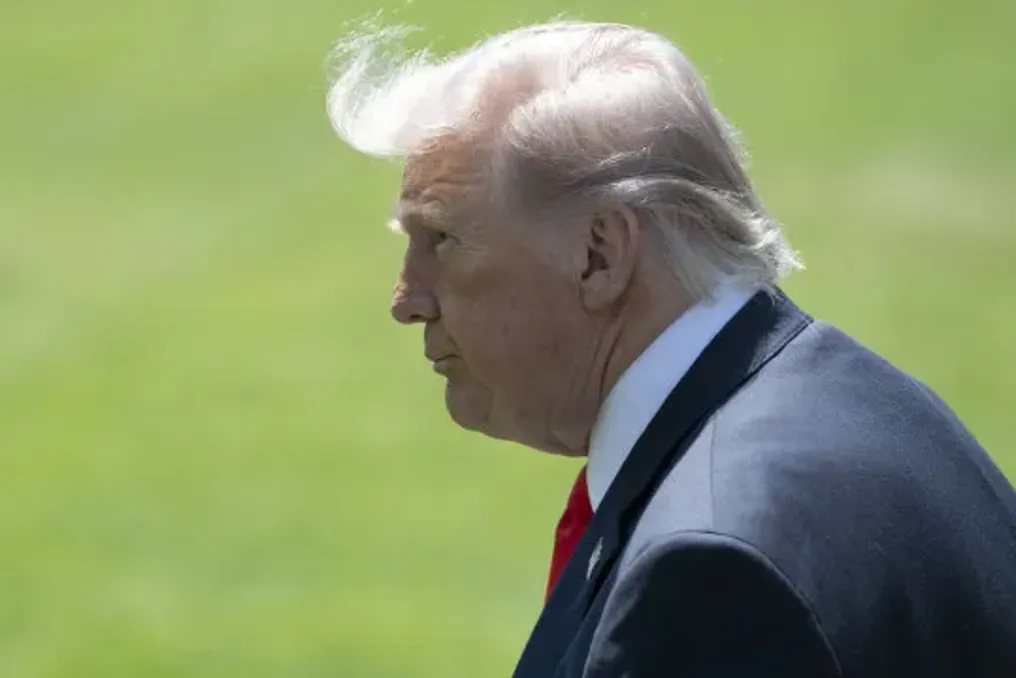
The aforementioned customs surcharges had been introduced in April 2025 by President Donald Trump, who had named the announcement 'Day of Liberation.' However, the country's highest court declared these tariffs illegal in February of this year, ruling that the White House had exceeded its authority by using the IEEPA to implement such taxes.
It is estimated that the federal government improperly collected about $166 billion (equivalent to 144.115 billion euros) before the judicial decision. As a result of this Supreme Court ruling, U.S. Customs and Border Protection began the first phase of its electronic system for processing refund requests on April 20.
Despite this, the Trump administration has sought alternative methods to maintain the punitive use of customs tariffs in international relations. In direct response to the Supreme Court's decision, a global tariff of 10% was applied with a temporary validity of 150 days. At the end of this period, in late July, the establishment of surcharges for 60 trading partners was announced. These new rates aim to penalize nations that have not prohibited the import of goods produced under forced labor. Products from countries that have adopted appropriate legislation against forced labor will be subject to a lower rate of 10%, while those with insufficient restrictions will face the higher rate of 12.5%.