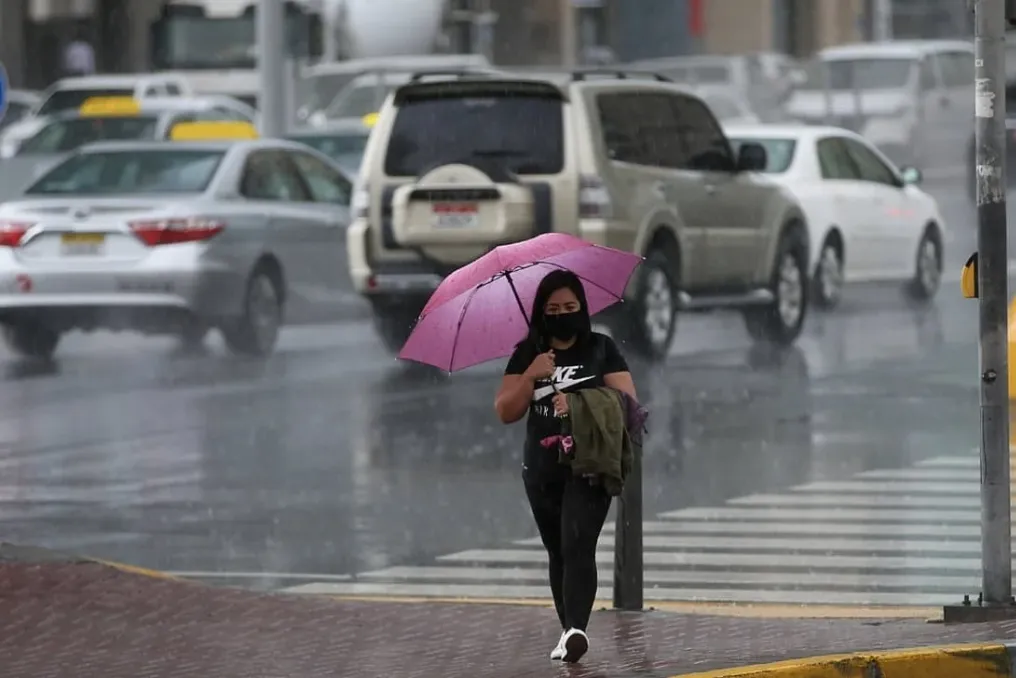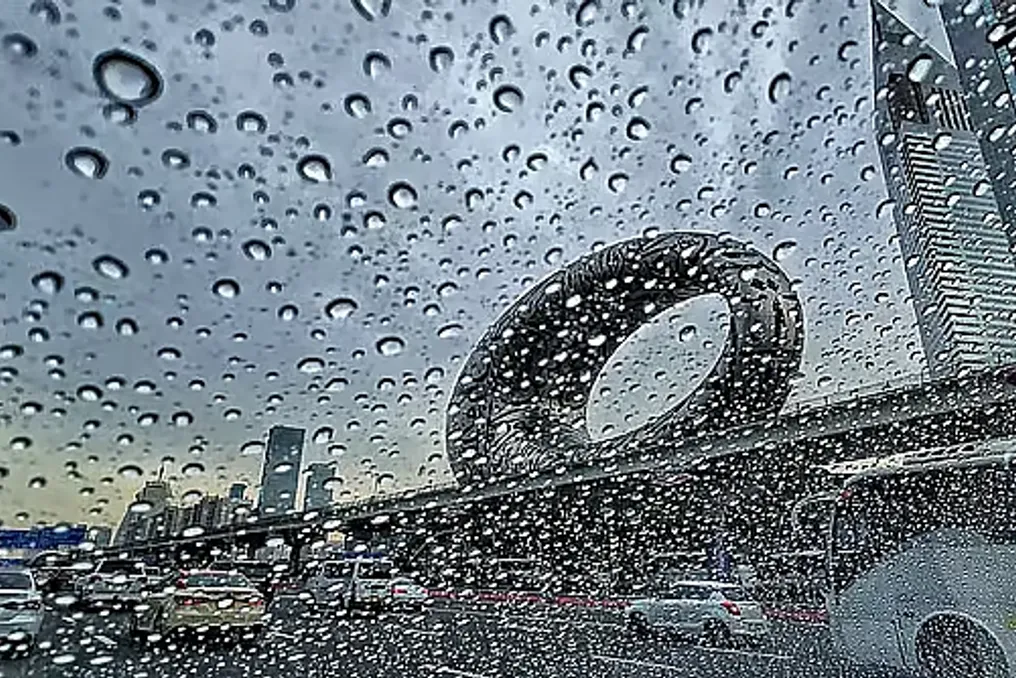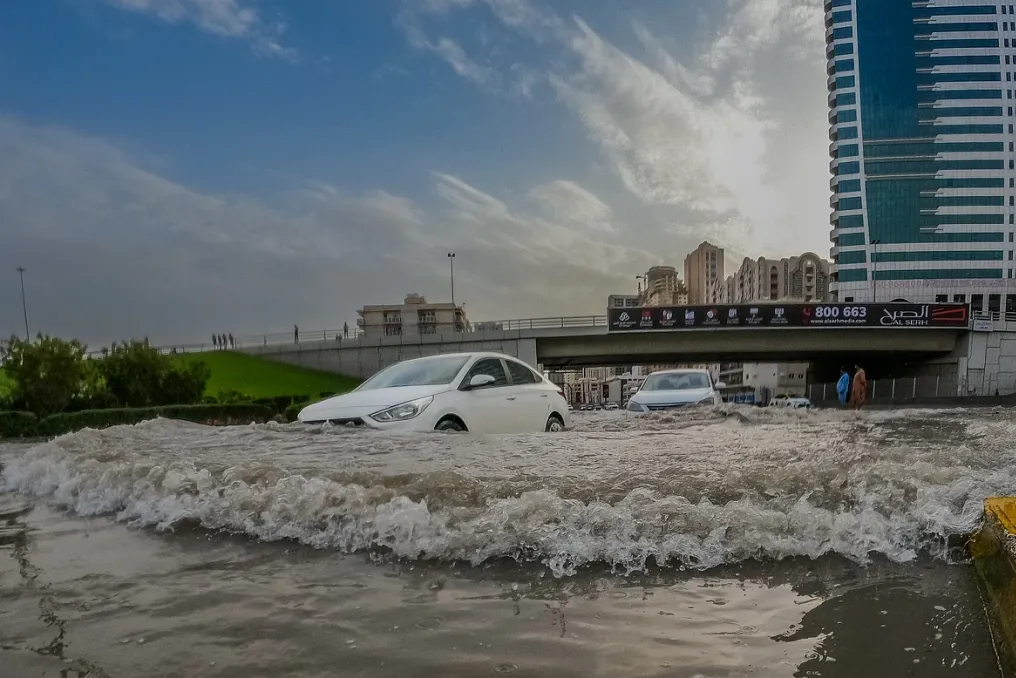
The UAE Ministry of Interior issued a warning regarding uneven precipitation of varying intensity and reduced visibility observed on Tuesday, August 4th.
The UAE Ministry of Interior issued a warning regarding uneven precipitation of varying intensity and reduced visibility observed on Tuesday, August 4th.
During the current week, from Monday, August 3rd, to Friday, August 7th, a period of rain of different strengths is expected in the UAE. The National Center of Meteorology (NCM) reported that convective clouds carrying the probability of precipitation will form over the UAE throughout the week, especially in the eastern part of the country.
The Ministry strongly recommended that drivers exercise caution under such dangerous weather conditions. Previously, Abu Dhabi published a guide with recommendations to follow before, during, and after periods of unstable weather, including heavy rain, storm winds, hail, and fog. Drivers are asked to monitor changing speed restrictions and be attentive on the roads.
The National Center of Meteorology (NCM) issued yellow and orange warnings valid until 10:00 PM today, urging residents to remain vigilant, especially when going outdoors.
Abu Dhabi has published a guide with recommendations on ensuring safety during periods of unstable weather in the country. This booklet informs the public on how to act before, during, and after adverse weather conditions, and also contains a list of emergency contact numbers in case of danger.
This week, from Monday, August 3rd, to Friday, August 7th, the UAE is experiencing a period of rainfall of varying intensity. The National Center of Meteorology (NCM) reported that convective clouds carrying the possibility of rain will form over the UAE throughout the week, especially in the eastern direction.
The guide provides various recommendations that should be followed during heavy rains, stormy winds, hail, and fog.
It is necessary to avoid being near trees or power line poles. During a thunderstorm, one should stay away from glass windows, as well as glass and metal doors, and not touch downed power lines. It is also forbidden to use mobile or wired phones in open areas during a thunderstorm.
During heavy rain and thunderstorms, one should avoid contact with metal and electrical devices exposed to bad weather. One must bypass floodwaters and streams, and children should not go outside during severe thunderstorms. People should avoid gathering near the mouths of valleys and streams, and standing on the edges of valleys.
During or after heavy rain, it is prohibited to lift manhole covers or enter sewage chambers. Driving during thunderstorms and heavy rains should be avoided unless absolutely necessary. When adverse conditions are announced, movement through valley streams should be refrained from. It is important to observe variable speed limits indicated on road signs and electronic displays, and to carefully monitor the condition of the road surface and avoid stopping or entering near floodwaters.
If you are outside, you must wait for the wind to subside before returning. People suffering from chronic respiratory diseases should take their medications and inhalers on time according to a doctor's prescription. If going outside is necessary, it is recommended to wear protective masks and eye protection, avoiding the use of contact lenses.
One should refrain from visiting the sea and participating in marine activities. It is necessary to stay away from construction sites and places where unsecured objects may cause injury. During strong winds, one should stay away from windows, glass and metal doors, keeping them tightly closed. One should also avoid being near trees or power line poles and any unnecessary outdoor activities.
In fog, one should adhere to the speed limit, leave sufficient distance from the vehicle ahead, and use headlights in low visibility. If stopping is required, one should not park by the roadside, but find a safe place with hazard lights on. It is important to avoid distractions and not overtake the vehicle ahead if it is not necessary in low visibility conditions.
During hail, one must not leave the house or expose oneself to hail. One must stay away from glass windows and doors during hailstorms, and also refrain from driving during such periods. Variable speed limits established on road signs and electronic information boards must be observed.
The guide also contains advice on precautions to take before unstable weather occurs, as well as instructions on actions after heavy rain or hail. This document is available on the Abu Dhabi Media Office website.
According to the forecast from the National Center of Meteorology (NCM), the weather in the UAE is expected to be clear or partly cloudy on Monday, August 3.
There is a possibility of convective cloud formation in the east and south, which will lead to precipitation in the afternoon. A light to moderate southeast or northeast wind of 10–25 km/h is expected, which may occasionally increase to 40 km/h.
The sea in the Arabian Gulf and the Oman Sea will be calm. Overall temperatures across the country are predicted to reach a maximum of 48°C, with a minimum temperature of 25°C.
In major cities such as Dubai, Abu Dhabi, and Sharjah, daytime temperatures will be 46°C, and nighttime temperatures will be 34°C, 33°C, and 32°C, respectively. Humidity levels in Dubai will fluctuate between 25 and 85 percent, in Abu Dhabi between 33 and 46 percent, and in Sharjah between 32 and 46 percent.
Residents of the UAE should expect further rain until August 6, as the expansion of the surface low-pressure system from the east will affect weather conditions. Furthermore, the weather will depend on the expansion of a weak upper atmospheric low-pressure system.
From August 2 to August 6, convective cloud formation is expected in some parts of the country, carrying the possibility of precipitation. Ahmed Habib, an NCM meteorologist, explained the possible cause of the rains during the hot summer in the UAE in a recent interview with Khaleej Times, suggesting that the ongoing El Niño wave might be the reason.
According to a bulletin issued by the National Center of Meteorology (NCM), residents of the United Arab Emirates (UAE) should expect rainy weather on July 28th.
There is a possibility of convective cloud formation in the eastern and inland areas, while overall the weather will be moderately clear or partly cloudy.
In Abu Dhabi, the air temperature will range from 31°C to 41°C, and in Dubai, it will fluctuate between 32°C and 40°C. The humidity level in both cities is forecast to be in the range of 35% to 80%.
Light to moderate winds are expected to blow from the southeast or northwest at speeds of 10 to 25 km/h, with the possibility of reaching 45 km/h. NCM added that if the wind strengthens to fresh or strong, it may cause dust lifting. The sea in the Arabian Gulf and the Oman Sea will be calm.