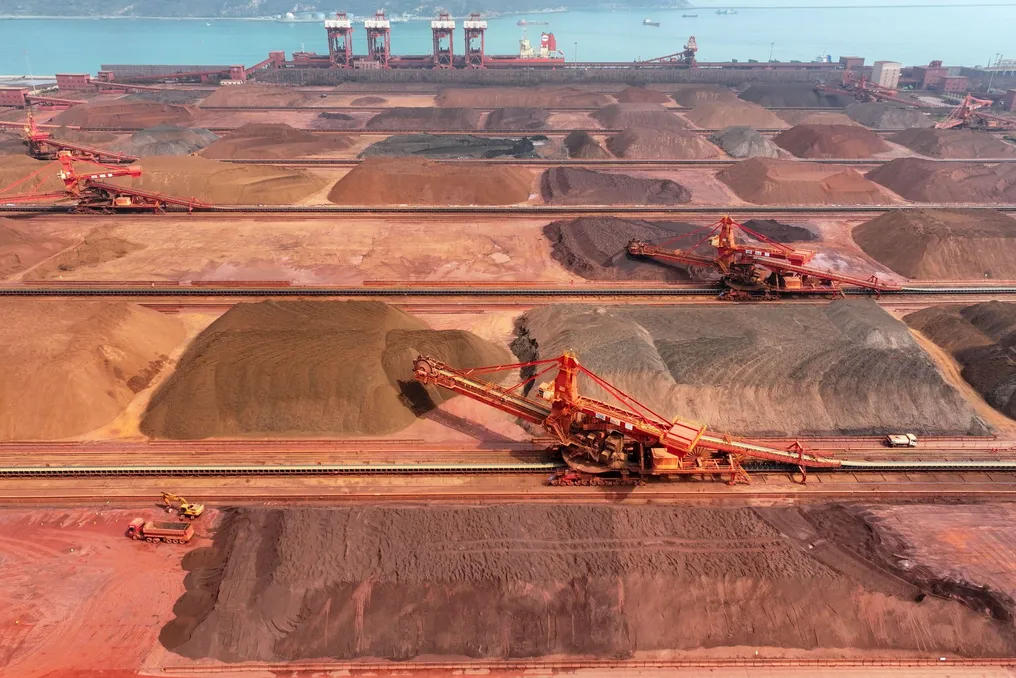
Five months have passed since the start of the war in Iran, and countries around the Persian Gulf, as well as the global economy, continue to feel the direct consequences of this conflict. Disruptions to global trade, particularly in oil and gas, are caused by frequent closures of the Strait of Hormuz, and the steel sector has suffered from these consequences, primarily in Iran and the Gulf itself. Beyond the region, the war has interrupted steel flows, increased insurance and key raw material costs, and created general uncertainty, causing global demand forecasts for steel to remain almost static.
} , 3. {
Similar stories
Popular
The war in Iran coincided with a slowdown in critical progress in the steel industry towards decarbonization. In recent years, as European leaders in decarbonization revised and postponed transition plans, the Gulf region was becoming a promising center for producing low-carbon iron and steel. This attracted international investment and large projects, many of which are already under construction or awaiting a final investment decision.
Impact of the War on the Gulf Industry
Fatin Durukan, a researcher at the Carboun Institute, an analytical center for climate change specializing in the Middle East and North Africa, stated that 'the war in Iran has turned geopolitics from a background risk into a key variable for the viability of green iron and steel projects' in the Persian Gulf area. He added that investors are interested not only in whether the region can produce low-carbon iron cheaply but also whether it can do so through safe, insured, and certified routes.
The Gulf is an important center for Direct Reduced Iron (DRI) production, an alternative to coal-based iron production in blast furnaces. This process typically uses gas but can also be powered by green hydrogen, which is considered a promising path to producing low-carbon steel. According to the Global Iron and Steel Tracker from Global Energy Monitor for March 2026, before the war in Iran, Saudi Arabia, Bahrain, Qatar, the UAE, and Oman had nearly 73 million tons of annual operational DRI capacity, equivalent to over 43% of the global potential.
Although Gulf production traditionally used fossil fuels, the region possesses significant renewable energy potential and accessible gas, while green hydrogen production is growing. Furthermore, the region has experience with DRI technology, existing iron supply chains, industrial port clusters, and a strategic location for export. These advantages helped attract at least $10 billion in investments into more than six 'green iron' projects in Oman, the UAE, and Saudi Arabia. These projects use renewable energy to produce DRI, which can be fed directly into steelmaking furnaces or transported as Hot Briquetted Iron (HBI).
However, iron and steel production has been directly affected during the war. Attacks on Iranian plants in Isfahan, Safidabad, and Ahvaz, as well as on a plant in Bahrain, have damaged or destroyed over 10% of the global DRI potential. Although none of the attacked plants had low-carbon projects, the war could still seriously impact the prospects for industry decarbonization.
Durukan noted the tangible impact of these factors on several major green iron and steel projects in the region. Among them, he pointed to industry reports indicating that Meranti Green Steel postponed its final investment decision for its planned 2.5 million tons per year hydrogen-powered DRI plant in Dukem, Oman, until the third quarter of 2026, despite having already secured full demand coverage for the plant's output. Meranti did not respond to a request for comment from 'Dialogue Earth.'
Durukan added: 'For projects in the feasibility study, pre-construction, or Memorandum of Understanding (MoU) stage, the effect can be stronger.' Such projects may include a 5 million tons per year DRI plant also in Dukem, announced by Mitsui and Kobe Steel and originally planned to start production in 2027, as well as a 5 million tons DRI project in Ras Al Khaimah, Saudi Arabia.
Optimism regarding the potential of green iron and steel in the region led to several announcements between 2022 and 2025. However, Durukan stated: 'But the war changed the standard of credibility,' adding that simply announcing a hydrogen facility or signing an MoU is no longer enough. Projects now require 'a viable procurement volume, access to DR-grade iron ore, credible emissions accounting, port and shipping resilience, insurance, and risk-sharing mechanisms with the public sector' to demonstrate the ability to withstand geopolitical stress.
Wave of Consequences for the Steel Sector
The Gulf region's position as a key supplier of oil and gas made some countries more vulnerable to the shock of the war, while indirect consequences for costs and raw materials in other sectors depended on their existing dependencies. Countries in South and Southeast Asia experienced some of the most severe energy shocks due to reliance on imported oil and gas from the Gulf. Steel mills in Southeast Asia faced energy shortages; in May, SteelOrbis reported that SteelAsia from the Philippines was considering delaying the expansion of its low-emission electric arc furnace steel production business.
India faced gas supply disruptions, but since over 80% of the country's metallurgy is based on coal, this directly affected only a small number of gas-dependent players, including small producers in regions like Gujarat and Punjab, as well as some large players such as JSW and AMNS. The overall impact of the war on the sector was, according to Part Kumar, an industry program manager from the Centre for Science and Environment based in New Delhi, 'mostly indirect.' He pointed to rising freight and marine insurance costs, as well as India's dependence on importing nearly 90% of its coking coal.
Meanwhile, China experienced some disruptions in steel exports in the initial days of the conflict, as about one-sixth of its shipments were destined for the Middle East following rapid trade growth in 2025. However, China successfully managed the conflict shocks thanks to decades of electrification and energy security planning, including its five-year energy plans. Raw materials for its steel industry are either domestic or come from Australia and Brazil. Thus, recently launched initiatives that could help decarbonize the steel sector, including a green hydrogen pilot program and policy updates for capacity replacement, proved resilient to energy shocks, even if their concept was not driven by the war, analysts reported.
Shift Towards Coal Gasification in India
In the Indian steel sector, this energy shock also drew increased attention to the use of coal gasification. In April, Jindal Steel announced that it solved the fuel shortage problem by using synthesis gas from coal in some of its finishing processes. This expands its existing use beyond DRI, which has been applied at its Angul, Odisha plant since 2020.
Processing coal into synthesis gas has attracted growing attention from Indian politicians since 2020. They aim to utilize India's vast coal reserves for various industrial needs and reduce import dependence, targeting 100 million tons by 2030. Some in the sector view this as a 'transitional industrial strategy' and a 'bridge' to low-carbon technologies in the DRI process. However, research and the government's own 'Green Steel Roadmap' indicate that DRI based on coal synthesis gas produces a life cycle emission level similar to or even greater than current prevailing technologies in India: direct burning of coal for DRI or in a blast furnace.
Kumar emphasized that coal gasification was a long-term goal but described a 'further deepening of the shift in mindset' towards energy security among decision-makers after the recent energy shocks. He mentioned a government support scheme of $3.9 billion for fuel development announced in May: 'There was pressure, and this was likely perceived as the right moment [to promote this].'
Regarding the potential impact on Indian steel decarbonization, Kumar said: 'These policies can ensure India's energy security, but they can also divert investment from many other [steel decarbonization] schemes. What about green hydrogen? Twice as much money is allocated to coal gasification. What signal are we sending to the industry right now? Probably that both can be done.'
India's green hydrogen mission, launched in 2023, included investments of $2.4 billion to create 5 million tons per year production capacity by 2030. It is currently behind schedule. This year, the government also announced an allocation of over $2 billion for Carbon Capture, Utilization, and Storage (CCUS).
Both Jindal Steel and the Ministry of Steel's roadmap assert that CCUS will be necessary to mitigate emissions from coal synthesis gas-based DRI. Simon Nicolas, a lead analyst on global steel at the Institute of Energy Economics and Financial Analysis, stated: 'Faced with the need for rapid economic development and a serious energy security challenge that threatens it, India is adopting an 'all-of-the-above' approach to steel decarbonization.' However, he previously warned about CCUS as a 'technological dead end' for Indian steel, citing uncompetitive costs, lack of proven ability to reduce emissions in steel production, and a 'long history of failures' globally.
Jindal was invited for an interview but declined to comment. Regarding the development of green hydrogen in India, Nicolas highlighted the potential role of this fuel in energy security efforts, including the steel sector: 'We have already seen a shift in tone in China regarding green hydrogen—from a decarbonization tool to an energy security tool. Given the progress made by India in green hydrogen, it can—and in my opinion, should—begin to view green hydrogen through the lens of energy security.'
Is This Obstacle Possible for Greener Iron and Steel?
As uncertainty over the resolution of the war persists, and final investment decisions for key iron and steel projects in the Gulf have not yet been made, the attention of some industry circles has shifted to opportunities for other potential 'green iron' producers. Some reports and commentators in Australia, the world's largest producer and exporter of iron ore, have called the war in Iran a 'window of opportunity' for the country. Nicolas stated: 'This should serve as a wake-up call for Australia to accelerate the development of green iron projects.' He added that Southeast Asia is a key opportunity region for Australia, especially if China accelerates its reduction of dependence on Australian iron ore.
Similarly, Brazil, the second-largest player in the global iron ore market, has long been considered for its advantages in green iron production. This raw material can create opportunities for sector leaders such as mining company Vale, which is itself an investor in a 'mega-hub' of green iron in Oman. Vale declined to comment on the progress of its projects or any consequences related to the war. However, in an interview with the Financial Times, its CEO Gustavo Pimenta stated that he believes recent energy shocks 'could accelerate the development of renewable energy sources and the green steel agenda.'
Iszan Choksi, Head of Global Steel Transition at the Agora Industry think tank, examined the prospects for global green iron trade. She noted: 'The geopolitical shock of the Middle East war will not change the fundamental market conditions. The competitiveness of HBI is determined by a number of factors, such as access to high-quality iron ore, as well as low energy and capital costs.' These fundamental conditions...
Caoa Chery has implemented a price reduction on the Tiggo 5X 2027, decreasing it by up to R$ 5,000, after the SUV reached the milestone of 100 thousand units sold and produced in Brazilian territory. These new prices are part of a commemorative promotion valid only during the month of August, according to the automaker's announcement.
The entry-level Sport version had its price adjusted from R$ 126,990 to R$ 124,990, representing a saving of R$ 2,000. The Pro version received a more significant discount, dropping from R$ 144,990 to R$ 139,990. Both configurations continue to benefit from the brand's seven-year or 150,000-kilometer warranty.
The manufacturer also assured that both models are ready for immediate delivery at all dealerships. Caoa Chery attributes this increased availability to the rise in manufacturing pace at the Anápolis (GO) plant, where capacity was expanded to meet demand and eliminate waiting lists.
What changed in the 2027 line
Introduced in February, the 2027 line standardized the 5X design, aligning it with the larger models, Tiggo 7 and Tiggo 8. The SUV received aesthetic updates, such as new bumpers, full LED headlights with vertical daytime running lights, and rear taillights connected by a light strip. Internally, the focal point is the 20.5-inch Full HD unified dashboard, which integrates the instrument cluster and multimedia center into a single screen, supporting wireless Android Auto and Apple CarPlay.
Starting with the Sport version, the vehicle features six airbags, a rearview camera, parking sensors, keyless entry, and electric adjustment for the driver's seat. The Pro version adds a seventh airbag, located in the front center, in addition to a panoramic sunroof, 360-degree camera system, dual-zone digital air conditioning, 50W wireless charging, 18-inch wheels, and the Max Drive 2.0 driving assistance package, which includes adaptive cruise control, autonomous emergency braking, and blind spot monitoring.
Mechanics remain unchanged
In the engine bay, the Tiggo 5X maintains the 1.5 turbo flex engine, which generates 150 hp with ethanol and 147 hp with gasoline, along with 22.8 kgfm of torque, coupled with a CVT gearbox simulating nine speeds. Caoa Chery reported that this assembly underwent recalibration aimed at improving both performance and drivability. The suspension structure is independent on all four corners, using McPherson in the front and multi-link in the rear.
This repositioning occurs in a highly competitive market, where the SUV competes directly with models such as the Volkswagen T-Cross and Hyundai Creta. It is relevant to note that the promotional price of the Sport still exceeds the R$ 119,990 practiced at the launch of the 2027 line in February. Additionally, in July, the brand had extended the model's offer in direct sales, providing tax exemptions that reduced the cost to R$ 103,180 for taxi drivers.
Many clients of Itaú bank expressed dissatisfaction on social networks regarding an unclear change in purchase notifications. This topic was actively discussed on X and Threads on Tuesday (04).
Due to the initial confusion, Itaú provided an exclusive explanation to Tecnoblog: nothing changes in the official application, and users will continue to receive alerts as usual.
The message sent today to a wide base of consumers concerned another service—push notifications via SMS and email about purchases, among other things, as well as monitoring of the bank balance.
According to the company, this service will indeed be discontinued on August 17 due to a low level of user engagement.
The Itaú application, which has become a hub for various company brands in recent years, will retain familiar transaction notifications for Pix, TED, as well as credit card purchases.
Part of the disinformation originated from the bank itself, as the official profile somehow responded that the measure would take effect with the latest application update. However, according to Tecnoblog, these two points are not related at all.
Furthermore, it would be highly contradictory for a bank that places such a strong emphasis on digitalization to decide to provide less information to its depositors and clients.
The official note states: 'There are no changes in other communication and notification channels used by Itaú.' Thus, customers can rest assured.
The White House is expected to extend the waiver of the Jones Act in the coming days, using it as a tool to stabilize gasoline prices. This decision comes against the backdrop of the consequences of the war between the US and Israel against Iran, according to information received by Reuters from sources.
The Jones Act, which has been in effect for a century, requires that cargo be transported between US ports on ships built and owned by the US, and operated by American workers. The purpose of this waiver is to increase flexibility in shipping and eliminate bottlenecks in transportation, which should help reduce fuel costs.
The current waiver of the Jones Act rules expires on August 16. This is already the longest suspension of the Jones Act rules since its adoption, and it has been used nearly 200 times since the start of the war with Iran.
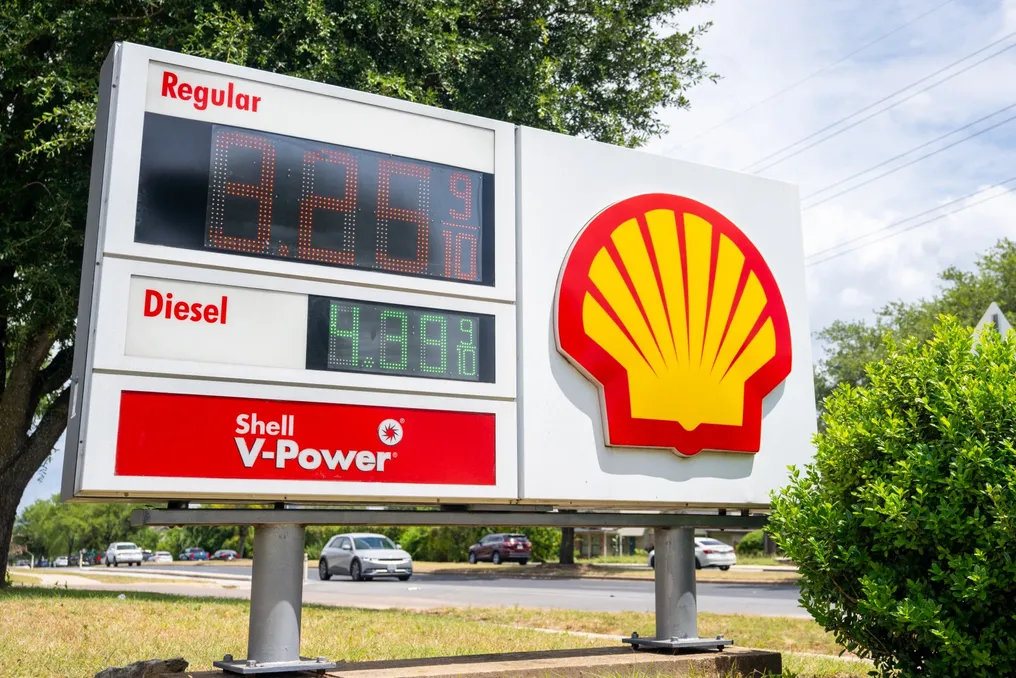
This step is being taken as Trump runs out of simple ways to lower oil prices in the US, which currently average $4 per gallon, ahead of the midterm elections in November. Furthermore, this follows comments made by Trump on Monday, in which he stated that oil companies such as Exxon Mobil and Chevron are receiving 'too much money' from the price increases caused by the war with Iran.