Within the framework of the state policy of New Uzbekistan, directions for ensuring human rights and freedoms are being consistently developed. Special attention is paid to protecting the rights of persons with disabilities, creating decent living conditions for them, improving the quality of social services, as well as ensuring the principles of legality and humanity in institutions where persons deprived of liberty are held.
Large-scale reforms are being carried out in this area. The work of the Ombudsman's Institute plays an important role not only in strengthening public control but also in raising legal culture among the population.
To achieve these noble goals, the regional representative of the Ombudsman for Bukhara region, Abira Khusenova, organized a number of practical events in Karakol district. These events were significant because they were aimed at strengthening the protection of human rights, enhancing social support, and further improving institutional activities.
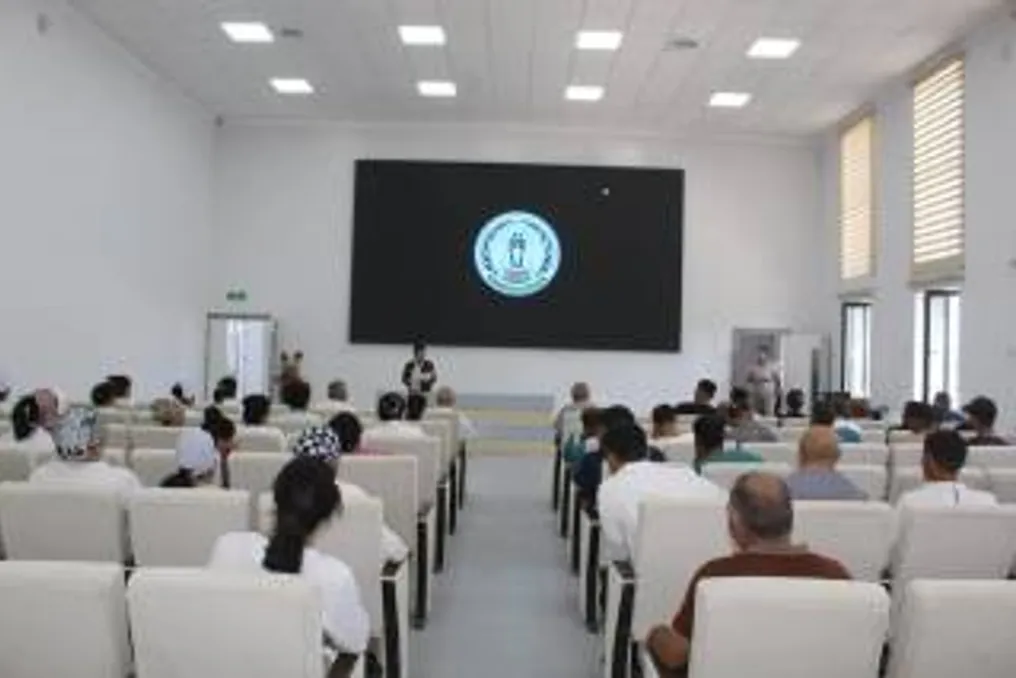
Initially, as part of the 'Ombudsman School' project, a legal and educational event was held for men at the 'Gamhurlik' Center for persons with disabilities. There, the essence of the Decree of the President of the Republic of Uzbekistan, adopted in April 2026, on 'Improving the System of Providing Social Services to Persons with Mental Health Disorders' was explained in detail.
During this event, tasks related to reliably protecting the rights of persons with disabilities through this decree, raising the quality of social services provided to them to a new level, and strengthening rehabilitation and social integration processes were discussed in detail. Furthermore, participants were provided with important information about the Ombudsman's powers to prevent cases of cruel treatment and about the work carried out within the national preventive system.
After this, the regional representative of the Ombudsman for Bukhara region conducted another monitoring visit to the 'Gamhurlik' Center. During the monitoring, the living conditions, medical care, nutrition, sanitary conditions, and issues of social rehabilitation for the residents of the institution were carefully examined.
A notable aspect is that employment projects have been effectively launched for citizens capable of living independently in the institution, with the aim of their adaptation into society. In particular, in addition to the implemented 'Sewing' project, practical work in the fields of 'Lemon Cultivation' and 'Gardening' was organized. These programs allow residents of the institution to participate in labor activities, develop work skills, develop self-organization ability, and accumulate the social experience necessary for independent life in the future.
This approach is particularly important because it serves not only to house the person but also to unlock their personal potential, strengthen faith in life through labor, and transform them into an active member of society.
Monitoring activities were also continued in the temporary prison under the management of the Public Security Service of the Internal Affairs Department of Karakol district. During the visit, the cells where inmates are held, the conditions for medical care, recreation and investigation rooms, as well as meeting rooms with lawyers, and the general sanitary condition of the institution were inspected.
Such inspections are crucial for the actual control over the provision of human rights, guaranteeing strict compliance with legislative requirements, and preventing any rights violations. Most importantly, every inspection serves to immortalize the value of the human personality and apply the principles of justice.
The events and monitoring conducted in Karakol district are another practical confirmation that the reforms aimed at ensuring human rights in New Uzbekistan are being carried out consistently and purposefully. The synchronization of state and public oversight, combining care and legal protection, is a vivid reflection of our country's path of development, which recognizes the value of the human personality as the highest value. Such initiatives contribute to strengthening the atmosphere of humanism, justice, and responsibility not only in the life of one institution or one region but in all of society.