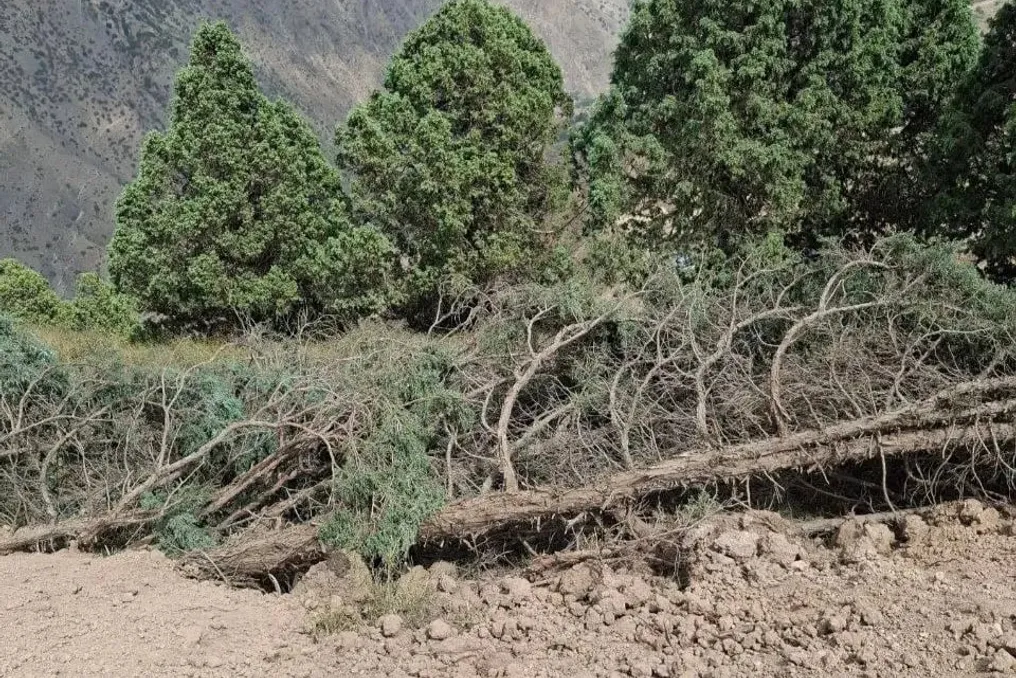
An inspection has begun in the Surkhandarya region of Uzbekistan following information about the illegal uprooting of old juniper trees on forestry lands.
An inspection has begun in the Surkhandarya region of Uzbekistan following information about the illegal uprooting of old juniper trees on forestry lands.
Representatives from the General Prosecutor's Office, Eco-Police, as well as environmentalists and local authorities have joined this investigation. The incident occurred in the village of Sangardak, which is located within the Uzunsky Forestry.
According to preliminary information, the trees were cut down without the required permits, even though environmental services had previously issued warnings regarding this area.
Currently, experts are assessing the scale of damage caused to the environment, checking the legality of the construction work being carried out, and identifying those responsible for the situation. It has been preliminarily established that 11 trees of Zarafshan juniper, nearing a hundred years of age, were destroyed.
Once the inspection is fully completed, the responsible parties will be held legally accountable according to the law.
Previously, environmentalists studied the case of mass tree removal at the Surkhandarya Scientific Experimental Station in Denau. Based on the results of that inspection, specialists concluded that strong winds were the cause of the green spaces falling.
Zimbabwe has taken a significant step in the fight against wildlife crime by officially recognizing its rangers as frontline law enforcement officers.
According to the Africa Travel and Tourism Association (ATTA), President Emmerson Mnangagwa recently signed an amendment to the Parks and Wildlife Act, which grants rangers expanded legal authority to protect the country's wildlife and natural heritage.
This move comes amid the ongoing threat of organized wildlife crime, which endangers some of Africa's most iconic species, as well as the tourism economy dependent on these species.
The new legislation introduces sections 96A and 96B, which formally define the purpose, duties, and powers of wildlife rangers. Under this law, rangers can now:
The goal of these measures is to enhance Zimbabwe's capacity to counter increasingly sophisticated poaching syndicates and other environmental crimes.
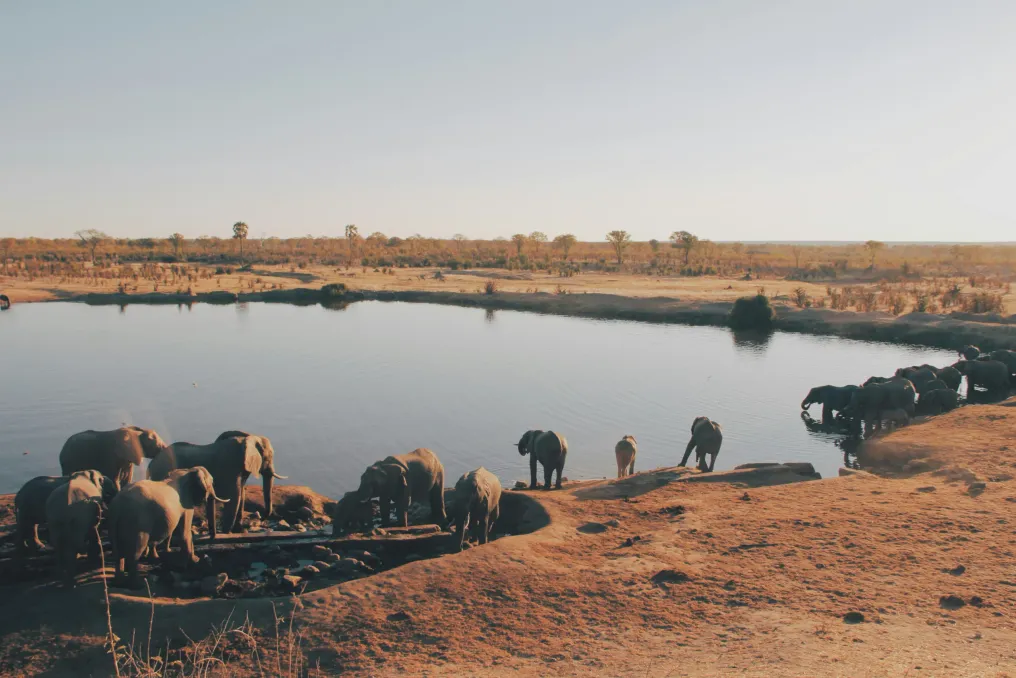
Zimbabwe is home to approximately 100,000 elephants, making it one of the countries with the second-largest elephant population in the world. Furthermore, it hosts the fourth-largest black rhino population globally, making conservation efforts particularly vital.
Wildlife crime remains a serious international issue, generating an estimated $7 to $23 billion annually through illegal trade and organized criminal networks. Due to its globally significant populations of elephants, rhinos, and other wildlife, Zimbabwe continues to be a target for poachers.
Wildlife tourism is one of Zimbabwe's main attractions, as destinations such as Hwange National Park and Mana Pools National Park draw visitors from around the world. The country has set an ambitious goal to build a $10 billion tourism economy by 2030, with conservation playing a central role in achieving this vision.
The Zimbabwe Parks and Wildlife Management Authority (ZimParks), which oversees many of the country's protected areas, continues to receive support from conservation organizations, including the International Fund for Animal Welfare and African Parks.
The Main Department of Ecology and Climate Change in Tashkent refuted social media reports claiming that 400 trees were cut down in the Jararik residential area, which is part of the Shaykhanthakur district. Following an inspection, environmental authorities determined that the reported figures were inaccurate.
According to data from the registry green.tashkent.uz, only 112 trees are officially registered in the specified zone. The Department explained that the land plot was acquired by an entrepreneur in 2017, when the trees mentioned in the social media posts did not yet exist. Later, a local resident planted fruit and ornamental trees aged two and three years on this plot at his own expense.
Ecologists established that this same resident subsequently illegally felled 45 trees using hired workers. Furthermore, he transplanted 35 saplings to the Yangi Darkhan mahalla in the Yanikhoyot district without adhering to established legal procedures.
An administrative protocol was drawn up against the violator according to Part 1 of Article 79 of the Code of Administrative Liability. He was fined 10.3 million soms, and the environmental damage was assessed at 49.9 million soms.
Additionally, during a separate inspection conducted on June 24 at the premises of the Zolotoye Iskusstvo building, specialists discovered three trees that had been cut down at the base. Materials regarding this case have been forwarded to law enforcement agencies for legal evaluation.