As part of Women's Month and going forward, simple and practical cooking tricks are offered that help save time, reduce stress levels, and turn mealtime into a pleasant activity.
As part of Women's Month and going forward, simple and practical cooking tricks are offered that help save time, reduce stress levels, and turn mealtime into a pleasant activity.
For many working women, balancing a full-time job, family responsibilities, and personal time can be extremely difficult. Adding cooking to this picture often turns it into an ordeal that can exhaust one before they even sit down to eat.
These methods aim to simplify kitchen procedures, allowing women not to feel overwhelmed while preparing food, but instead to look forward to the meal.
One of the most effective techniques is the advance preparation of dishes. It is recommended to chop vegetables, marinate proteins, and cook grains in large batches on the weekends. These ingredients should be stored in airtight containers in the refrigerator or freezer. When a busy weekday arrives, ready-made ingredients will be at hand, making dinner faster and less stressful.
On evenings when energy levels are low, one-pot meals become a lifesaver. These can be stews, casseroles, or stir-fries where all ingredients are cooked together. Such dishes not only reduce cleanup time but also allow flavors to blend harmoniously, providing a satisfying and rich dinner with minimal effort.
One should not avoid using pre-cut vegetables, frozen fruits, or ready-made sauces. Although some connoisseurs may disapprove, using such hacks allows for saving precious minutes. The key is to find a balance between convenience and using fresh produce to achieve nutritious and tasty meals.
Several carefully selected kitchen gadgets can drastically simplify the cooking process. A slow cooker or pressure cooker allows you to set up meal preparation while you are at work. An air fryer provides crispy and healthy results without needing to monitor the process for hours. Even simple tools, such as good knives and cutting boards, can speed up and secure preparation.
It is advisable to create a short list of tried-and-true dishes that are quick, nutritious, and enjoyable for both you and your family. Alternating these recipes helps prevent decision fatigue and saves mental energy that would otherwise be spent deciding what to cook each day.
Cooking tricks do not end at the preparation stage; they extend to cleanup. It is recommended to line baking sheets with foil or parchment paper, immediately soak dishes after use, and keep the workspace tidy. Such simple habits reduce post-meal stress and increase the likelihood that the cooking process will be enjoyable.
Cook sauces, dressings, and basic ingredients in large batches, then freeze or refrigerate them. A versatile tomato sauce, a large batch of pesto, or pre-cooked rice can significantly enhance your daily meals with minimal effort.
Leftovers don't have to be boring. For example, yesterday's fried chicken can be turned into tacos, extra rice into a stir-fry, or vegetables mixed into a hearty soup. By being inventive with what you already have, you can reduce waste and save money.
In this Women's Month and beyond, you should not cope alone. Cooking should not be a burden—it can become a tool for caring for yourself, your family, and your well-being. By integrating these simple tricks into your daily routine, you reclaim precious time, reduce stress, and create meals that are both satisfying and sustainable. It is important to remember that working women are not just completing many tasks—they are succeeding, innovating, and achieving goals. With the right cooking hacks, the kitchen becomes another space where your talent shines.
After an initial period of snow scarcity, conditions for winter sports such as skiing and snowboarding have significantly improved at Chilean ski resorts. The first major precipitation, which usually occurs between late May and June, only intensified in mid-July, postponing the full opening of slopes and operations at several resorts.
A strong cold front hit the region between July 14th and 22nd. Although this event guaranteed the expected snow accumulation, it also forced the preventive closure of access to locations such as Portillo, Valle Nevado, and Farellones, due to avalanche risk and precarious road conditions.
However, starting from July 23rd, the main roads began to reopen progressively, with circulation returning to normal—although still subject to time checks and the mandatory use of winter equipment on certain sections—allowing the season to continue under ideal conditions for tourists.
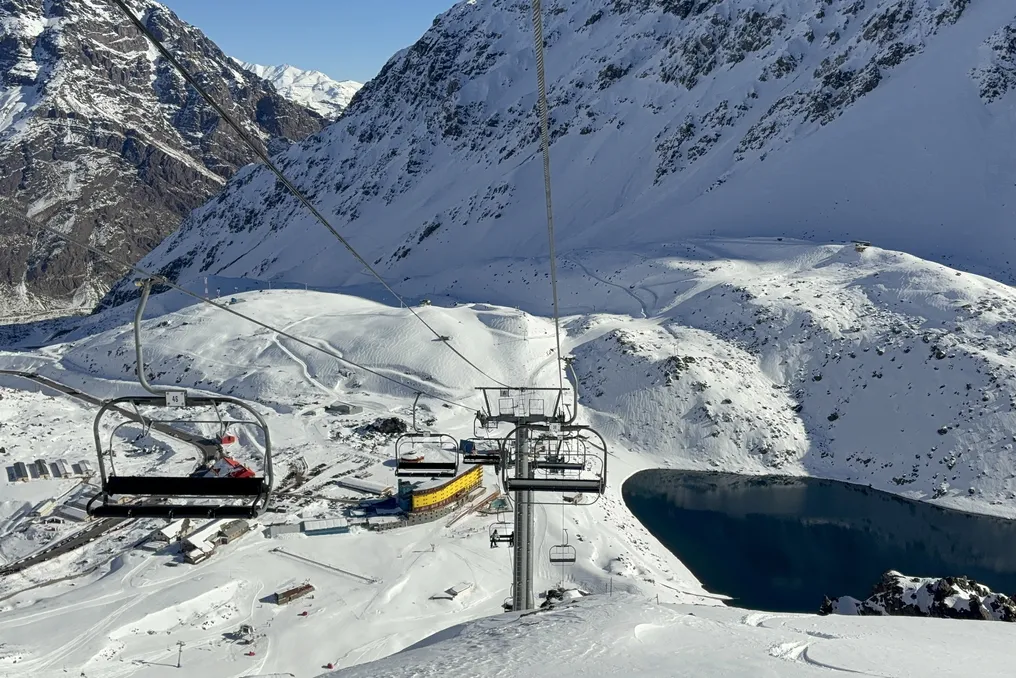
Portillo confirmed the resumption of its winter season last Saturday. The Chilean resort recorded an accumulation of 6.96 meters of snow since the beginning of the season, presenting a base of 2.55 meters in the Hotel Portillo area, which is favorable for skiing and snowboarding.
Local teams dedicated themselves to the preparation and safety of the mountain, carrying out tasks such as removing excess snow, monitoring avalanches, and preparing slopes and cable cars.
In the last 24 hours, the resort received 8 centimeters of snow, and the total accumulated over the last seven days reached 94 centimeters. In the higher areas of the slopes, the snow depth is close to 2.8 meters.
Weather forecasts indicate a change in climate in the coming days. A new cold front is expected to reach the region between Wednesday (5th) and Thursday (6th), promising intense snow and keeping temperatures below zero in the following days.
Located approximately two hours from Santiago, in the center of the Andes Mountains, Portillo is recognized for having a lower concentration of skiers, offering vast off-piste skiing area, and possessing a stunning landscape surrounded by the mountains that form Laguna del Inca.
The resort's infrastructure comprises 34 slopes with different difficulty levels, 14 lifts, and about 500 hectares of terrain suitable for skiing. Furthermore, the facility offers a ski and snowboard school, equipment rental services, a pool, dining options, cinema, gym, and multi-sport gymnasium, along with spaces dedicated to children.
Accommodation options available include Hotel Portillo, the Octagon and Inca lodges, and chalets. Tourist packages are sold in Ski Week format, lasting seven nights, and Mini Week, which lasts three or four nights, covering accommodation, four daily meals, access to lifts, and complex facilities.
The natural pools known as Buraco do Galego and Lasca da Velha, located on Cachorro Beach in Fernando de Noronha, have been reopened to receive visitors after being closed for a period of eight months. This resumption is part of a testing phase and is accompanied by new rules established by the Chico Mendes Institute for Biodiversity Conservation (ICMBio) and the Island Administration, aiming to optimize tourist flow and raise safety standards.
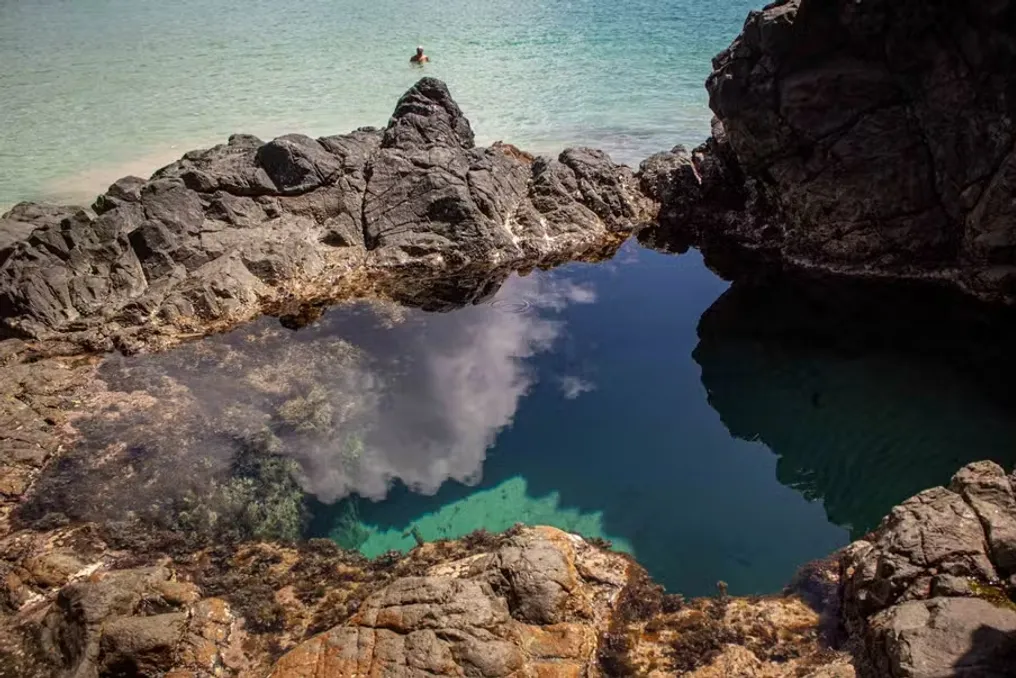
These two pools, formed between rocks and accessible only during low tide, are highly sought-after tourist spots in the archipelago. However, the growing number of visitors in recent years, driven by the relentless pursuit of perfect photos, has caused overcrowding, resulting in conflicts and increased risks at the site. Due to this growth, the natural pools were closed.
The reopening took place on July 16th, following several meetings held between ICMBio and the Fernando de Noronha Administration.
Buraco do Galego, a small pool of crystal-clear water hidden among rock formations, has become one of the most photographed locations in Fernando de Noronha. Its popularity grew even more after images of celebrities, such as Neymar and Bruna Marquezine, circulated on social media.
Diving into this attraction depends directly on maritime conditions. The natural pool is visible during low tide, when visitors usually practice swimming, snorkeling, and enjoying the scenery, and can even jump from the surrounding rocks, which requires caution due to the three-meter depth.
Lasca da Velha is another natural pool located on Cachorro Beach, also shaped between rocks. Like Buraco do Galego, it can be reached at low tide and attracts attention with its clear waters and the backdrop defined by stone walls. The Noronha Passeios agency offers guided tours by accredited professionals in the region.
In this initial phase, access will be restricted to the hours between 9 am and 5 pm and will be conditional on tide conditions and the safety of traversing the rocks. Entry to the natural pools will only be granted when there is low tide.
If the sea shows choppiness caused by winds or storms, or any other dangerous condition, visitation may be temporarily suspended. ICMBio staff and lifeguards will be present at Cachorro Beach to assist visitors and answer questions.
With the implementation of these new regulations, Buraco do Galego and Lasca da Velha also prohibit any type of space reservation. Therefore, it will not be permitted to reserve parts of the natural pools or prioritize photo sessions. This measure aims to ensure that both residents and tourists can enjoy the attractions equally.
Authorities also advise that tours be conducted under the supervision of duly accredited guides or drivers. Additionally, there is a provision that only street vendors authorized by the Fernando de Noronha Administration may operate in the area.
In addition to access rules, the new protocol details emergency procedures. In cases of drowning, the recommendation is that visitors do not attempt a rescue by entering the water. The correct procedure is to throw a floating object to the victim and immediately contact the Fire Department via numbers 193 or (81) 3619-0439.
This testing phase will serve to verify whether the new visitation model allows residents and tourists to enjoy Buraco do Galego and Lasca da Velha without the problems that led to the closure returning.
The caves of South Africa offer much more than just impressive rock formations. Some open up panoramic views of mountains, others frame dramatic coastal landscapes, and some combine breathtaking natural beauty with the fascinating history of humanity.
These natural formations, from mountain shelters overlooking vast valleys to sea caves framed by crashing waves, provide opportunities to see some of South Africa's most spectacular landscapes. If you are looking for a hike with an unforgettable reward, these caves deserve a place on your travel list.
Located in the Silvermine Nature Reserve, Elephant's Eye Cave is one of the most pleasant destinations for day hikes in Cape Town. The trail is relatively accessible, passing through fynbos before leading visitors to a sandy cave with views of False Bay and the surrounding mountains.
The cave received its name from a distinctive rock formation resembling an elephant's eye and has become a favorite picnic spot for tourists. While the cave itself is impressive, it is the expansive view stretching to the coast that keeps visitors lingering long after they catch their breath.
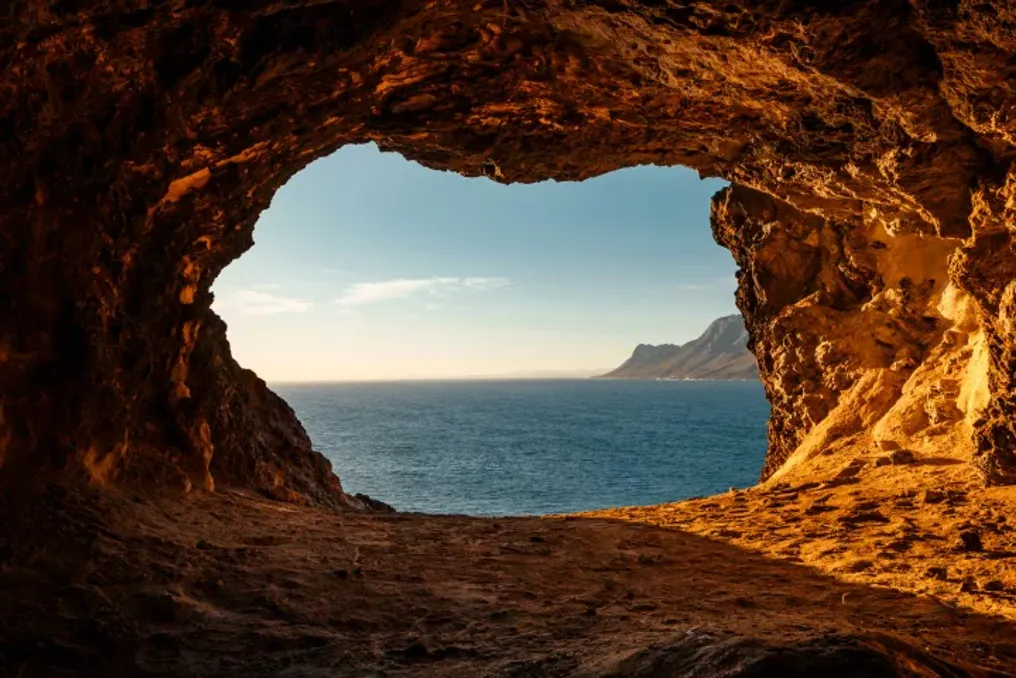
Timing is crucial when visiting Wenkhoeskrans Cave. It is only accessible at low tide and is a massive sea cave located near Arniston on the West Coast. According to local legend, it is so large that it could accommodate full wagons of oxen, which gave it its Afrikaans name meaning 'rocky house for wagons.'
A short walk along the beach to the cave is part of the experience, but inside visitors enjoy dramatic views back to the ocean as waves crash into the entrance. This is one of those places where changing tides constantly transform the landscape.
Situated above Walker Bay near De Kelders, Klipgat Cave combines stunning coastal scenery with a remarkable human history. Archaeological findings indicate that the cave was inhabited by people of the Middle Stone Age thousands of years ago. Today, visitors walk along a short wooden boardwalk through the Walker Bay reserve before entering the cave, which offers unobstructed views of the bay.
During whale season, there is even a chance to see southern right whales from the cave entrance, making it one of the few places where ancient history and world-class wildlife viewing come together.
Not every cave needs stalactites to make an indelible impression. Tarn Cave, hidden in the Southern Drakensberg, is a popular overnight stop for tourists traversing the region's mountain trails. Located high above the valleys, it offers panoramic views of rolling peaks and dramatic cliffs.
Watching the sunrise from the cave entrance is a reason enough for the climb. The cave has become a favorite spot for experienced hikers wishing to immerse themselves in one of South Africa's most picturesque mountain landscapes.
Near Wilderness, Caimans Grotto offers a completely different cave experience. The cave is accessible via an old railway line near the Caiman River; it opens onto the Indian Ocean from under a rocky overhang. The site has also attracted attention due to its unusual history, as a long-time resident, Clifford Brandon, converted it into an improvised museum and shelter.
Whether it is the cave's history or the continuous ocean views that attract visitors, this location offers a memorable stop along the Garden Route. Tourists should exercise caution when visiting this area, especially near the old railway bridge.
Aasvuelkrans Cave proves that sometimes the best views require extra effort. One must descend a steep staircase to reach it, and the cave opens onto a stunning waterfall hidden in the Mpumalanga landscape. The combination of the cascading waterfall, towering rocks, and sheltered cave creates one of the province's least known scenic spots.
For tourists exploring the surrounding reserve, it is an ideal place to take a break for a picnic before continuing the route.
Many of South Africa's most scenic caves are located in protected areas or along hiking trails, and conditions can change depending on weather, tides, and seasonal access. Coastal caves should only be visited during safe low tide periods, while mountain caves require appropriate hiking gear and careful planning. Always check local conditions before heading out and, if possible, stay on marked trails.
The caves of South Africa offer much more than dark chambers and ancient rock formations. Some open up to vast mountain views, others frame endless ocean horizons, and some combine natural beauty with millennia of human history. Whether you are chasing the sunrise in the Drakensberg or watching waves crash against a sea cave on the coast, these underground viewpoints remind us that sometimes the best views are right inside the entrance.