Due to the growing demand for clean and reliable electricity driven by artificial intelligence, Valar Atomics has raised $1 billion in a new Series B funding round. Sequoia Capital led this round.
Due to the growing demand for clean and reliable electricity driven by artificial intelligence, Valar Atomics has raised $1 billion in a new Series B funding round. Sequoia Capital led this round.
The new capital injection increased the valuation of the nuclear energy startup to $6 billion, more than four times its value at the beginning of this year. Furthermore, Valar Atomics secured a $200 million debt financing agreement, which was used to accelerate production processes.
Traditional nuclear power plants take over ten years to build, cost billions of dollars, and often face expensive delays. Valar Atomics aims to completely change this outdated model. The startup plans to manufacture small reactors based on high-temperature gas-cooled reactors directly on clean factory assembly lines. If mass production of standardized units can be achieved, it will significantly reduce both construction costs and deployment timelines for Valar.
The process at Valar is done in-house, unlike traditional energy companies that must engage external contractors. The company integrates reactor manufacturing, reactor operation, and even nuclear fuel production in one place. Managing the entire supply chain protects Valar from component failures and ensures strict quality standards are met in all reactor units delivered to clients.
Artificial intelligence requires a colossal amount of continuous electricity. Next-generation data centers equipped with powerful AI chips operate around the clock. Existing power grids are simply incapable of handling such a rapid increase in energy consumption. Consequently, technology leaders are seeking new sources of baseload energy to ensure uninterrupted server operation.
Valar considers small modular reactors an ideal solution for large data centers. The company recently partnered with Nvidia to develop a 30-megawatt computing complex that will be powered by advanced nuclear energy. During previous tests, electricity from a Valar reactor even briefly powered an Nvidia AI chip. Although renewable sources like solar and wind are very useful, AI centers require reliable power every second of the day.
Founder Isaiah Taylor dropped out of school at age 16. He believes that nuclear energy has failed to scale in the past because each facility was built as an individual, unique project.
Valar has already demonstrated the practical viability of its core technology. In Emery County, Utah, the company successfully built and operated its test reactor, Ward 250. This 100-kilowatt test unit, authorized by the Department of Energy, reached criticality without any issues. The design uses helium cooling, graphite moderation, and specialized ceramic-coated fuel cores. Valar is now moving from laboratory testing to commercial scale.
The new capital will be directed towards establishing large-scale manufacturing facilities capable of building numerous reactors annually. Instead of constructing individual power plants on-site, Valar intends to deliver complete reactor parks directly to commercial customers worldwide.
Despite reaching a $6 billion valuation, Valar faces significant operational challenges. Issues with manufacturing reactors in factories differ substantially from the complexities associated with obtaining commercial operating permits. The nuclear regulatory agency has strict and complex safety rules that require years of navigation. Moreover, Valar must develop safe routes for nuclear fuel and secure operational sites.
Industry experts warn that early success in testing does not guarantee commercial success. Nevertheless, with the support of top Silicon Valley specialists, Valar is actively moving forward to lead a new era of nuclear energy.
The Adani Group conglomerate presented proposals to the government of Odisha for the construction of two nuclear power plants, each with a capacity of 2800 megawatts, as well as an ultra-supercritical thermal power plant and a series of pumped storage energy projects, the total cost of which is estimated at approximately 1.5 trillion rupees.
A delegation from Adani Group, led by Subrata Tripathi, President of Business Development at Adani Ports and SEZ, presented its proposals to Kanak Vardhan Singh Deo, Deputy Minister and Minister of Energy, in Bhubaneswar on Friday, according to officials.
The proposed investment package includes two nuclear power plants with a total capacity of 5600 MW, a thermal power plant with a capacity of 2400 MW, and numerous pumped storage projects to ensure reliable 24/7 power supply and support the integration of renewable energy sources. The state government has already approved Adani's 1.8 gigawatt pumped storage project in Nayagarh district.
The company forecasts that these projects together will create over 22,000 direct and indirect jobs and significantly increase power generation capacity in Odisha.
Officials noted that this is the second proposal for nuclear projects from a private company received by the state. Besides Adani, Tata Power has also offered to build a nuclear power plant in Malkangiri district, and NTPC has expressed interest in investing in the state's nuclear energy sector.
A senior official from the Department of Energy told Business Standard that 'the Adani proposal will undergo detailed discussion on project technical feasibility, land availability, regulatory clearances, environmental clearances, and implementation timelines before a final decision is made.'
The nuclear proposal is significant as it is one of the first major investment plans announced after the enactment of the Sustainable Use and Promotion of Nuclear Energy for Transformation of India Act (SHANTI Act), 2025, which opened India's civilian nuclear sector to regulated private participation.
This legislation is a key pillar of the Central Nuclear Energy Mission, which aims to achieve a nuclear power capacity of 100 GW by 2047, compared to India's current installed capacity of less than 10 GW.
The proposal comes at a time when Odisha is becoming one of India's fastest-growing industrial hubs. The state has attracted proposals for large steel plants, aluminum projects, green hydrogen facilities, and hyperscale data centers, all of which require reliable 24/7 power supply.
Adani Group is continuously strengthening its energy portfolio through thermal power, renewable energy, transmission networks, pumped storage projects, and green hydrogen initiatives. The company is also exploring nuclear energy opportunities in Gujarat and Madhya Pradesh. Nuclear energy will provide the group with a stable source of carbon-free base load power, complementing its rapidly growing renewable energy business.
Senior officials present at the meeting included Vishal Kumar Deva, Additional Minister of Energy, Bhaskar Jyoti Sarma, Chairman and CEO of Odisha Power Transmission Corporation Ltd (OPTCL), and Satyapriya Rat, Managing Director of GRIDCO.
Antares, a company developing advanced nuclear microreactors for military and space applications using high-efficiency compact reactor technology, has raised $470 million in Series C funding. These funds were secured through a combination of equity and debt capital.
The round was co-led by Paradigm and Caffeinated Capital with participation from several strategic investors. Additional participants included Point72 Ventures, Shine Capital, and Industrious Ventures, as well as other global institutional investment firms. The financing comprised $370 million in equity capital and $100 million in debt capital, designated for commercial expansion.
Antares plans to use the raised capital to transition from reactor demonstrations to full-scale commercial deployment across various markets. This funding follows a significant technical achievement by the company in nuclear reactor development this year.
Antares became the first private company to design a non-water nuclear reactor that demonstrated criticality after more than forty years. The Mark-0 reactor achieved this milestone at Idaho National Laboratory in the United States. The company intends to direct the capital toward developing its power-generating Mark-1 reactor, which is expected by 2027.
Furthermore, the funds will be used to improve manufacturing capabilities and processes, supporting existing defense clients under government programs. This includes work on the U.S. Air Force Advanced Nuclear Power Program initiatives. The funding also supports the U.S. Navy expeditionary energy program and related advanced energy projects.
Chief Executive Officer Jordan Bramble stated that Antares has successfully proven the concept of its innovative nuclear technology. He added that the company will now focus on preparing for commercialization and broader market adoption. The investments support collaboration with government partners in creating reliable energy systems that do not require refueling for six years.
Antares' compact nuclear microreactors are designed to provide continuous power supply in locations where traditional energy infrastructure is difficult to maintain. These systems target military bases and space applications requiring reliable long-term power. The company's reactors are designed to operate autonomously for years, reducing dependence on vulnerable fuel supply chains, which is becoming increasingly relevant as governments strive to create more resilient energy infrastructure for defense operations.
According to the company, the latest funding will help meet the deadlines set by Executive Order 14299, which requires an operational reactor on an inland military base by September 2028.
Investors cited Antares' recent engineering successes as a key reason for their support. Paradigm specifically highlighted the successful operation of the company's factory microreactor and its transition to large-scale deployment. Caffeinated Capital also noted Antares' progress in reactor development, client acquisition, and supply chain strategy. The firm believes that the company's focus on defense clients and long-term operational reliability positions it well in the growing advanced nuclear energy sector.
Founded in 2023, Antares has rapidly expanded its operations in locations such as California, Idaho, and South Carolina. The company develops nuclear energy systems capable of providing safe and sustained power for defense and strategic missions while reducing reliance on traditional energy sources.
Former Uber executive Travis Kalanick is returning to the global technology arena with an ambitious plan for heavy industry. His physical artificial intelligence startup, Atoms, has raised $1.7 billion in a major funding round led by venture capital firm Andreessen Horowitz.
The investment consolidates several hidden operations and marks a new chapter in the life of the former Uber CEO. Ben Horowitz joined the Atoms board of directors, which is somewhat of an unfinished business since Kalanick's blog post in 2011.
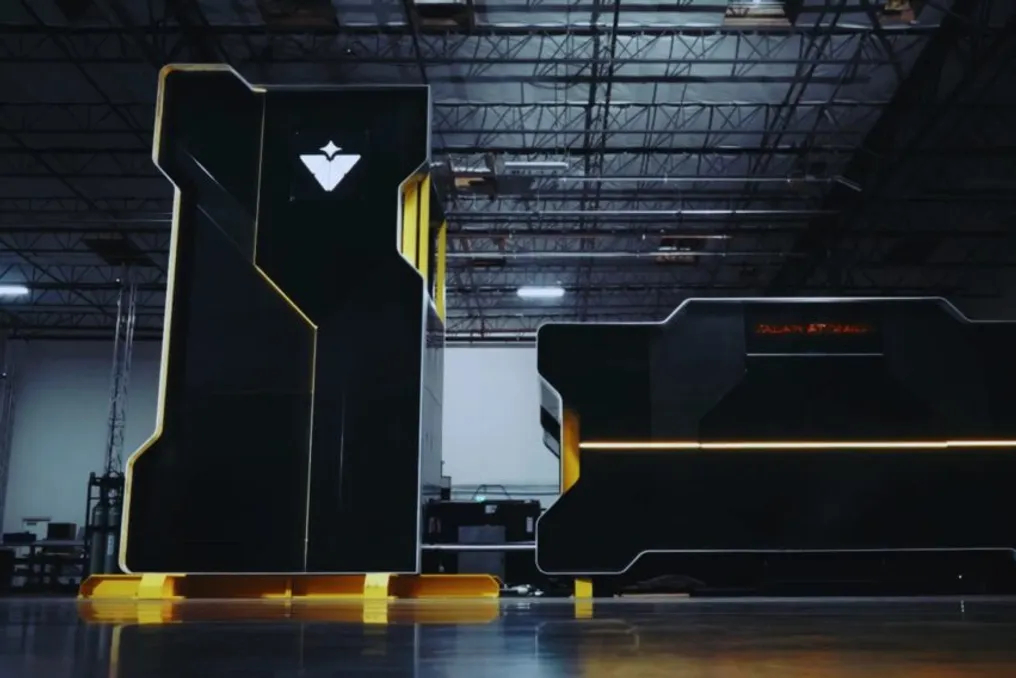
Atoms has focused its strategy on specialized machines designed to perform specific tasks, rather than stylish humanoid constructs. While many AI startups are chasing general-purpose humanoid robots, Kalanick's firm believes that industrial labor requires equipment built specifically for that purpose.
The company is deliberately working in capital-intensive physical sectors such as mining, heavy transport, construction, and commercial food production. Kalanick views this move as the culmination of a decade-long transition from digital data to physical atoms. He describes these automated installations as atom-based computers. According to Kalanick, heavy manufacturing acts as the processing unit, commercial real estate provides physical storage, and transportation logistics functions as the main network.
The company's main goal is to digitize and automate critical supply chain tasks that pure software code cannot solve on its own.
The funding round consolidated three separate operating units under a single equity structure. The first, Atoms Food, includes Kalanick's previous venture in the form of CloudKitchens. This food segment utilizes automated culinary platforms like Lab37 and software systems such as Otter.
The second unit, Atoms Mining, deals with autonomous heavy machinery in remote mining locations. This activity directly relies on Atoms' recent acquisition of Pronto, which specializes in autonomous equipment and was founded by former Uber engineer Anthony Lewandowski. The third unit, Atoms Transport, functions as a flexible base for industrial robotics, helping move goods through complex logistical hubs. Together, these three areas form a comprehensive system for automating physical production from scratch.
The $1.7 billion investment signals high confidence from major venture capital players. In addition to lead investor Andreessen Horowitz, well-known firms such as Bain Capital, Fifth Wall, K5 Global, Abstract, Chemistry, A*, and SV Angel have joined. Notably, Uber itself acted as a direct equity investor. With this support, Kalanick closes the loop with the taxi company he helped found in 2009 and left in 2017.
In addition to equity capital, Atoms also secured large debt loans from major financial institutions, including JPMorgan, Goldman Sachs, Bank of America, Wells Fargo, and Barclays, providing the company with significant debt leverage to finance expensive equipment. The company plans to use the $1.7 billion to accelerate machine assembly, increase field deployments, and attract highly skilled engineers. Labor shortages and rising costs are becoming increasingly serious problems for global supply chains, creating strong demand for reliable automated physical systems.
Ben Horowitz emphasized that specialized industrial machines are much better suited for operation in complex environments than humanoid robots. Atoms is focused on physical AI, prioritizing work over consumer electronics. The company hopes to demonstrate that the digitization of physical labor will be the catalyst for the next industrial revolution.